
Artwork Interpretation: Elegant Angel
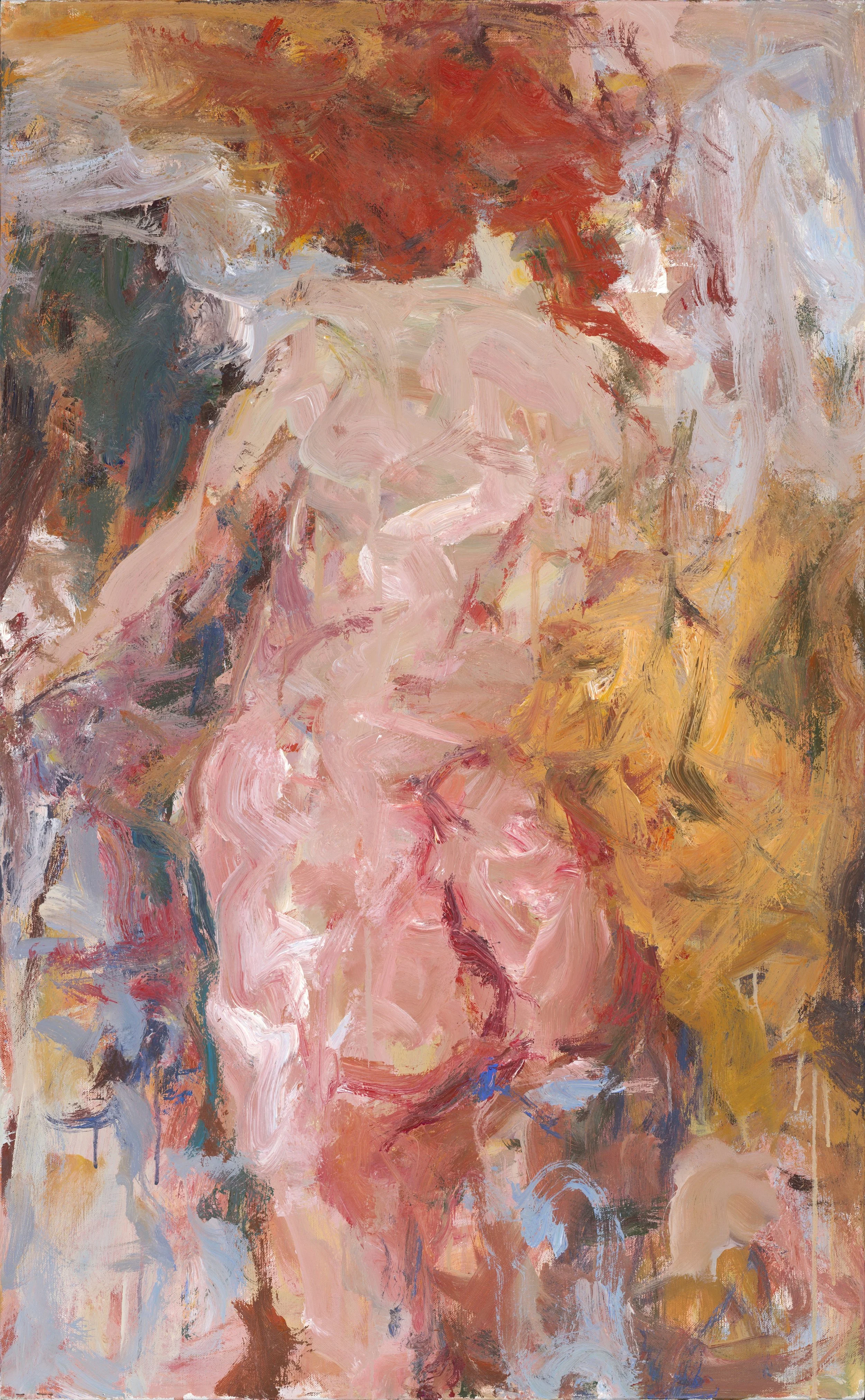
Elegant Angel
Oil On Canvas
68×110cm
In BEI Jiaxiang’s Nude series, a trace of Renaissance brilliance subtly permeates the human figure he depicts.
After the prolonged confinement of humanity during the Middle Ages, the grandeur of ancient Greek human figures had gradually flattened into bland symbols akin to hieroglyphs. As self-awareness within human civilization began to wither alongside the arts, Michelangelo emerged as a beacon, akin to the God in his fresco Creation of Adam, wielding his brush as a torch to disperse the oppressive clouds that had shrouded the West for nearly a millennium, restoring the course of history.
The human figures depicted by Michelangelo are exemplars of robust vitality. His mastery of precise anatomical structures transcends mere scientific limitations. Under his hand, every figure—regardless of gender—radiates fullness that surpasses rational boundaries; each muscle line embodies an exuberant life force, and every inch of skin glimmers with the essence of humanism. This is Michelangelo’s proud tribute to the beauty of humanity.
However, although the individual portrayal of the female figure became a traditional subject in oil painting, the robust beauty of women gradually diminished. It is only on BEI’s canvas that the roundedness of the female body seems to return to an era of renewal.
The composition features a relaxed female figure from behind, her right torso curving inward toward her abdomen, as if her right arm rests on her elevated right knee, accentuating the slightly angular muscle lines of her taut hips. Beneath BEI’s fluid brushwork, Michelangelo’s sense of strength bursts forth with renewed vitality. The vibrant, unruly red hair is alluring yet not excessive, reviving a long-lost sense of robust beauty amidst the enchanting scenery.
In her presence, a natural force surges forth, breaking free from the constraints of civilization, akin to a medieval heretical witch navigating the third realm between humanity and divinity.