
Artwork Interpretation: Munch’s Gaze
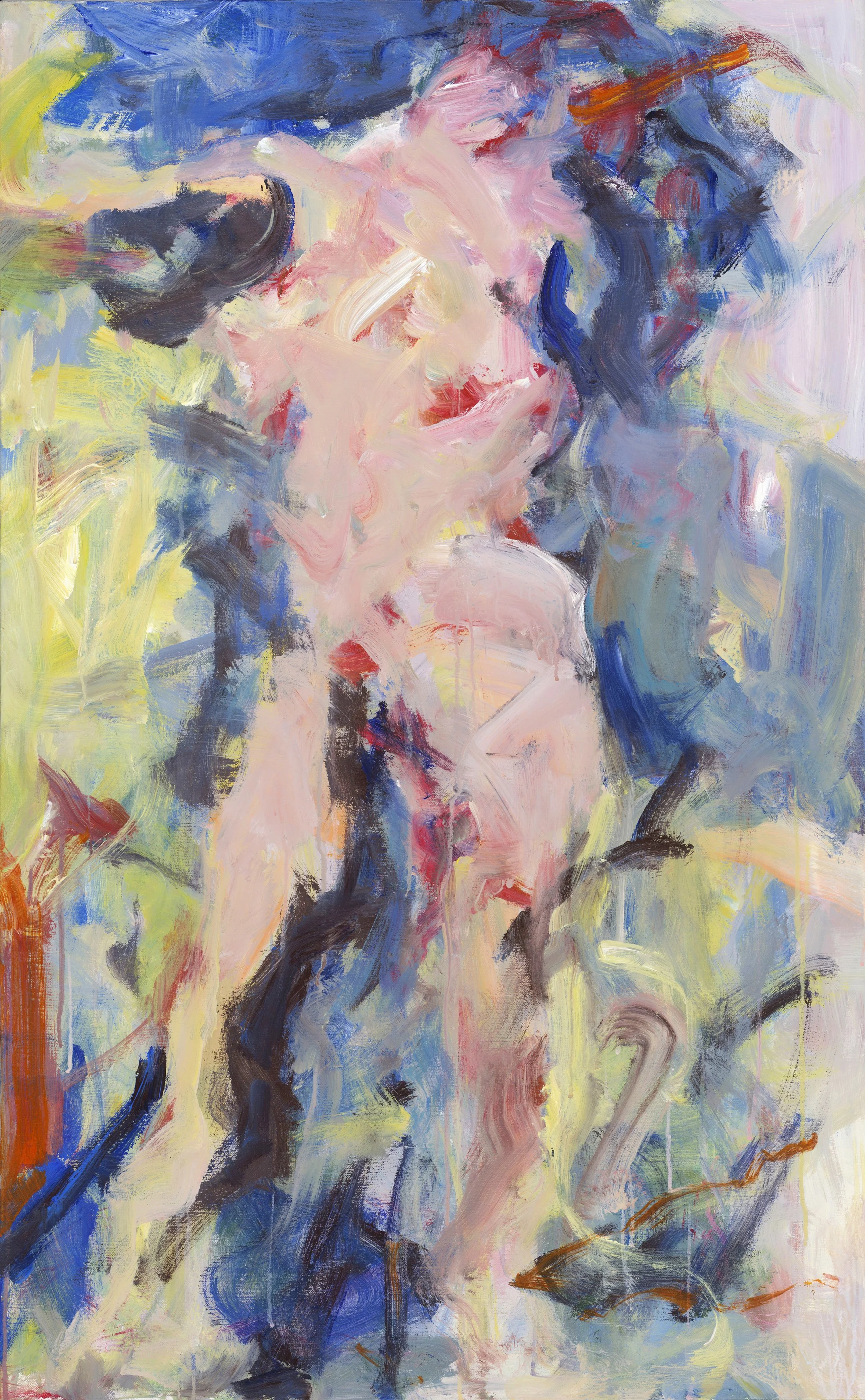
Munch’s Gaze
Oil On Canvas
68×110cm
In this work, BEI Jiaxiang constructs an atmosphere that departs from traditional representations of female nudes.
The woman in the painting stands with her weight shifted to the left, her right leg gracefully lifted, inadvertently highlighting the curvature of her waist and hips. Her head tilts comfortably to the left, naturally arching her upper body forward, while her vibrant orange-red hair faintly emerges against the background. BEI intentionally simplifies the details of the figure, employing just a few bold strokes of color to convey her beauty without any flattering embellishments. He deliberately blurs facial features and exaggerates certain proportions, emphasizing a confident demeanor through the relaxed pose of the figure. By melding the external attributes of femininity with an inner state of being, BEI aims to portray an independent and liberated community, fostering an emotional resonance rooted in physical form.
In terms of color application, BEI further enhances this sense of spirituality. He primarily employs cool tones dominated by indigo, akin to the palette used by Edvard Munch in Nude Standing Against a Blue Background. This choice is relatively rare in traditional oil paintings depicting desire and the gaze upon the human body. The use of cool colors not only increases the spatial depth of the piece but also stands in striking contrast to the figure’s fair skin, accentuating its three-dimensionality. Additionally, compared to the intense emotional direction of warm tones, the layered effect of cool colors draws the viewer’s attention and invites more contemplative reflections. Modernist and Expressionist styles often emphasize the complexity of emotional expression, making the arrangement of cool colors particularly fitting for such artistic exploration.
However, unlike Munch, BEI does not impose excessive subjective projections onto the imagery. Instead, he aspires for the viewer to wander freely through the unique and abundant inner world of femininity, much like the woman portrayed in the painting.