
Artwork Interpretation: Old Shanghai - Shikumen Series
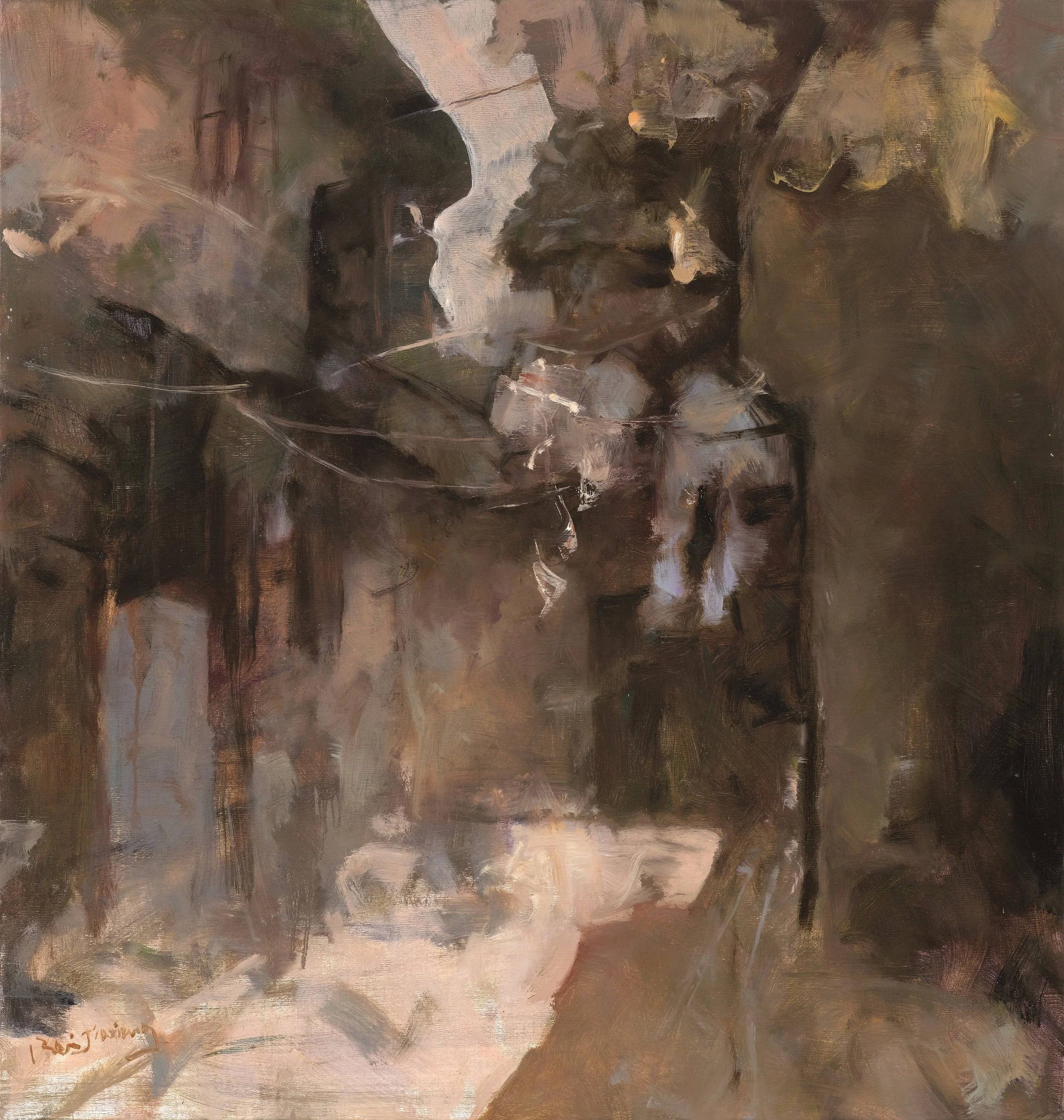
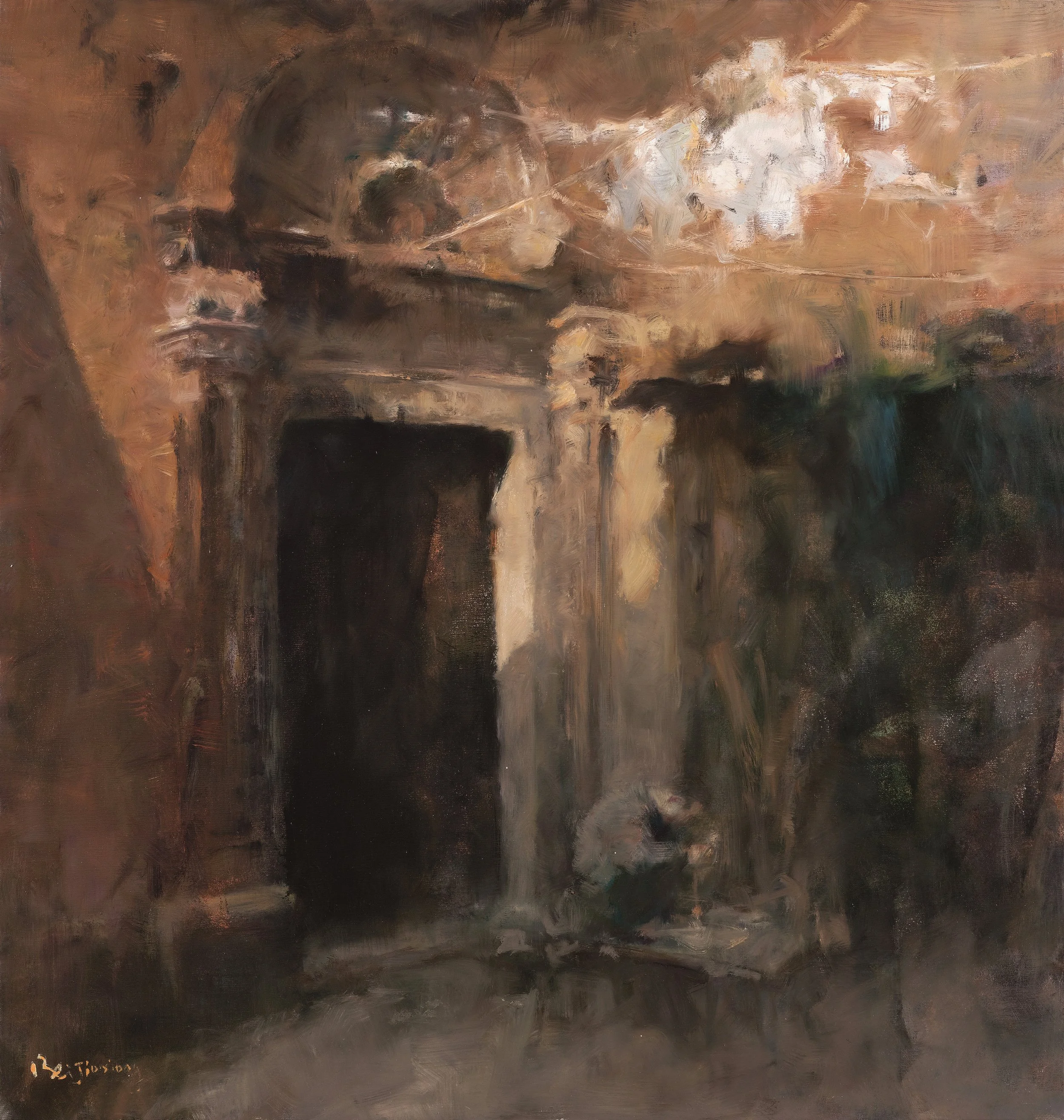
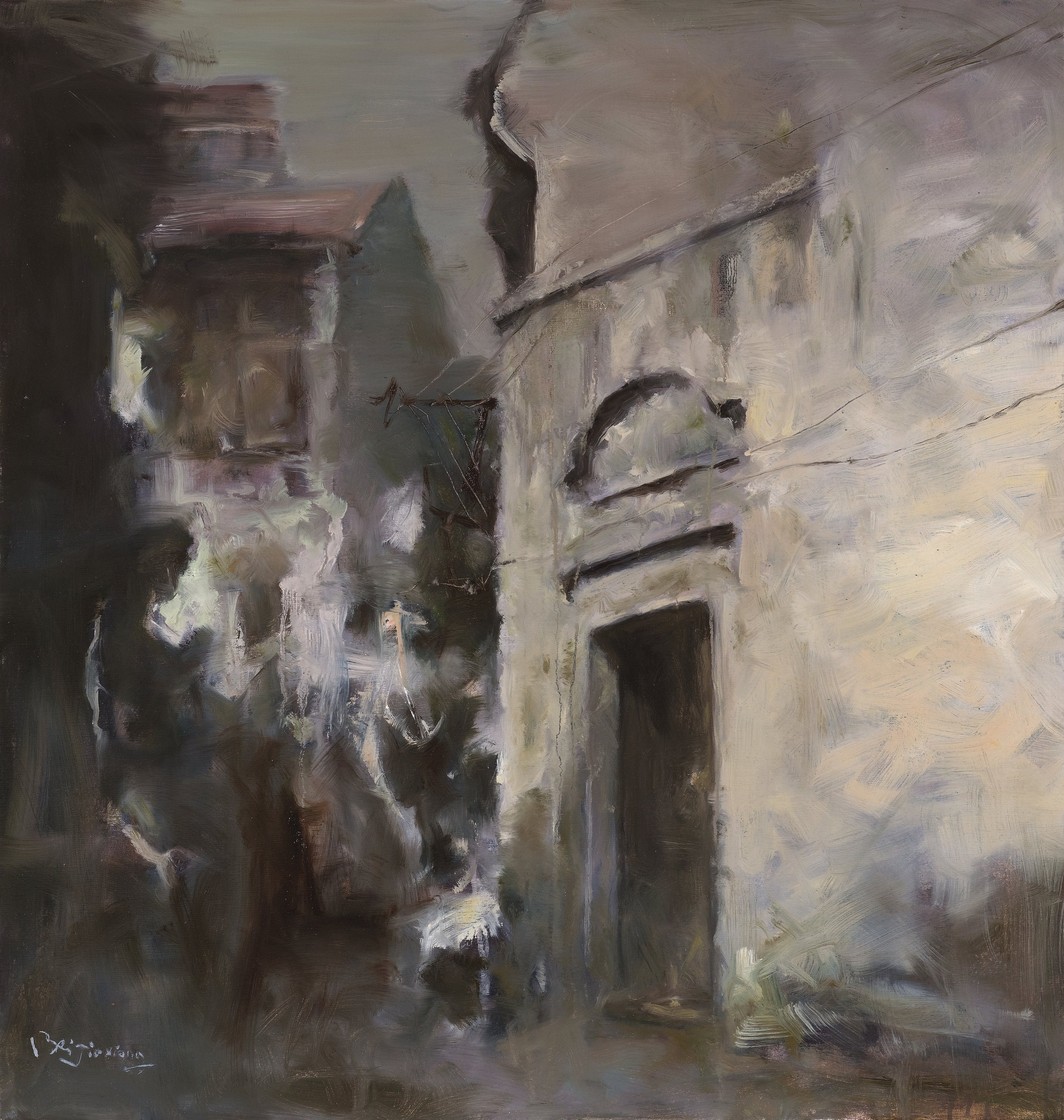
In the BEI Jiaxiang’s Shikumen series, shifts of color blocks are built upon the foundation of realism, in order to construct the expected imagery. This approach preserves the authenticity of details such as the architectural carvings and water drainage of Shikumen (stone gate) buildings, while the use of hazy gray tones alleviates the sense of triviality. This high concept in painting language not only achieves a visual balance between the concrete and the ethereal but also crystallizes the Shikumen as a cultural symbol, articulating a sense of historical memory with restraint.
The symmetry of Shikumen architecture and the depth of the alleyways are transformed in BEI’s work into dialogues across multiple spaces and times. Adopting an aerial perspective, he compresses elements like street-level buildings and dormers into a flattened composition. This echoes the traditional “walled compound” layout of Shikumen while also enhancing the dreamlike quality through the weakening of perspective. The frequent appearances of closed doors contrasted with open kitchen entrances metaphorically represent the dualities of closure and openness, intimacy and community inherent in Shikumen culture.
Compared to Monet’s Rouen Cathedral series, which explores light and color variations in the same scene, BEI’s method also encompasses multi-angle depictions of Shikumen. While Monet revels in the dance of light and shadows on the complex facades of cathedrals, BEI focuses more on the cultural memories embedded within the architecture. Through repeated reconfigurations of Shikumen building elements, he reconstructs a segment of collective memory belonging to the past.
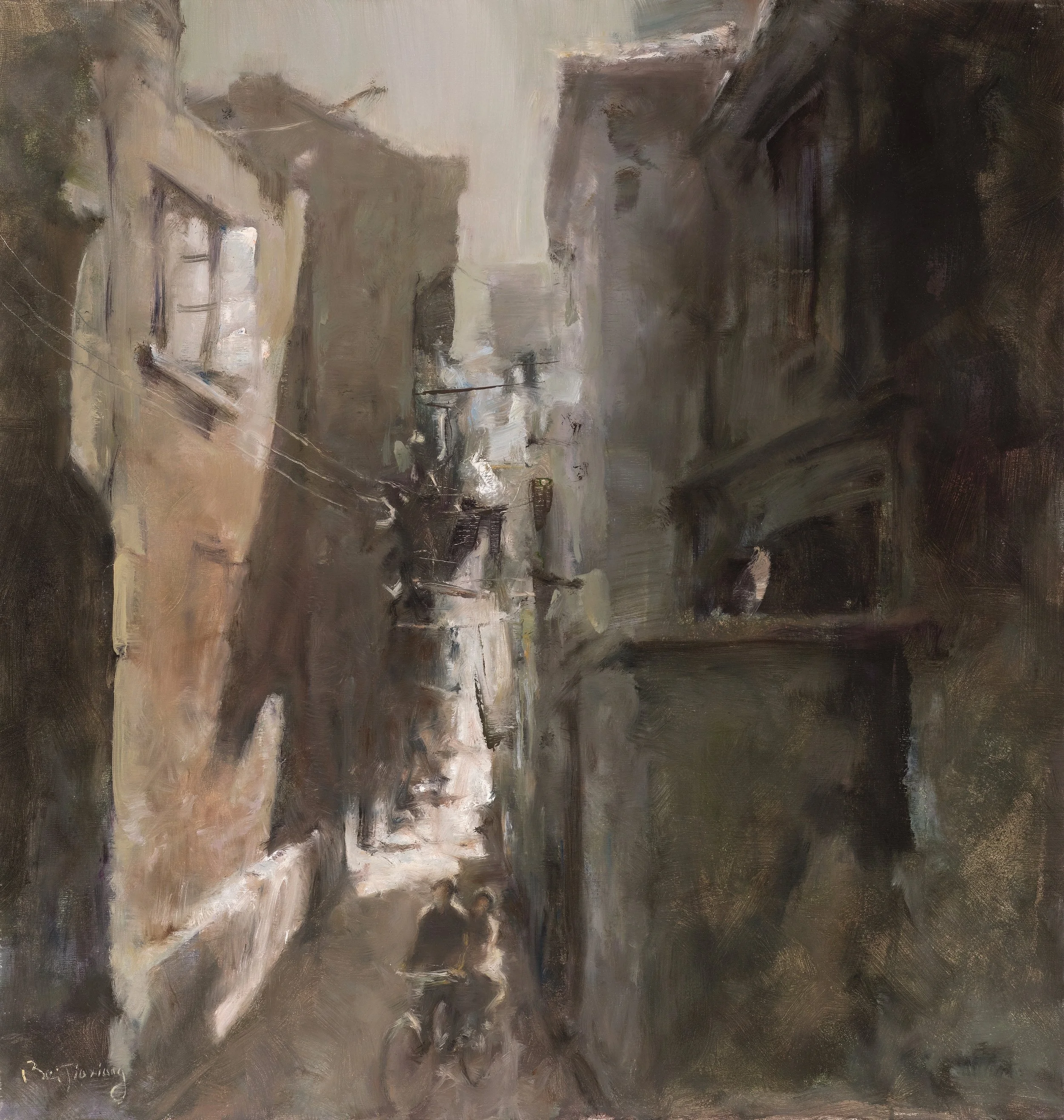
Hengfeng Alley
Oil On Canvas
95x100cm
In the Shikumen series, BEI Jiaxiang employs this uniquely Sino-Western architectural style to create a dialogue between the spirit of Shanghai School art and Western oil painting techniques, attempting to reinterpret his cultural identity within the context of contemporary art.