
Artwork Interpretation: Old Shanghai - Shanghai Echo
In the Hometown -Shanghai Echo series, BEI Jiaxiang leans towards capturing the macro perspective of Shanghai’s urban landscape and its zeitgeist, rather than focusing on specific architectural forms.
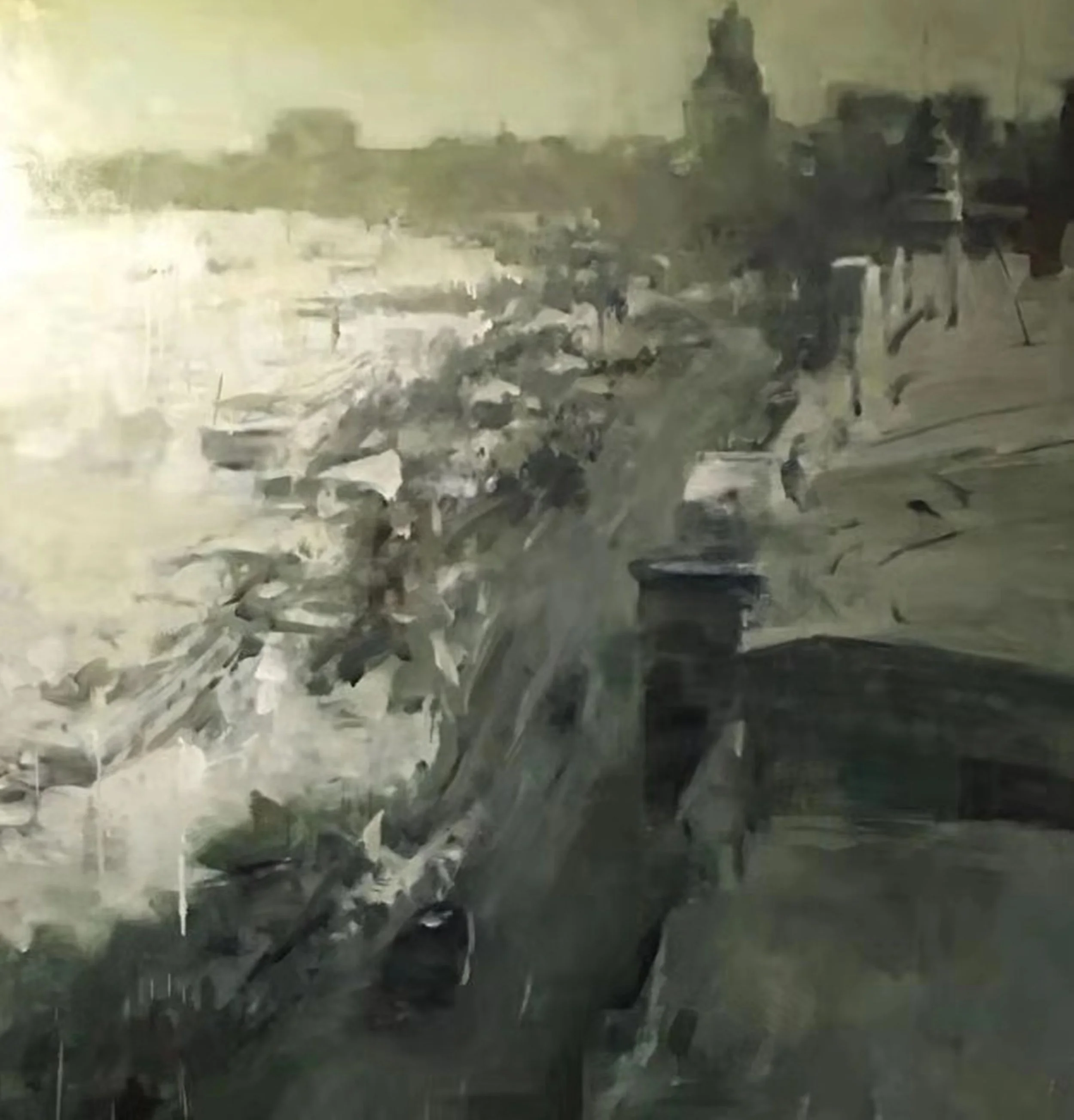
Old Time of The Bund
Oil On Canvas
165×172cm
From the textured reliefs of Exotic building clusters to the shimmering surface of the Huangpu River, and the bustling crowds on the streets, BEI meticulously restores architectural details of iconic scenes like the Bund and Nanjing Road. This technique parallels Monet’s The Saint-Lazare Station. Although Monet is more dedicated to the liberation of color, both artists reveal similar sentiments and subjective projections in their depictions of architectural light and shadow, as well as their memories of the industrial age.
Furthermore, BEI skillfully utilizes an overview perspective to compress spatial depth, creating a visual experience akin to the “scattered perspective” found in traditional Chinese scroll painting, echoing the aesthetic tradition of “traveling and observing” prevalent among the traditional Chinese literati especially in the south-eastern regions. Within the urban fabric, BEI also depicts numerous cars, rickshaws, and bicycles, bestowing a sense of fluidity to the scene and positioning these as the main subjects of “traveling and observing”, forming a dual narrative of grand historical tides and bustling ordinary life.
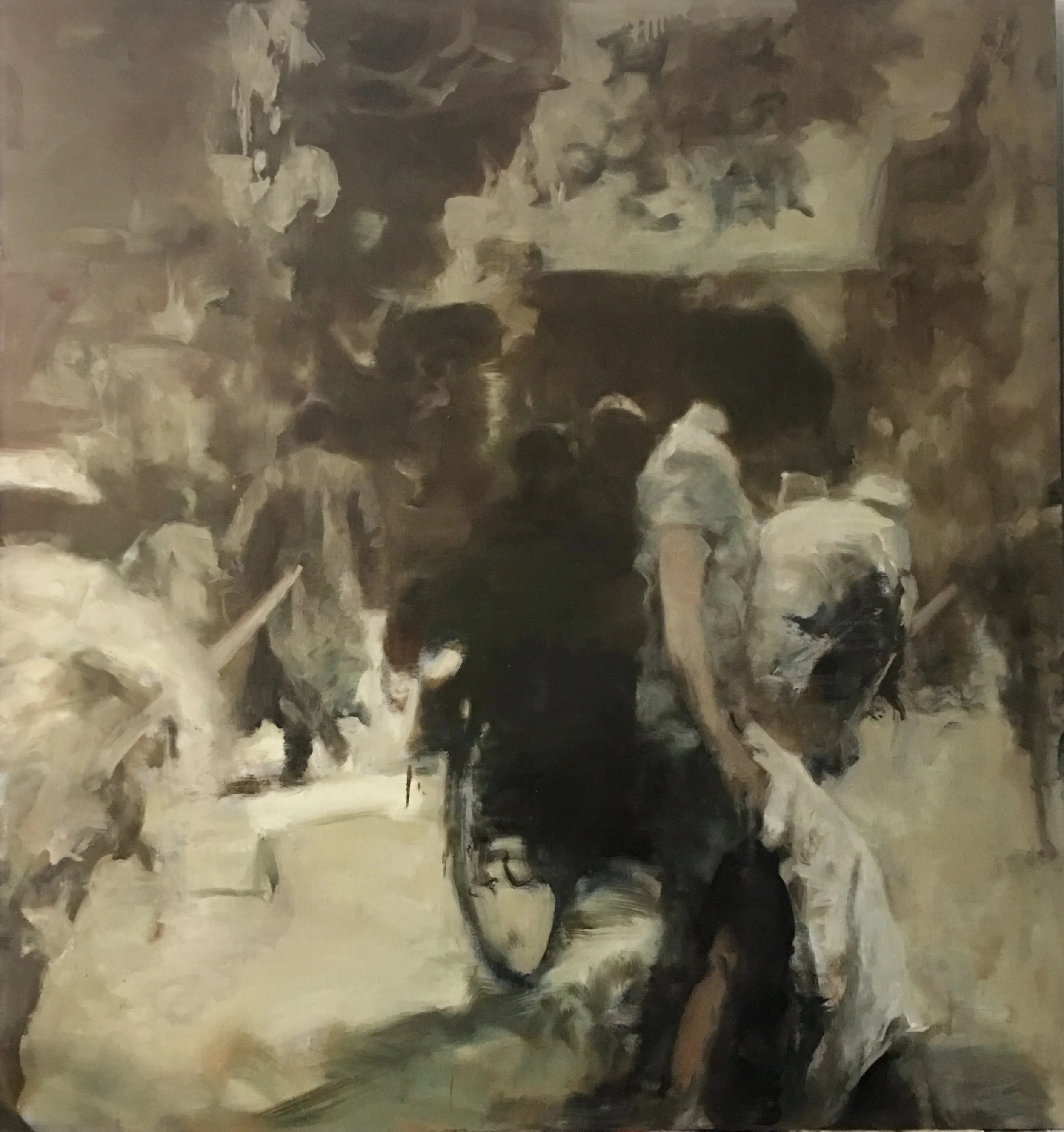
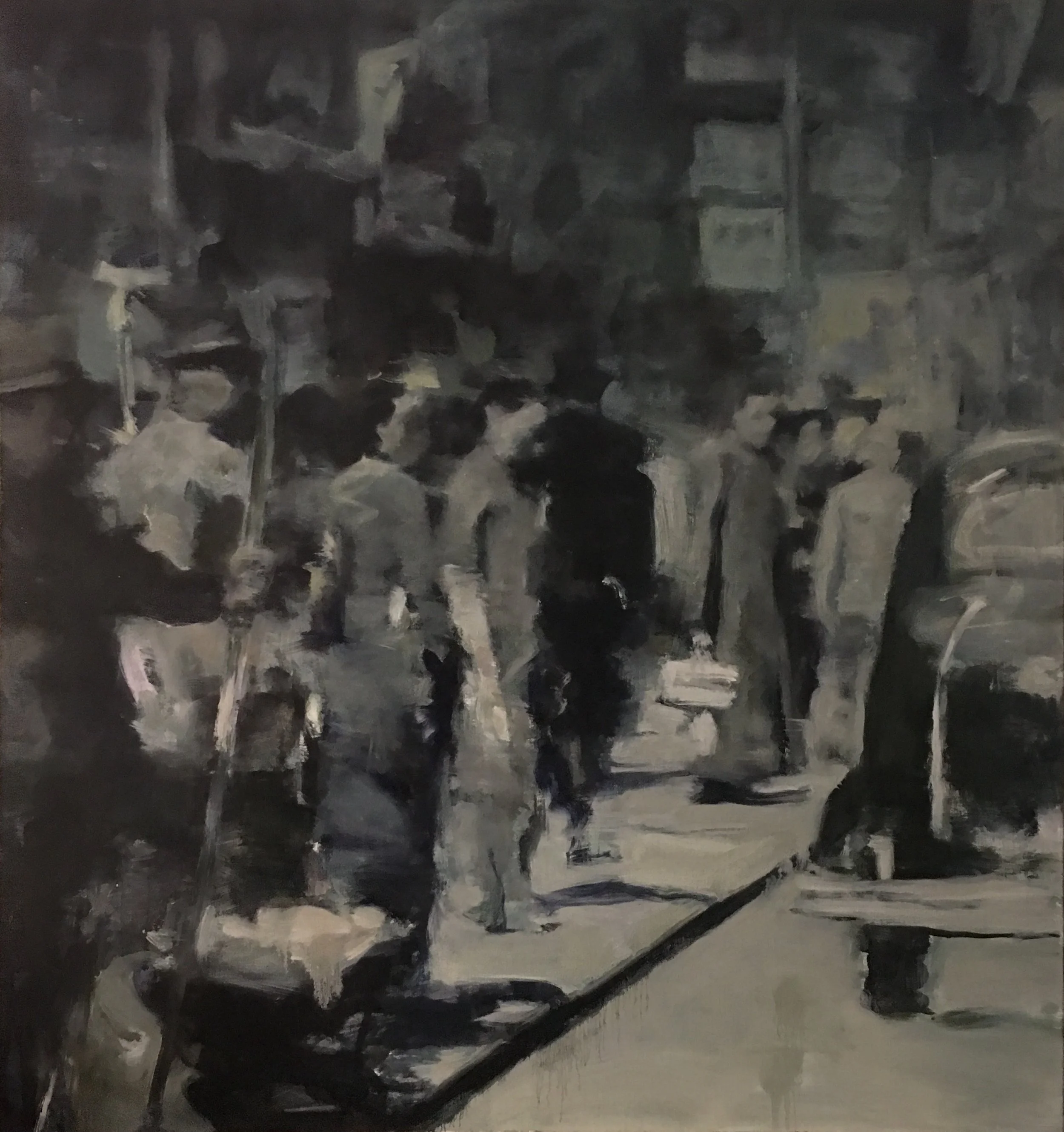
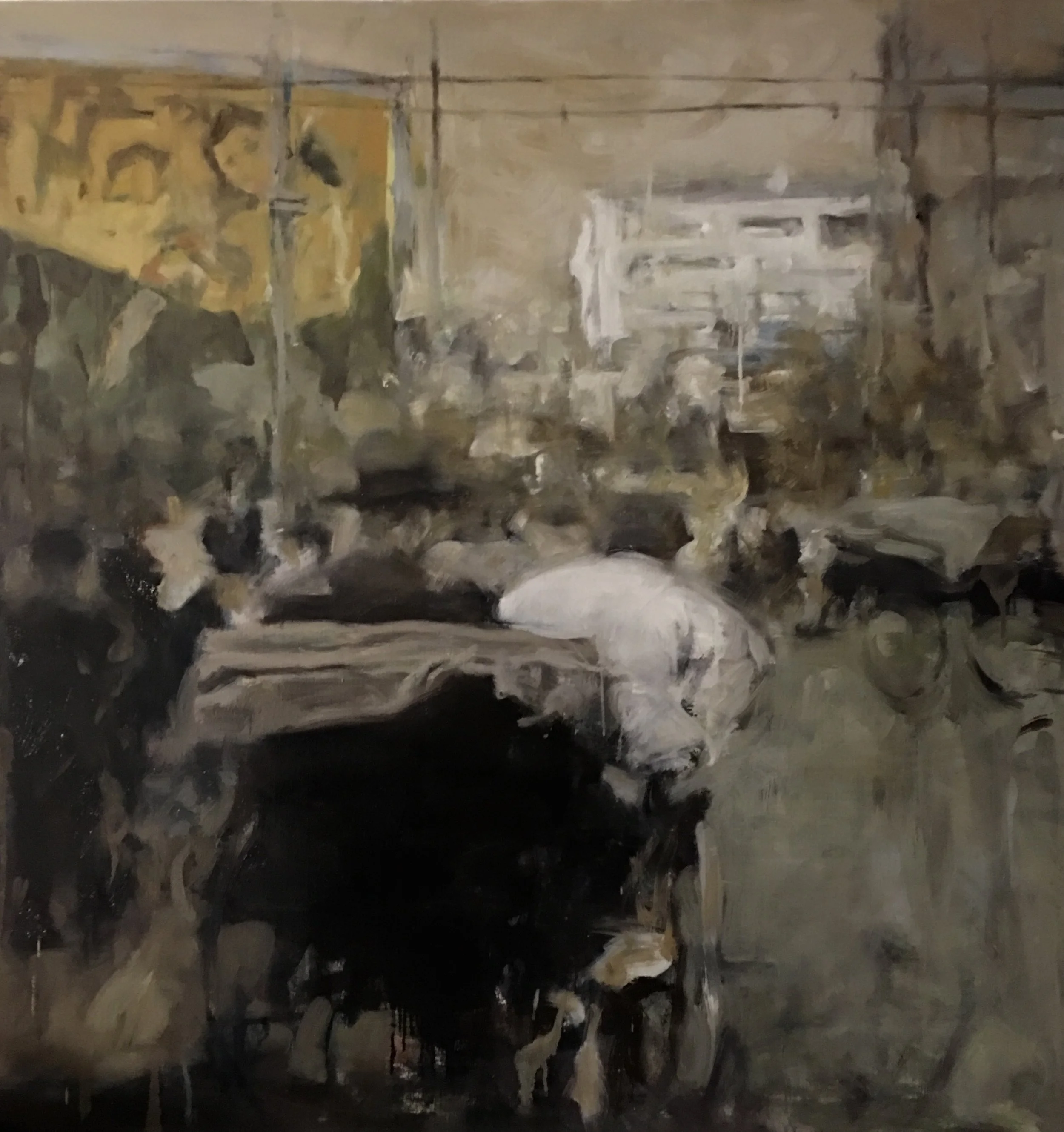
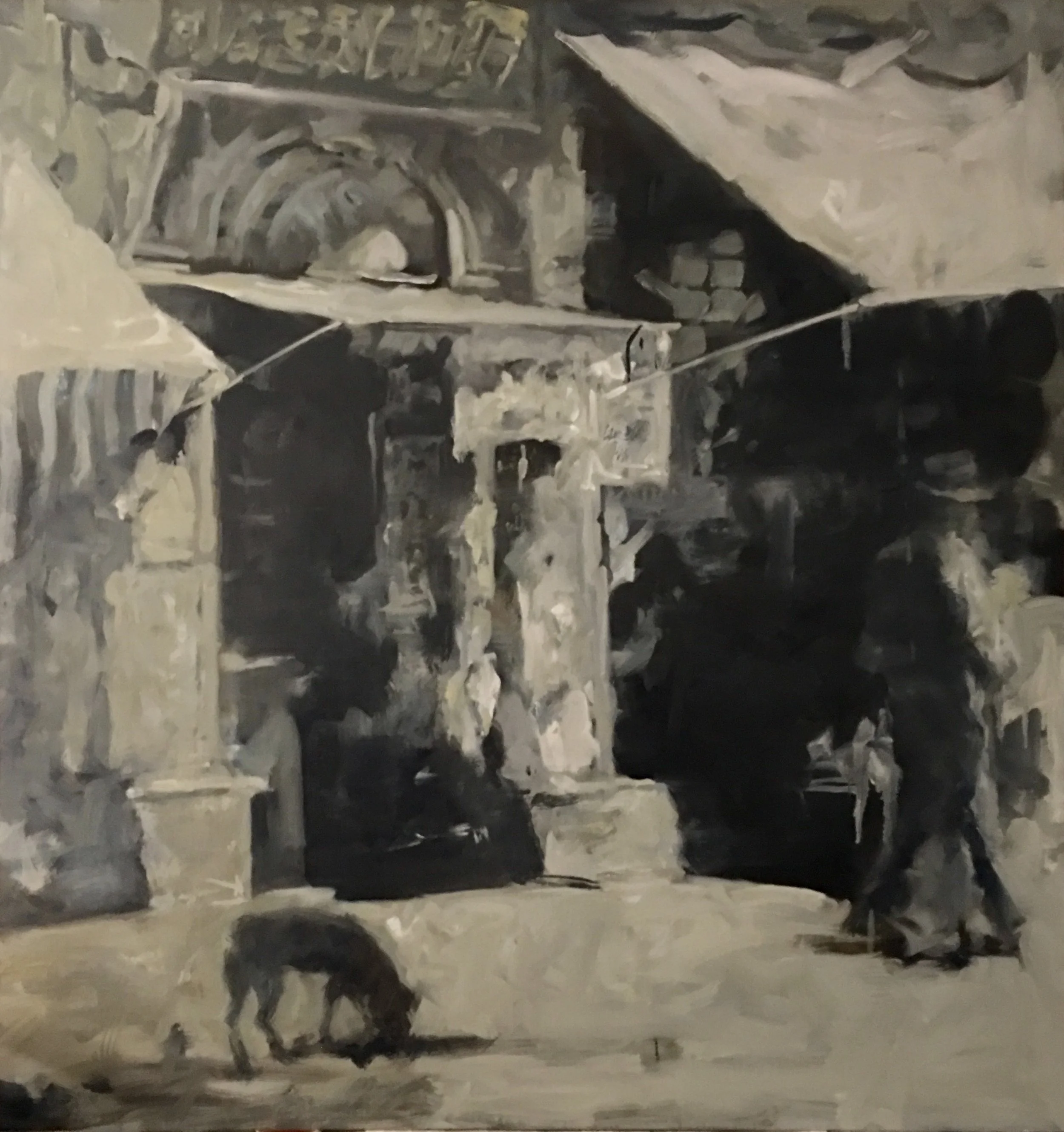
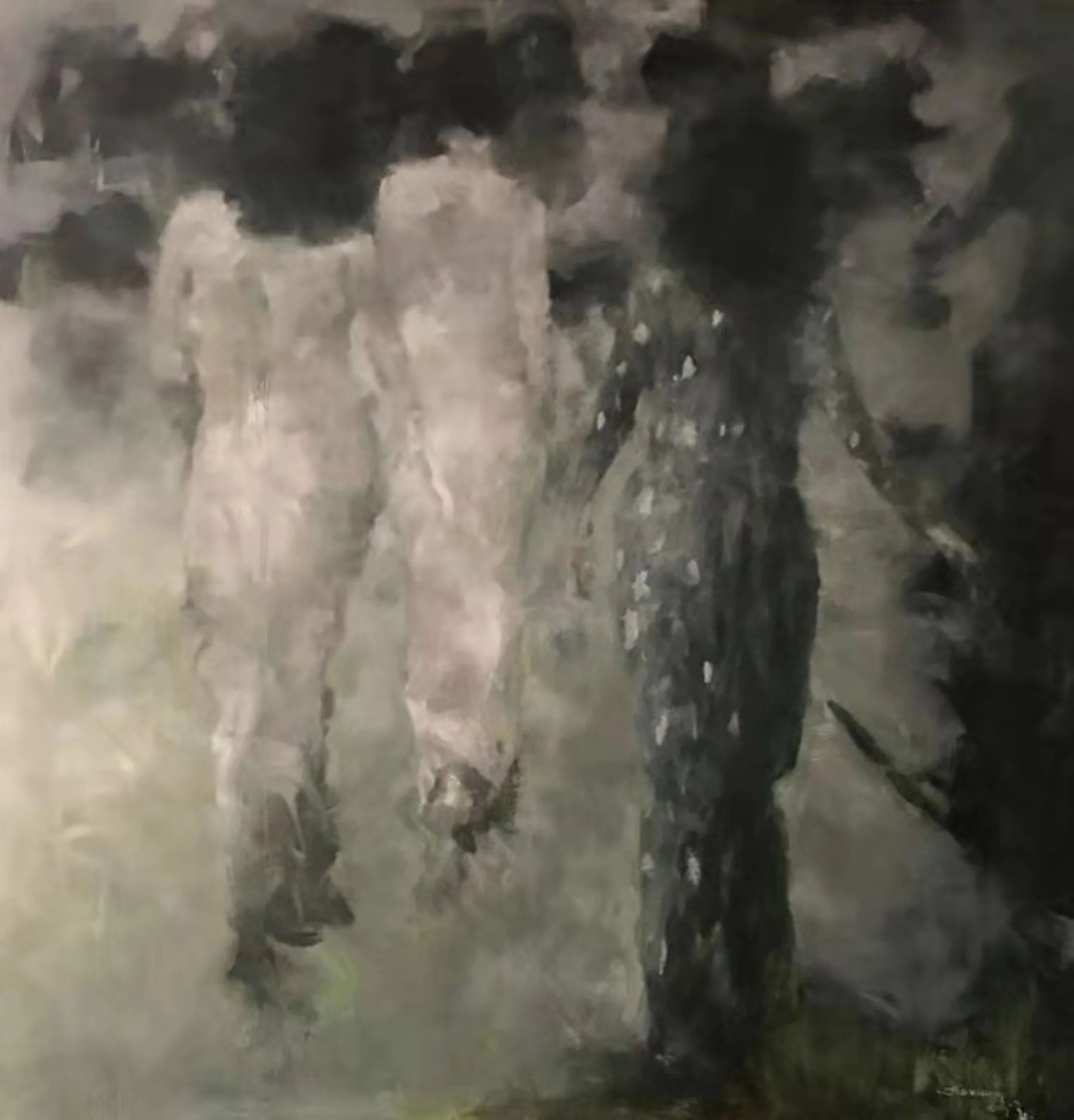
The essence of the Hometown - Shanghai Echo series is BEI Jiaxiang’s visual decoding of the “modernity” of Shanghai Art School culture. He neither falls into the trap of documentary realism nor drifts into abstract formalism; instead, he translates Shanghai's monumental landmarks into a visual carrier of Shanghai Art School cultural genes through an imagistic language. This creative path not only continues LIN Fengmian’s ideal of “harmonizing Chinese and Western art” but also reconstitutes the possibilities of local narratives from a global perspective—liberating Shanghai from its colonial imagination as “the Paris of the East” and restoring it as a spiritual domain rich in cultural collision.