
Artwork Interpretation: Oriental Abstract Series - Moonlit Lotus Pond
BEI Jiaxiang’s Oriental Abstract - Moonlit Lotus Pond series of colored ink works completely breaks free from the figurative visual language, overturning the traditional expression of this subject in Chinese painting. It pushes the profound integration of Eastern literati painting spirit and Western expressionism to a new level.
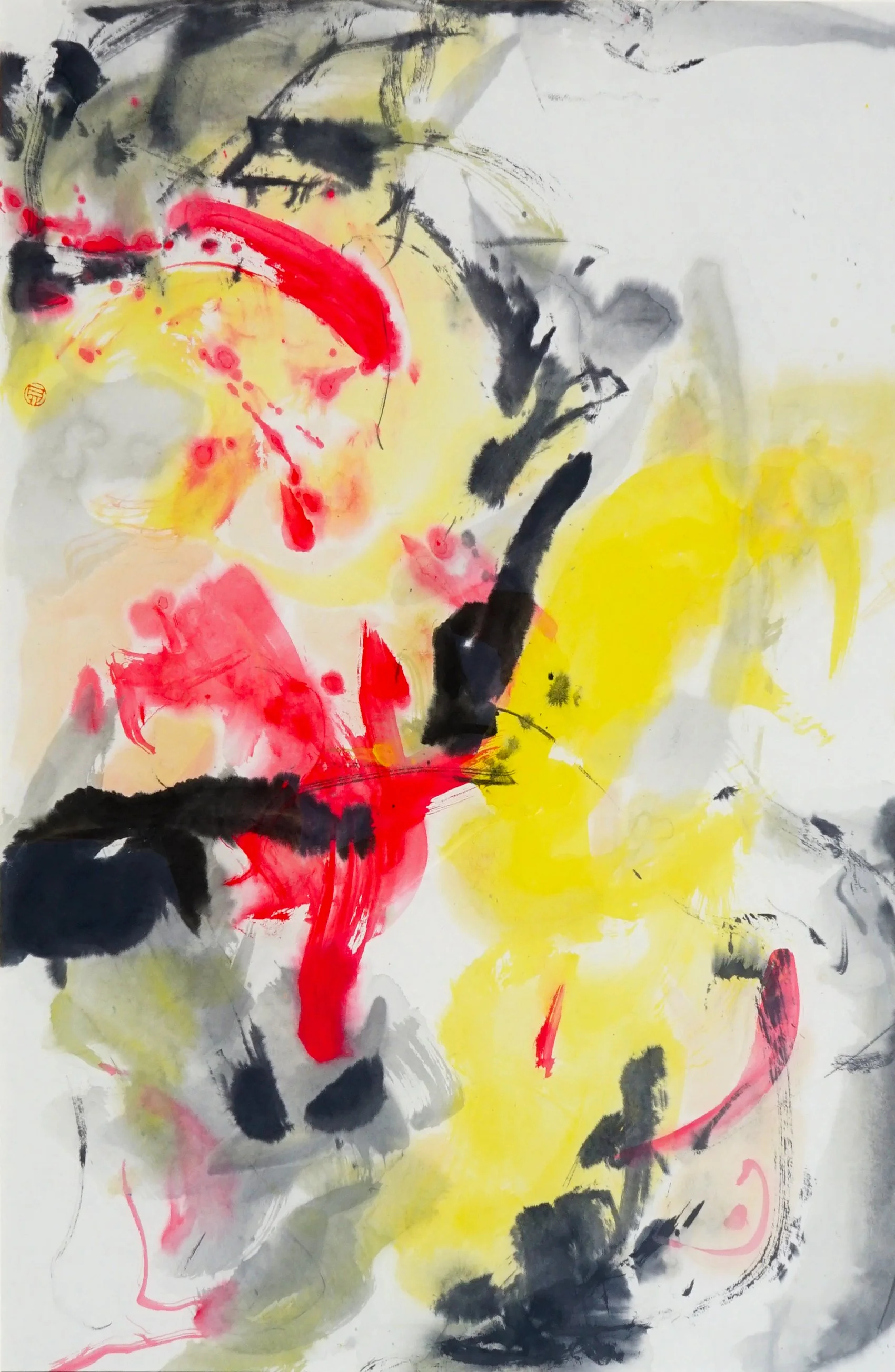
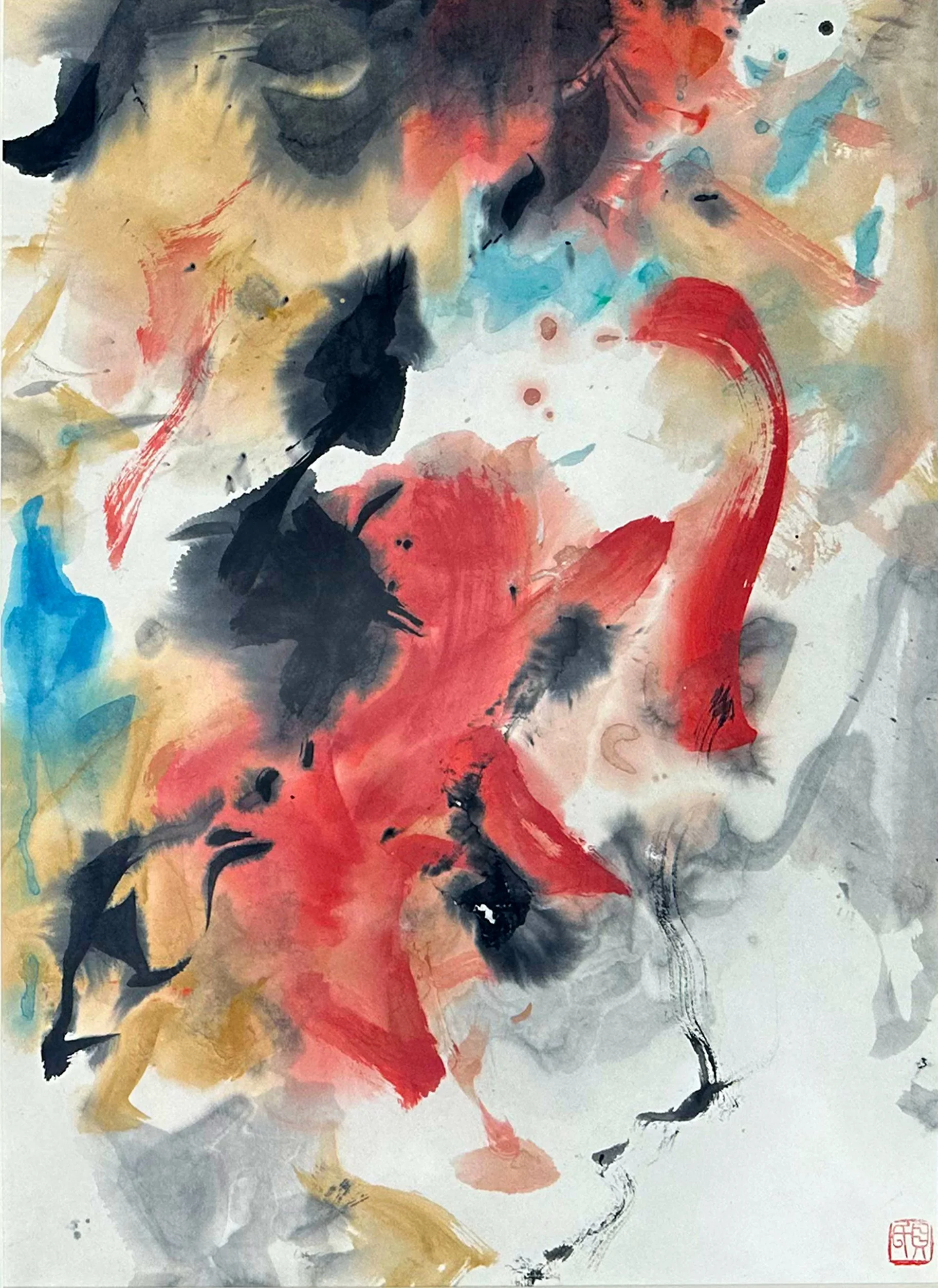
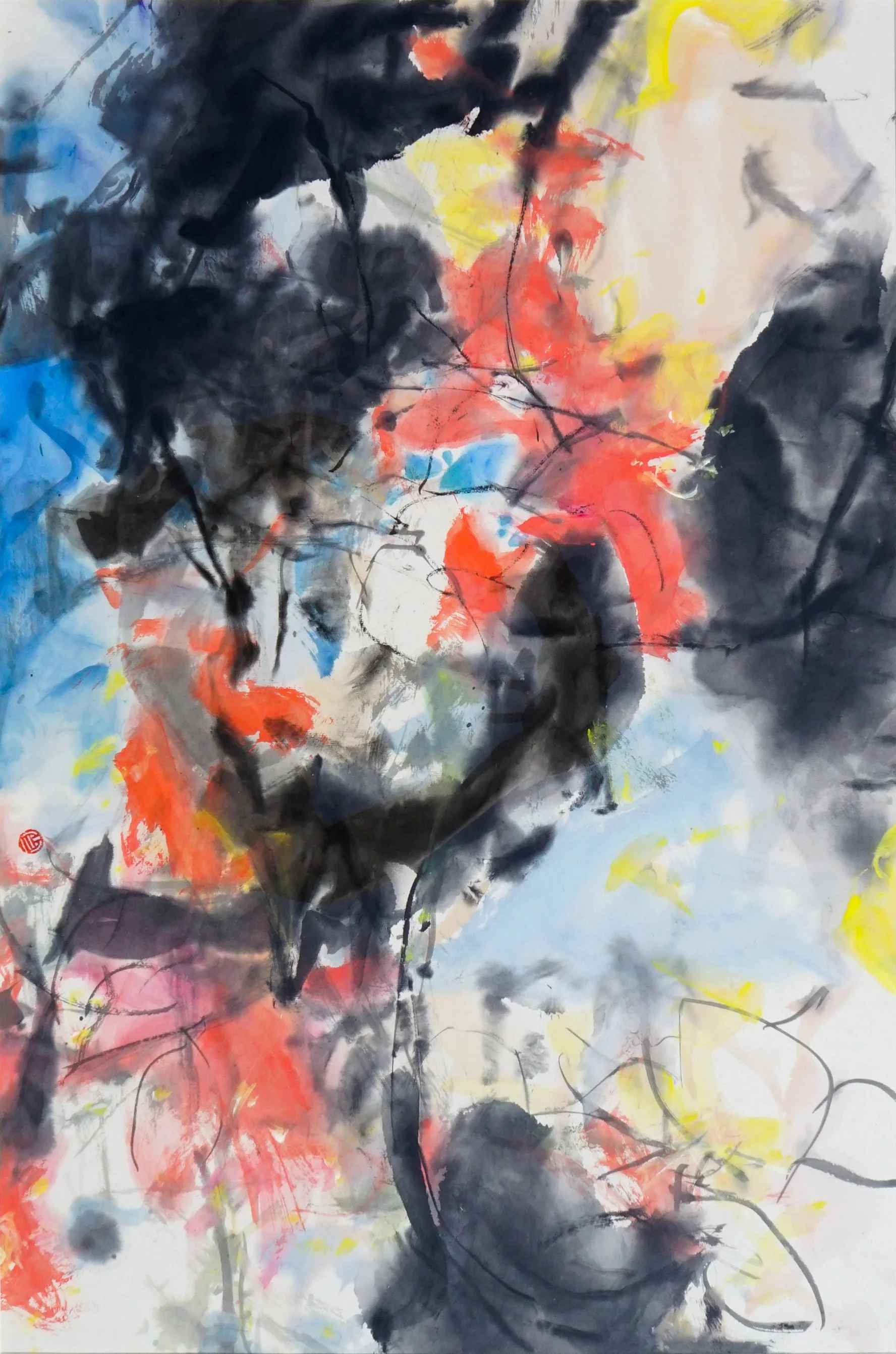
The composition entirely abandons the concrete forms of lotus leaves or swimming fish, instead constructing spatial rhythm through the interweaving of geometric color blocks and the use of white space. Following the overall law of dynamic balance within the composition, it creates a breathing sense of interplay between emptiness and solidity. The edges of the color blocks are blurred; cool and warm colors collide to release energy, and by leveraging the permeability of xuan paper as a medium, randomness is transformed into a controllable “intentional unintentionality.” This expression not only echoes ZAO Wou-Ki’s exploration of color tension during his "wild cursive" period, but also manages to weaken the physical attributes of hue while enhancing the expression of “mental imagery”, by using the wet technique to achieve the diffusion effect of ink wash. Following the rhythm of the painting, BEI employs the technique from calligraphy, using dry, rough brushstrokes to carve irregular trajectories in the composition, simulating the unrestrained spirit of cursive script.
The traditional lotus pond theme of “coming out of the mud unstained” is transformed by BEI into a philosophical reflection on the essence of life. Through the seemingly chaotic blending of color blocks, he simulates the ceaseless flow within a pond. This treatment continues the aesthetic of desolation found in Bada Shanren’s “withered lotus,” while abstractly dissolving the moral admonition function typical of literati painting, shifting instead toward a simple praise of the normalcy of life.
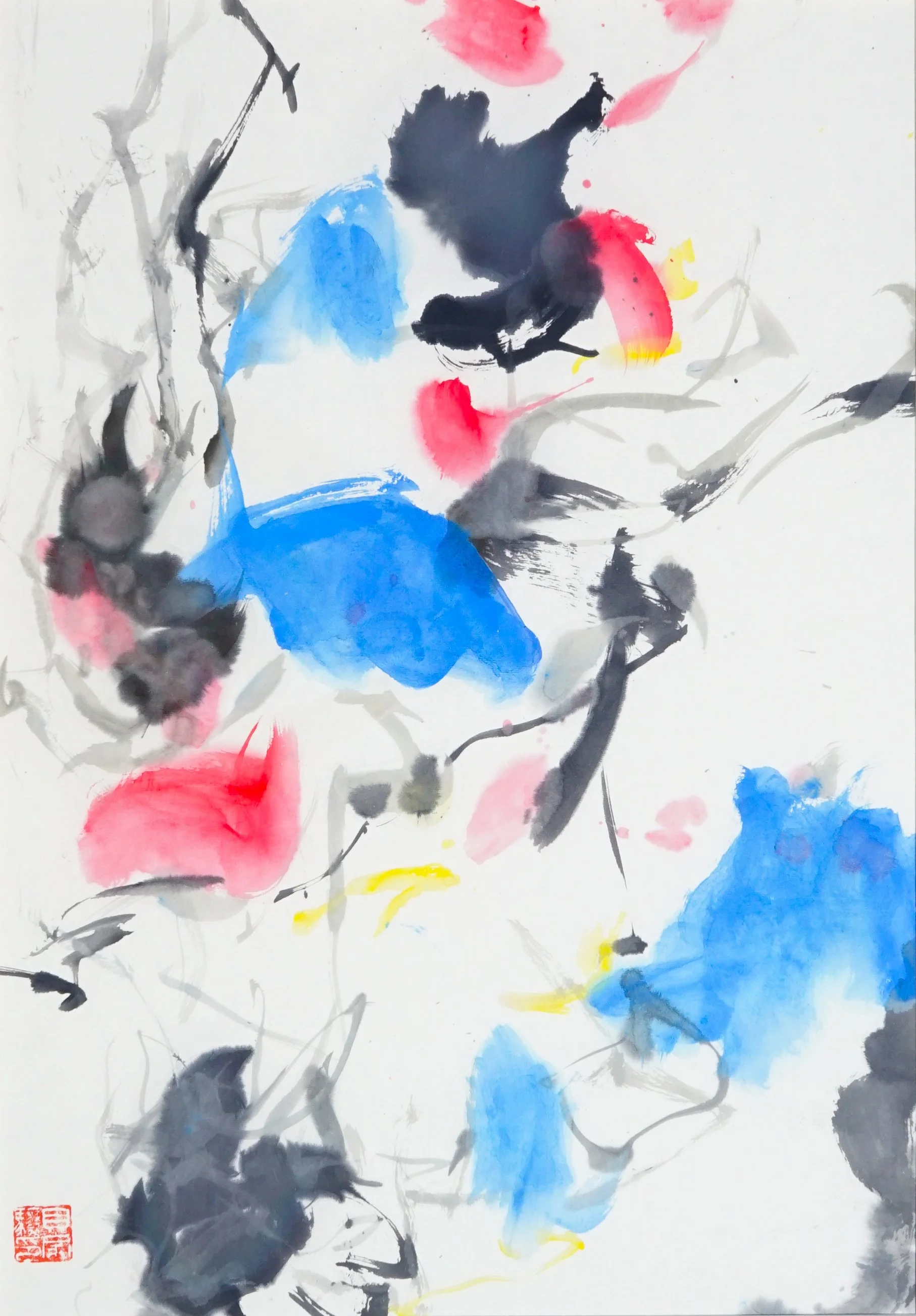
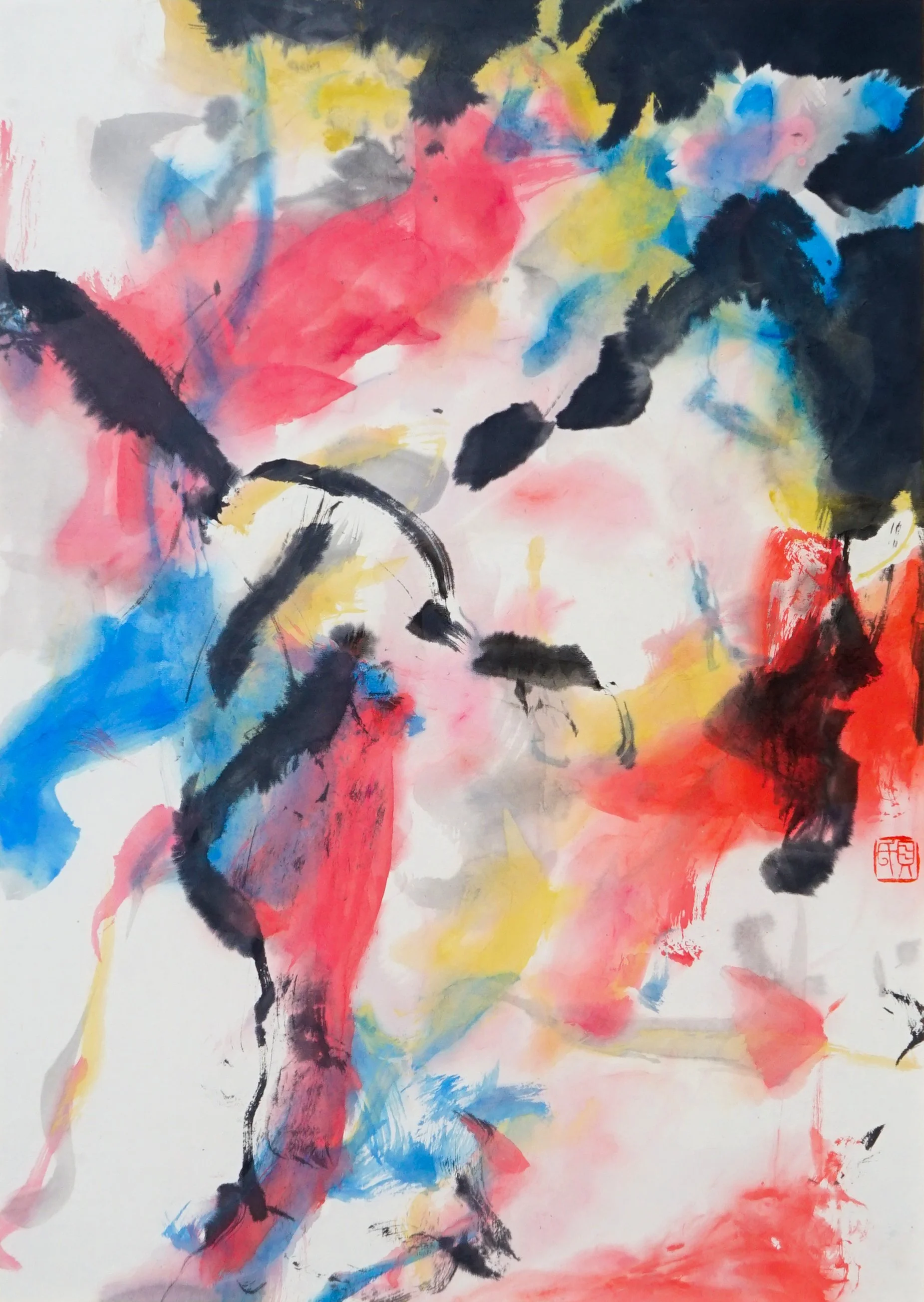
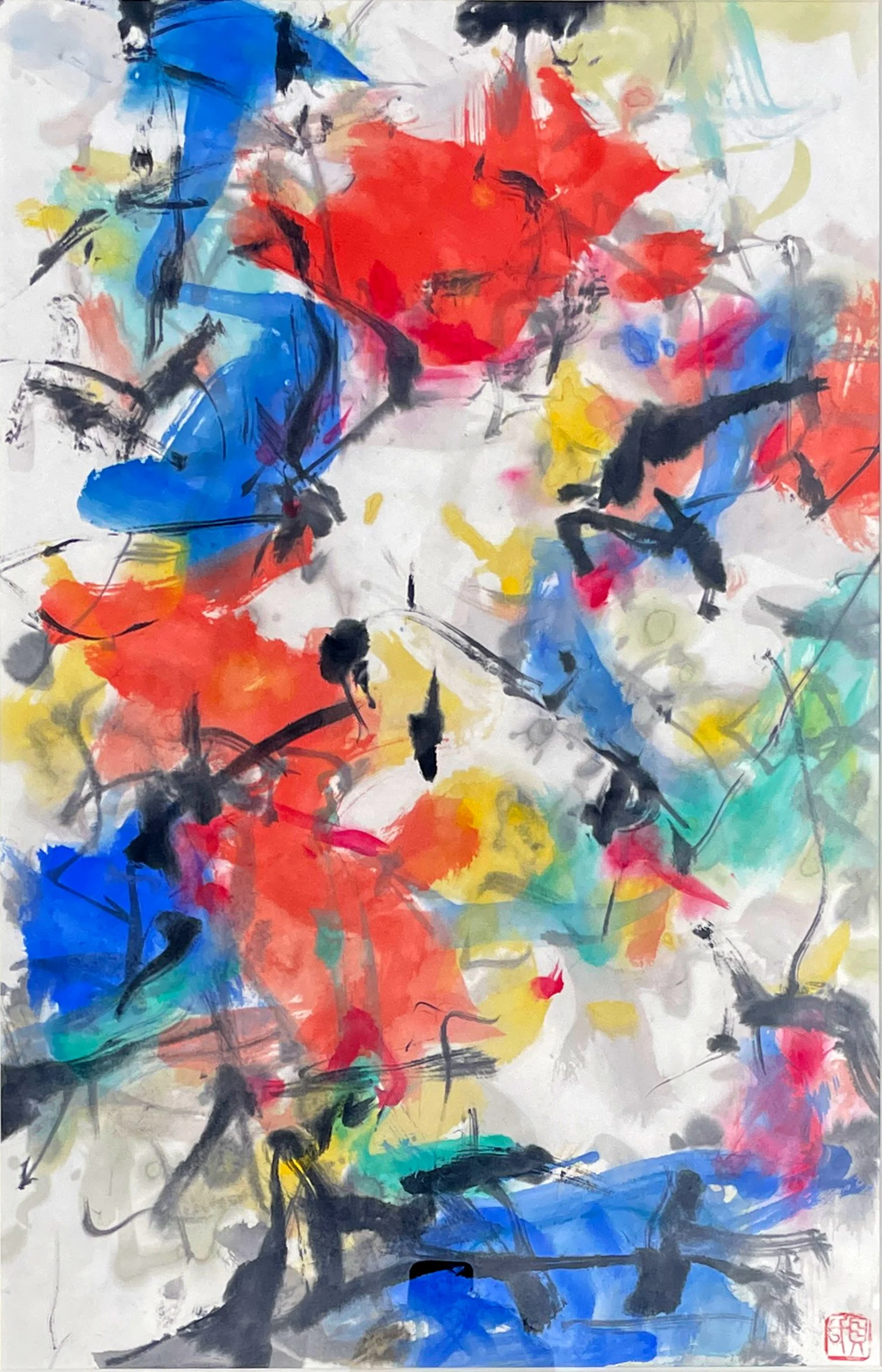
BEI Jiaxiang’s Oriental Abstract - Moonlit Lotus Pond series, using colored ink as its medium, accomplishes a modern transformation of traditional literati painting. Technically, it integrates Chinese and Western methods; culturally, it links past and present. It is not only a milestone in his personal artistic exploration but also highlights the vitality and possibilities of contemporary Chinese ink art in cross-cultural dialogue.