
Artwork Interpretation: Dashing in the Breeze
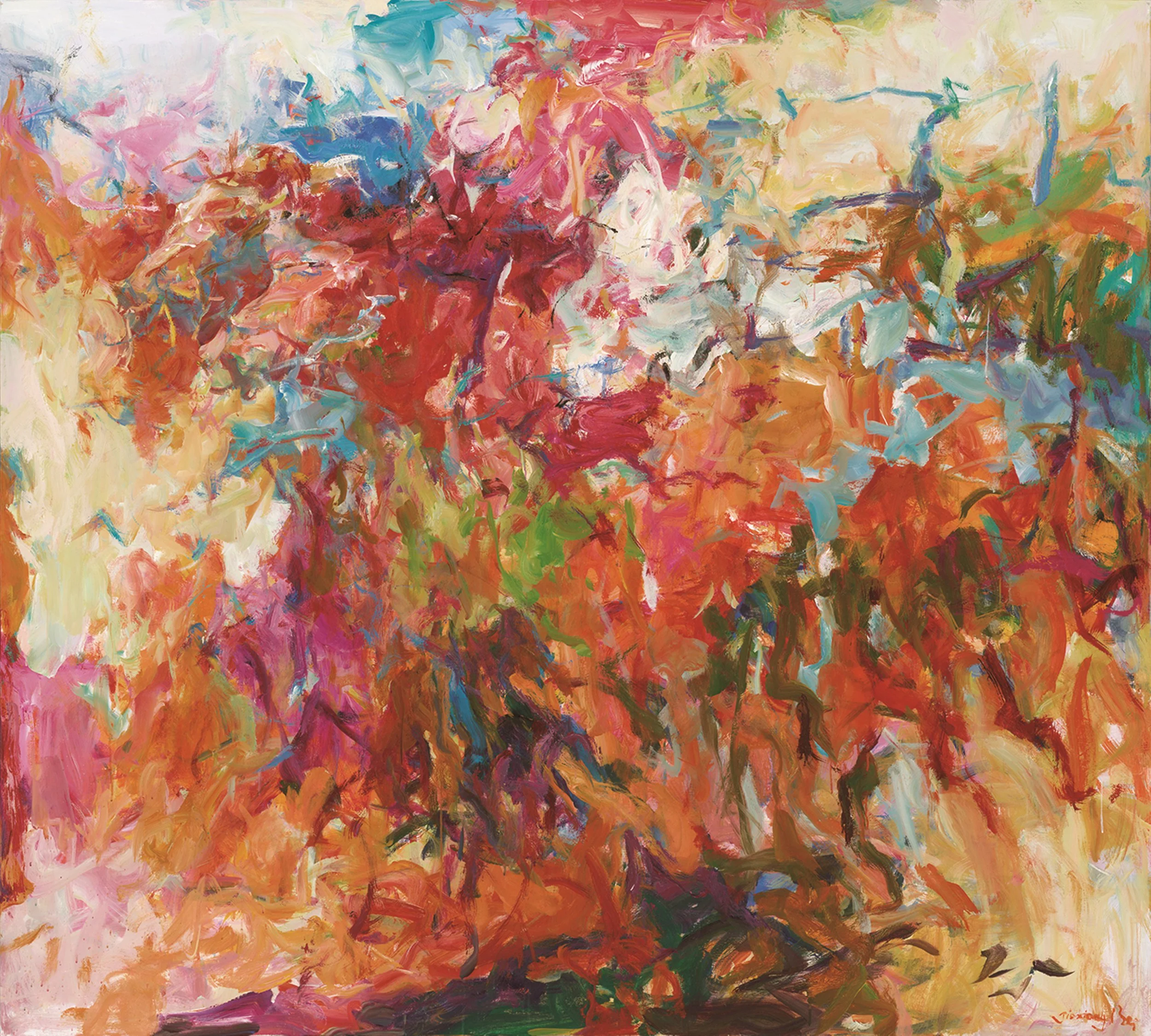
Dashing in the Breeze
Oil On Canvas
200×180cm
BEI Jiaxiang’s Dashing in the Breeze uses a square canvas as its stage, weaving together vibrant orange and magenta as dominant hues with cold-toned lines of lake blue, black green, and indigo to construct a visual tension.
At the center of the composition, the racehorses and riders are thoroughly deconstructed into curved color blocks; the boundaries between limbs and background dissolve within the momentum of speed, as if the galloping horse’s trajectory is sketching ripples of energy through the air. The trembling directions of the color blocks hint at the path of speed, while the cold-colored lines slice across the canvas like blades—evoking the fluidity of ink wash’s “dripping marks” yet aligning with Western Expressionism’s capture of motion.
Although BEI has lived in Australia for years, his creation remains deeply rooted in the inclusive genes of Shanghai Art School. The use of highly saturated colors in the painting shines with Fauvist spirit; the collision of orange blocks releases primal vitality, while the trembling brushstrokes at the edges and the incidental ink wash diffusion further enhance the decorative qualities of the work. The pale hues at the top of the canvas break the density by means of negative space, injecting a sense of breath between the warm tones and the restraint of the cooler ones—forming the dialectical rhythm of “the interplay of emptiness and fullness” in Eastern aesthetics.
The unique value of Dashing in the Breeze lies in its conscious dual cultural identity. Technically, BEI Jiaxiang fuses Chinese and Western brush expressions into a personalized language of “color-block calligraphy”; conceptually, he grafts the literati painting’s spirit of freehand brushwork onto Western abstraction, elevating the traditional subject of the horse into a cross-cultural aesthetic spiritual carrier. The confrontation of color and the interplay of emptiness and fullness in the composition is not only a visual celebration but also a metaphor for the eternal struggle between passion and reason—much like Shanghai Art School’s self-positioning amid globalization: embracing formal innovation of modernity while steadfastly guarding the spiritual roots of local aesthetics.