
Artwork Interpretation: Wind Chaser
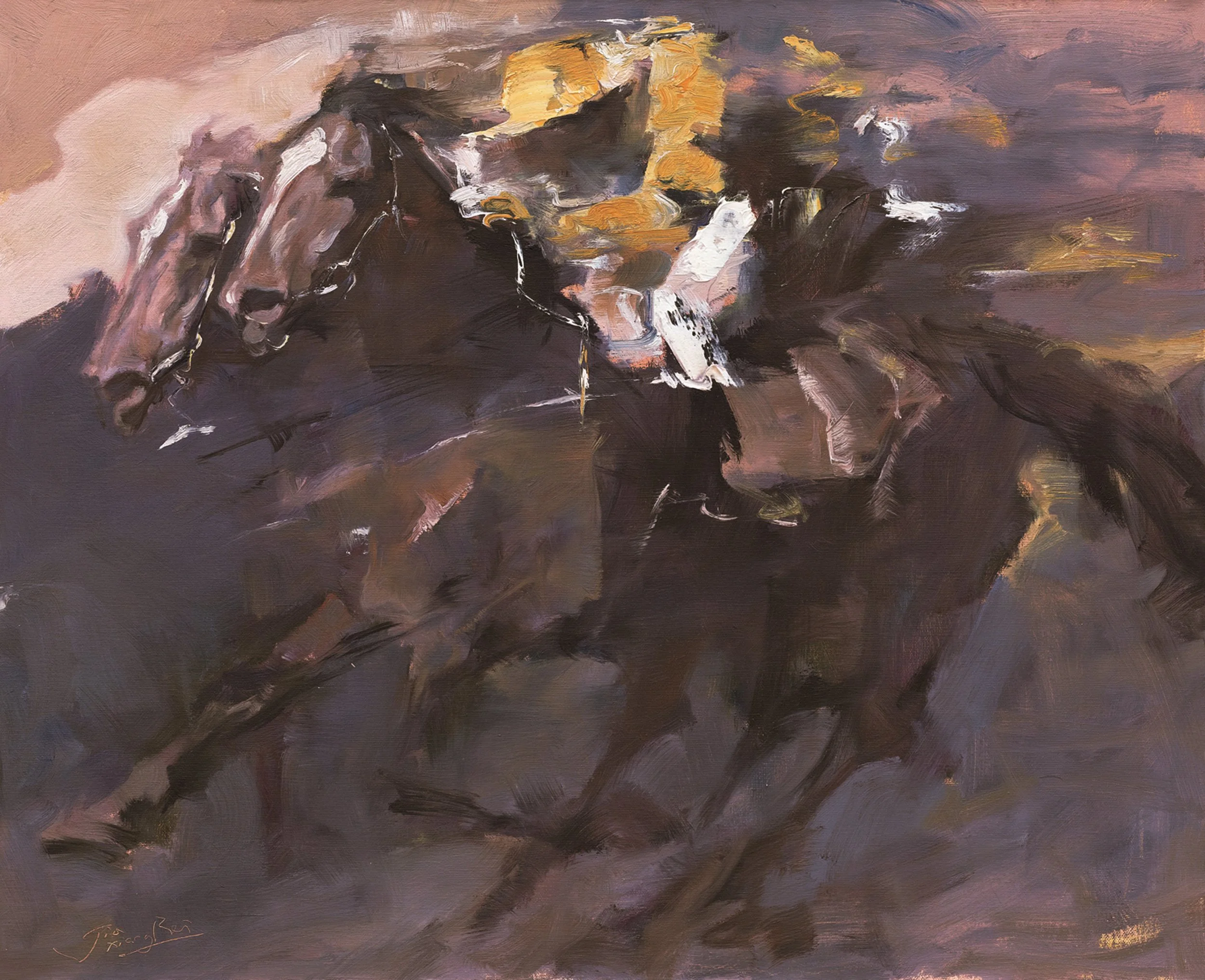
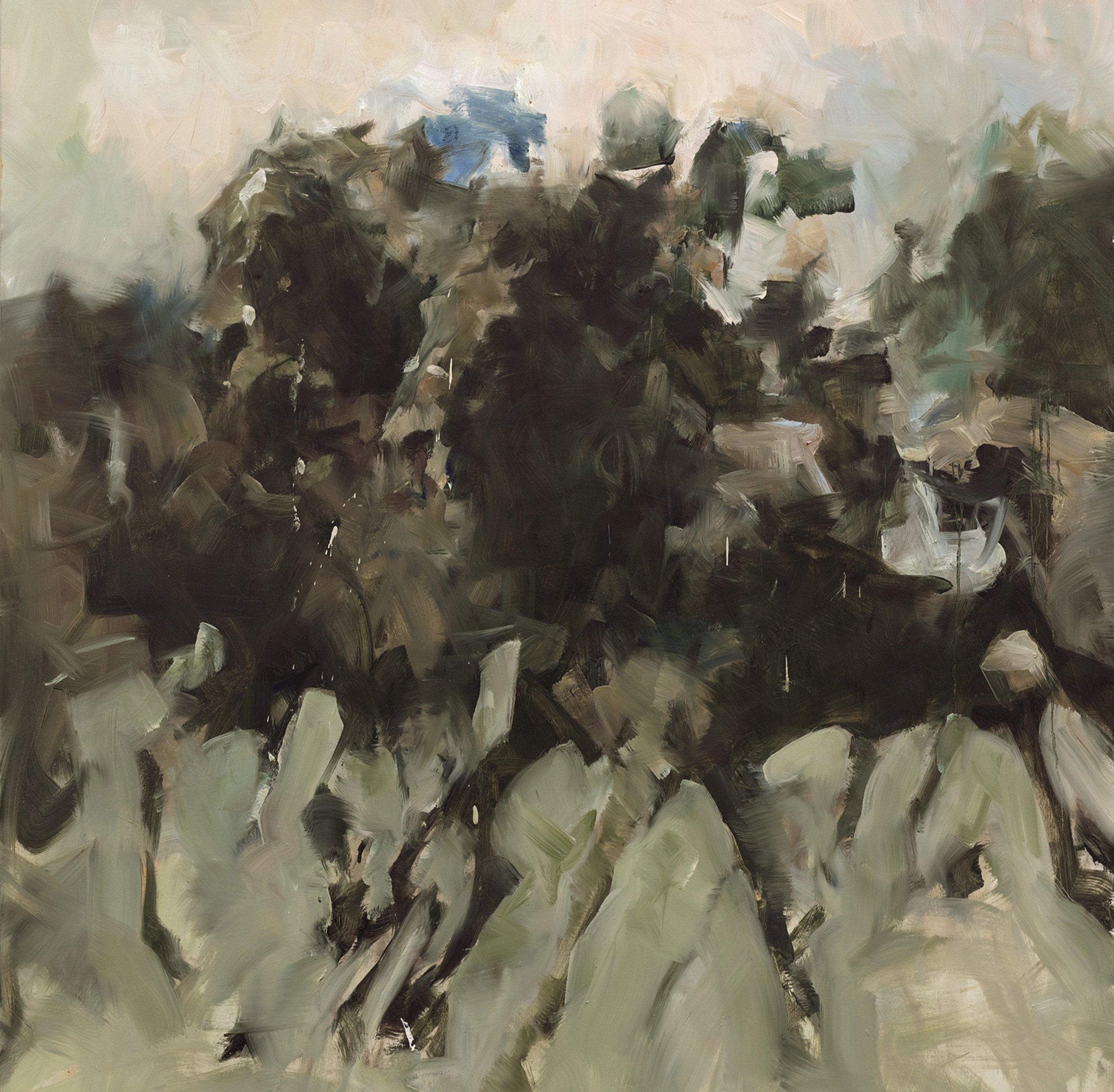
BEI Jiaxiang’s Horse series, with its dual interpretation of speed and memory, becomes another significant work in the artist’s integration of Eastern imagery and Western expressive aesthetics. In contrast to the conventional passion of galloping horses, this series places greater emphasis on capturing the philosophical interplay of the real and the ephemeral within dynamics.
The Horse series breaks through the linear narrative of traditional racing themes, adopting a radiating composition to enhance visual momentum. The herd of horses expands outward from the canvas, creating a centrifugal tension; meanwhile, the large areas of blank space in the corners align with the Chinese landscape painting principle of “reckon blank as inked”.
BEI’s brushwork combines the expressive nature of Eastern calligraphy with the wildness of Western expressionism. He outlines the muscular forms of the horses with thick, rugged applications while employing dry brush strokes to convey the ethereal quality of their manes, producing effects reminiscent of Chinese ink wash. This technique echoes the abstract treatment of animal forms by German expressionist painter Franz Marc while incorporating the concept of “expressing spirit through form” from Chinese literati painting. The horses, blurred into semi-abstract shapes, evoke both the contemporary embodiment of the “Vigor Spirit” in Chinese culture and the deconstructed reimagining of freedom in the epic of Australian pioneering history. BEI intentionally dissolves the physical presence of the riders, allowing the horses to become pure spiritual vessels.
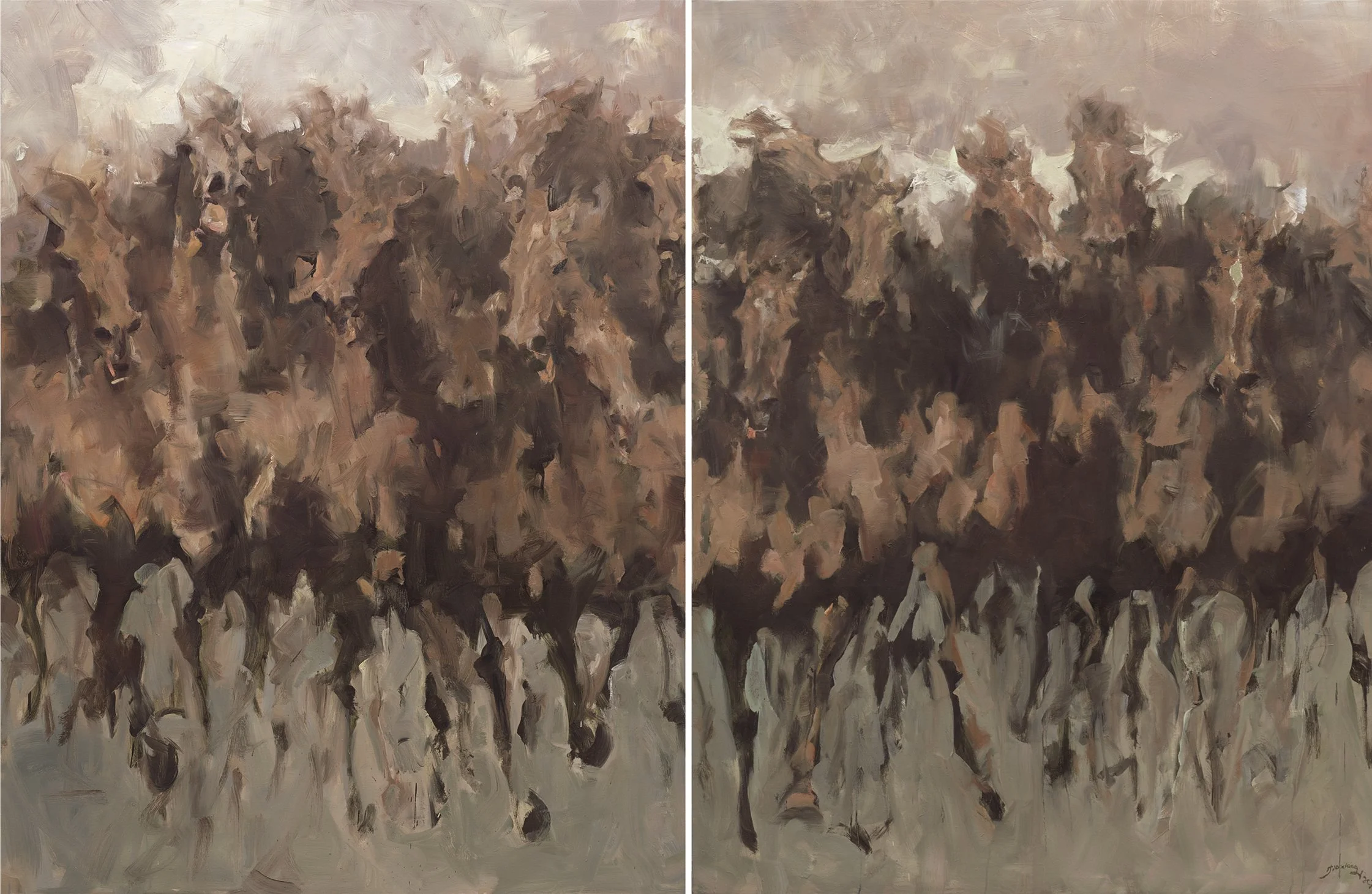
Momentum
Oil On Canvas
150×196cm×2
Thus, the Horse series represents not only BEI’s bold breakthrough in the boundaries of oil painting language but also his aesthetic declaration of cultural identity. By infusing the “imagery” thinking of Chinese literati painting into the dynamic expressive framework of the West, the artist captures the continuity of time within the solidified moments of oil paint. In the rush of the brush strokes, a poetic reconciliation between the East and the West, tradition and modernity is achieved.