
Artwork Interpretation: The Knight
In BEI Jiaxiang’s Knights Series, the aesthetic of color setups a visual battle across cultural boundaries. Amidst the cold mist interwoven with cobalt blue and ultramarine, horses in ochre tear through the spatial expanse with an almost provocative stance. This extreme confrontation between complementary colors and the warm-cool tonalities serves as both a snapshot of the galloping moment and a flowing timeline within an ink wash scroll.
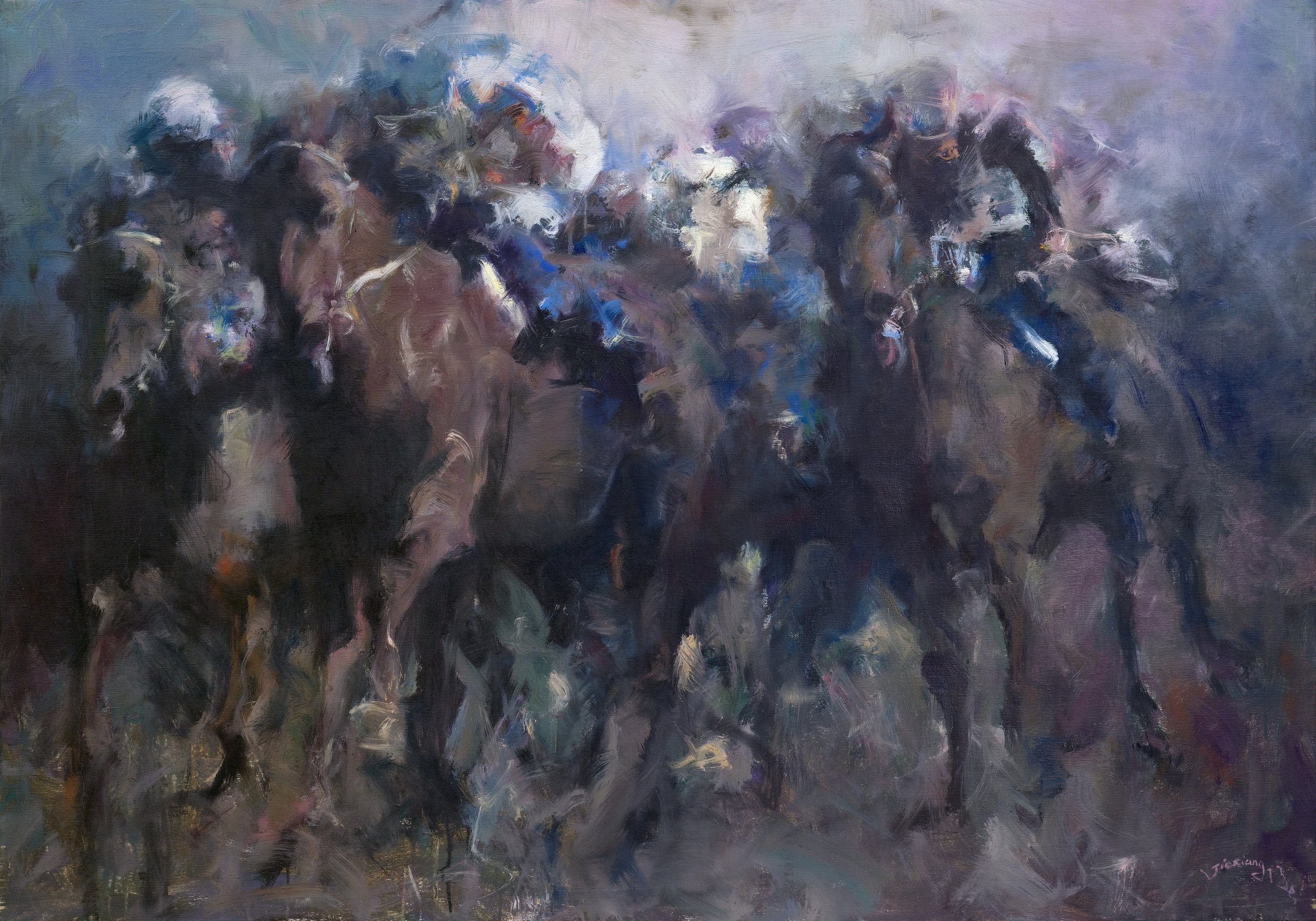
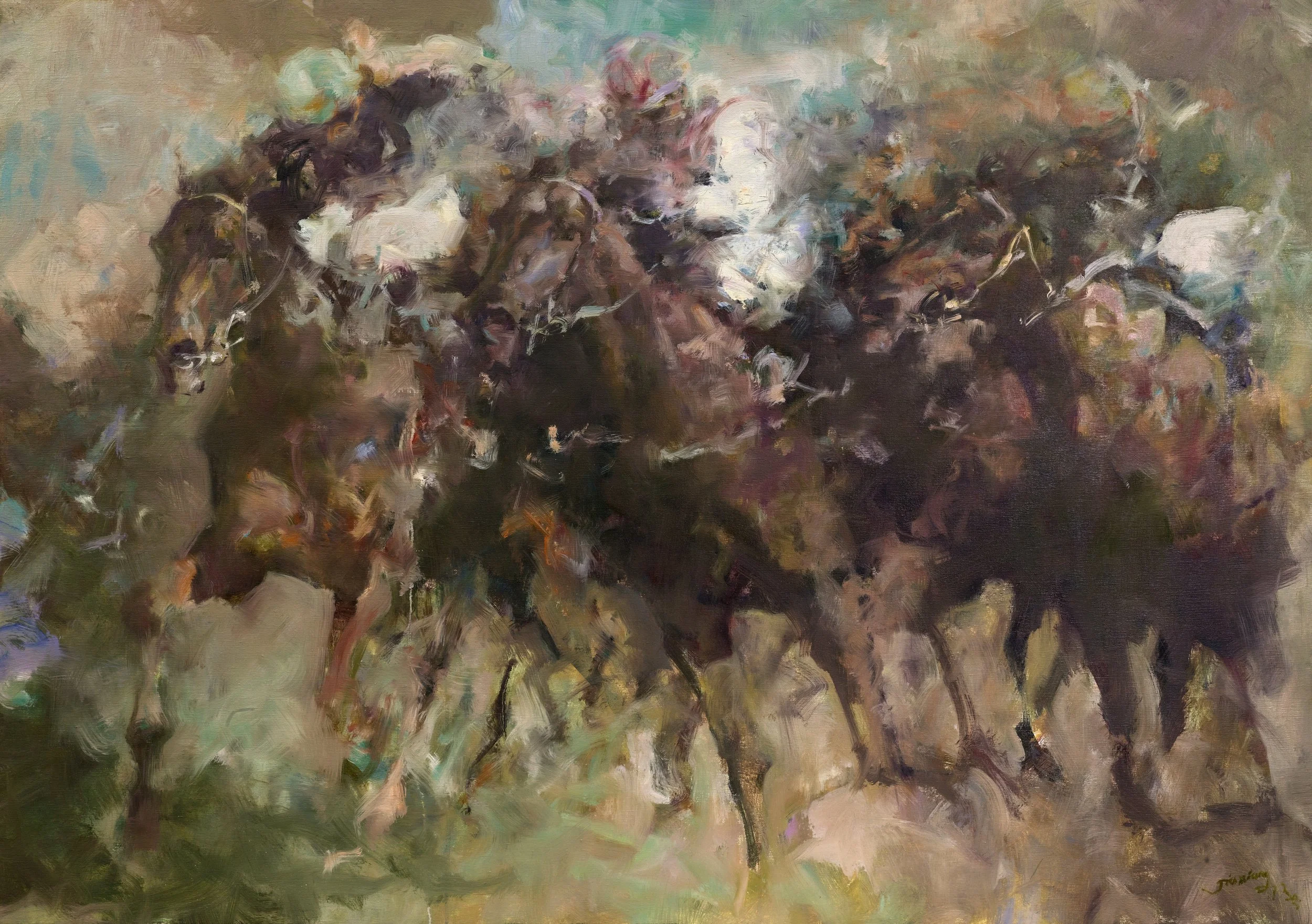
As a cultural wanderer, BEI’s creation always navigates along the dialectics of deconstruction and reconstruction, and the muscular lines of the horses he depicts reveal a unique aesthetic inclination. The precise analysis of horses’ skeletal structure stems from long-term observation at the Melbourne racetrack, while the exaggerated neck curves and body lines clearly inherit the classic forms of Han Dynasty brick paintings. The dynamic portrayal of the leaping horses reflects not only the brushwork and aesthetic interest found in traditional Chinese expressive ink paintings, but also resonates with Théodore Géricault’s romantic capture of movement. This hybridization of dual genes crossing two cultural systems reaches its peak in the Knights series.
In contrast to the characterization of the horses, the riders on their backs remain indistinct. BEI uses silver-gray strokes dragged horizontally with a palette knife to suggest the contours of the riders, whose forms are often simplified into fluid linear structures that blend seamlessly with the horse’s tail. The contrast between the tangible presence of the horses and the ethereal shadow of the riders is intentionally emphasized, achieving a spiritual pursuit of man and horse as one.
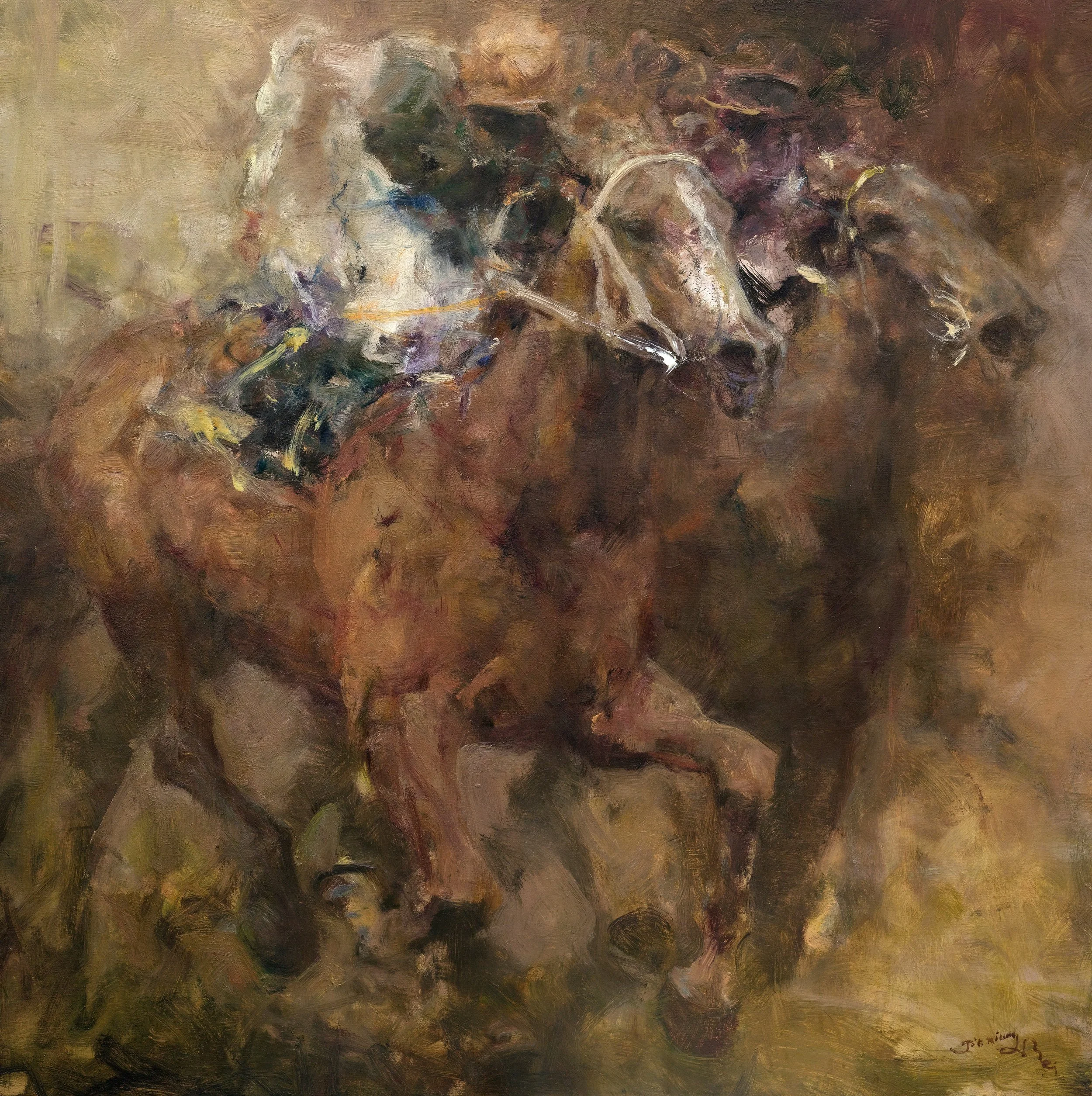
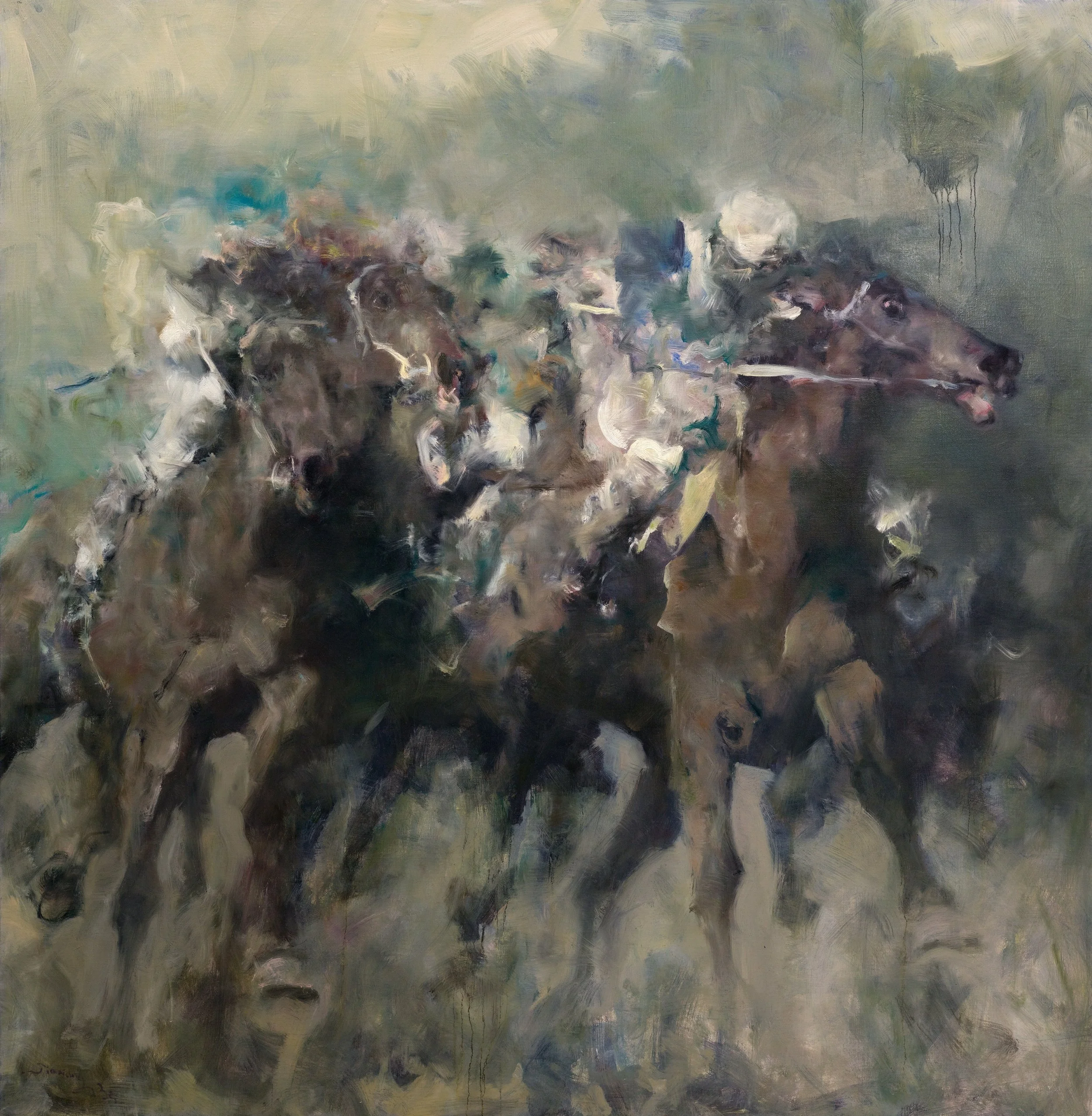
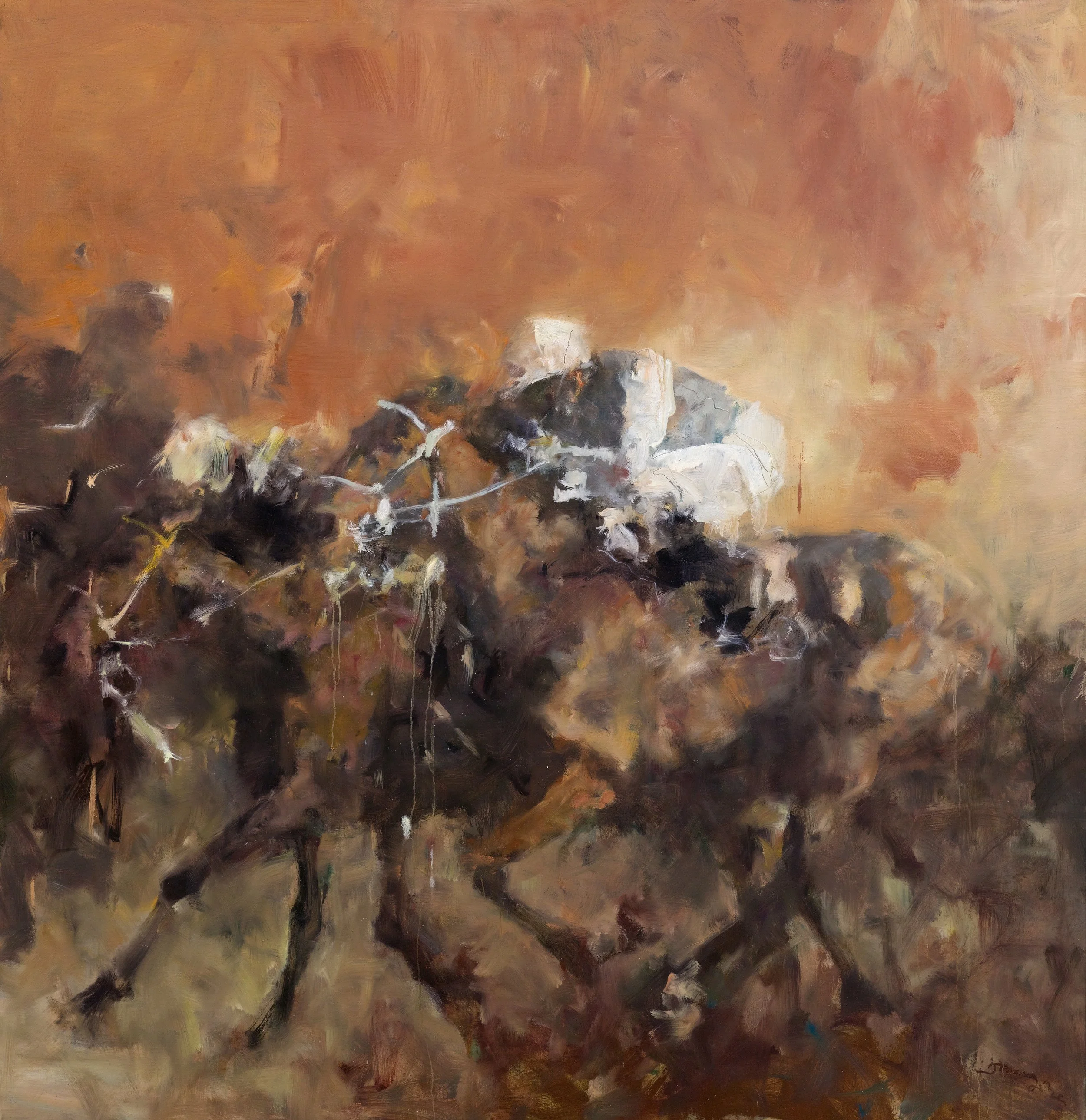
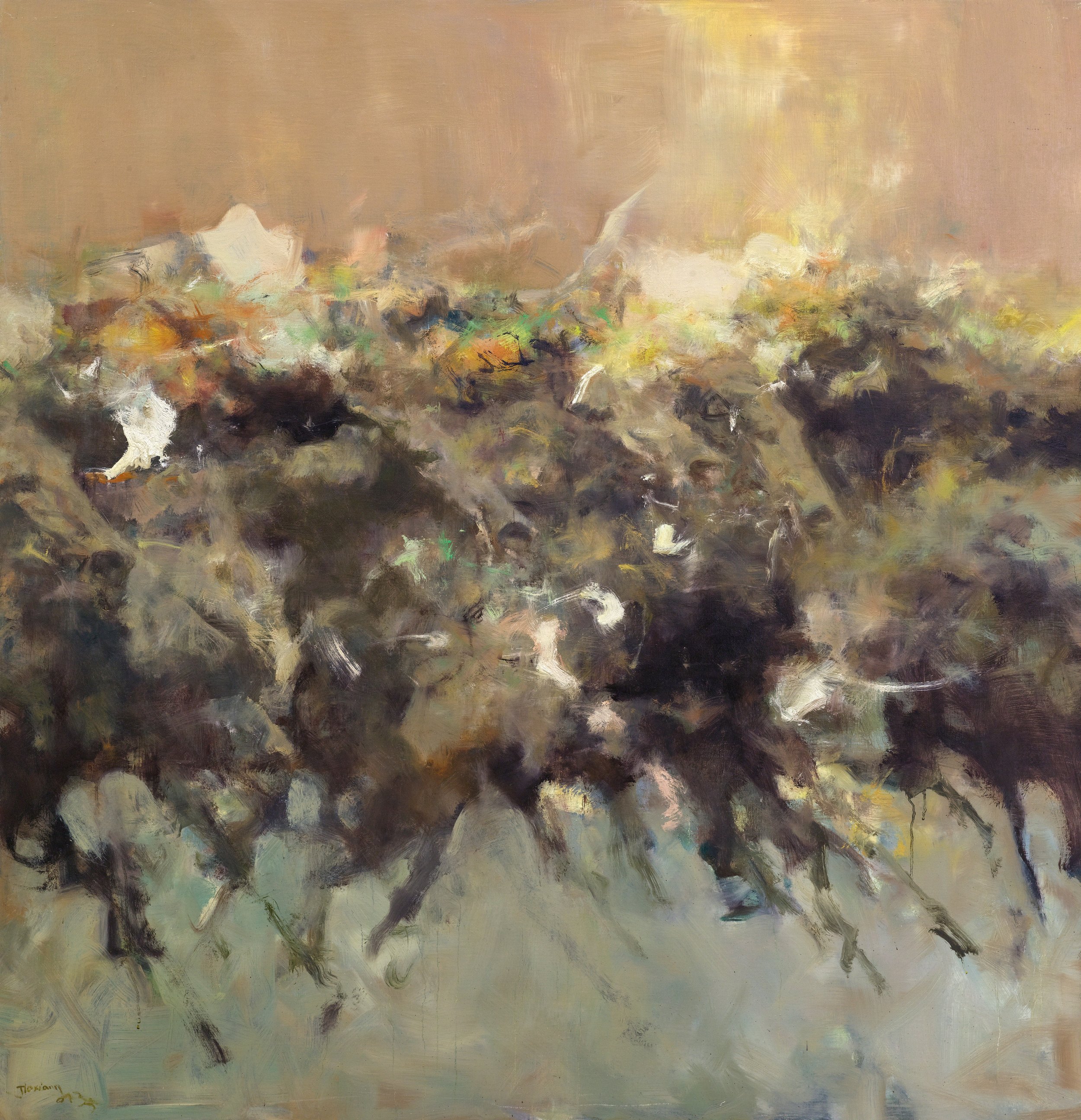
These horses, wandering between the concrete and the abstract, the East and the West, tradition and contemporary styles, are not only metaphors for BEI Jiaxiang’s personal creative journey but also indicate a paradigm shift in contemporary art production within a cross-cultural context—reborn in deconstruction, fused in confrontation, and reaching new aesthetic realms in the fervor of gallop.