
Galloping Like Orchid
In the fragmented neon reflections of Shanghai Bund, the silhouette of a qipao drifts amid monochromatic hues; at Melbourne’s racetrack, the charged manes of galloping steeds tear through the air like flames; within the interplay of lights in midnight’s dimly lit bars, intertwined limbs transform into flowing rhythmic lines. These seemingly disparate images converge under BEI Jiaxiang’s brush, weaving a romantic ritual that traverses East and West. When the vibrant depths of Western oil painting meet the ethereality of Eastern literati, BEI with four decades of mastery, forges countless nuances of noble yet unpretentious orchid-like grace within this spiritual realm.
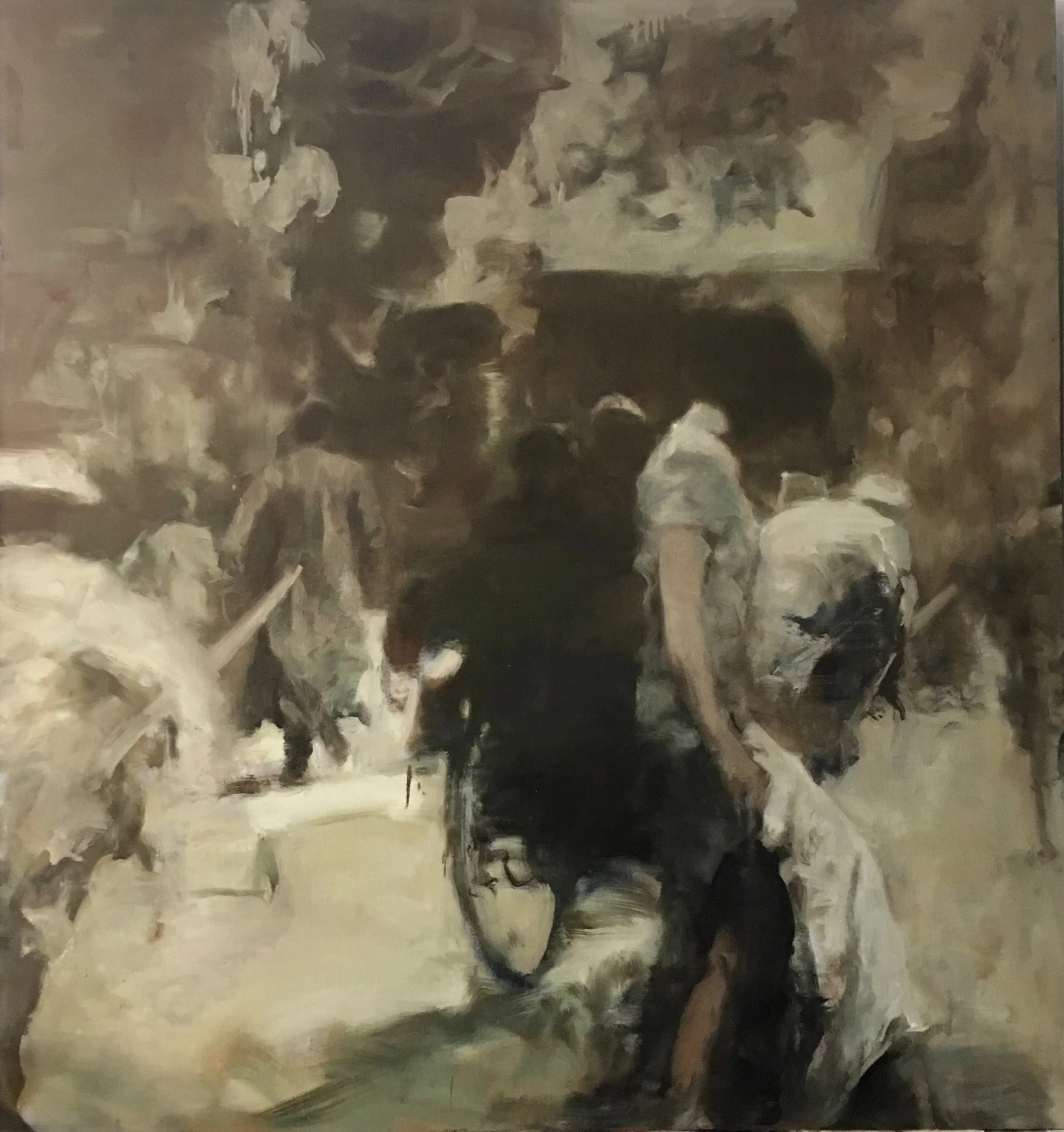
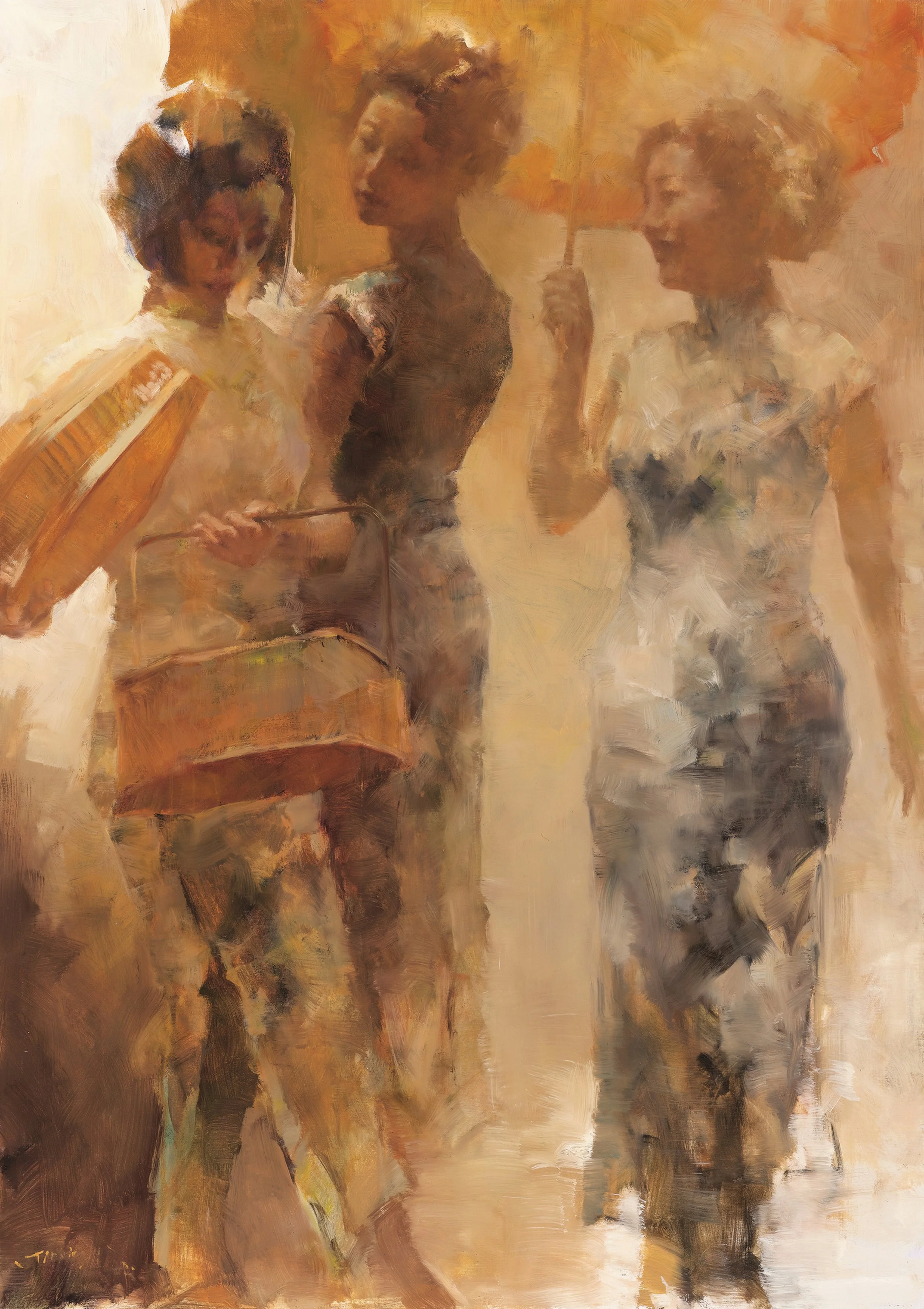
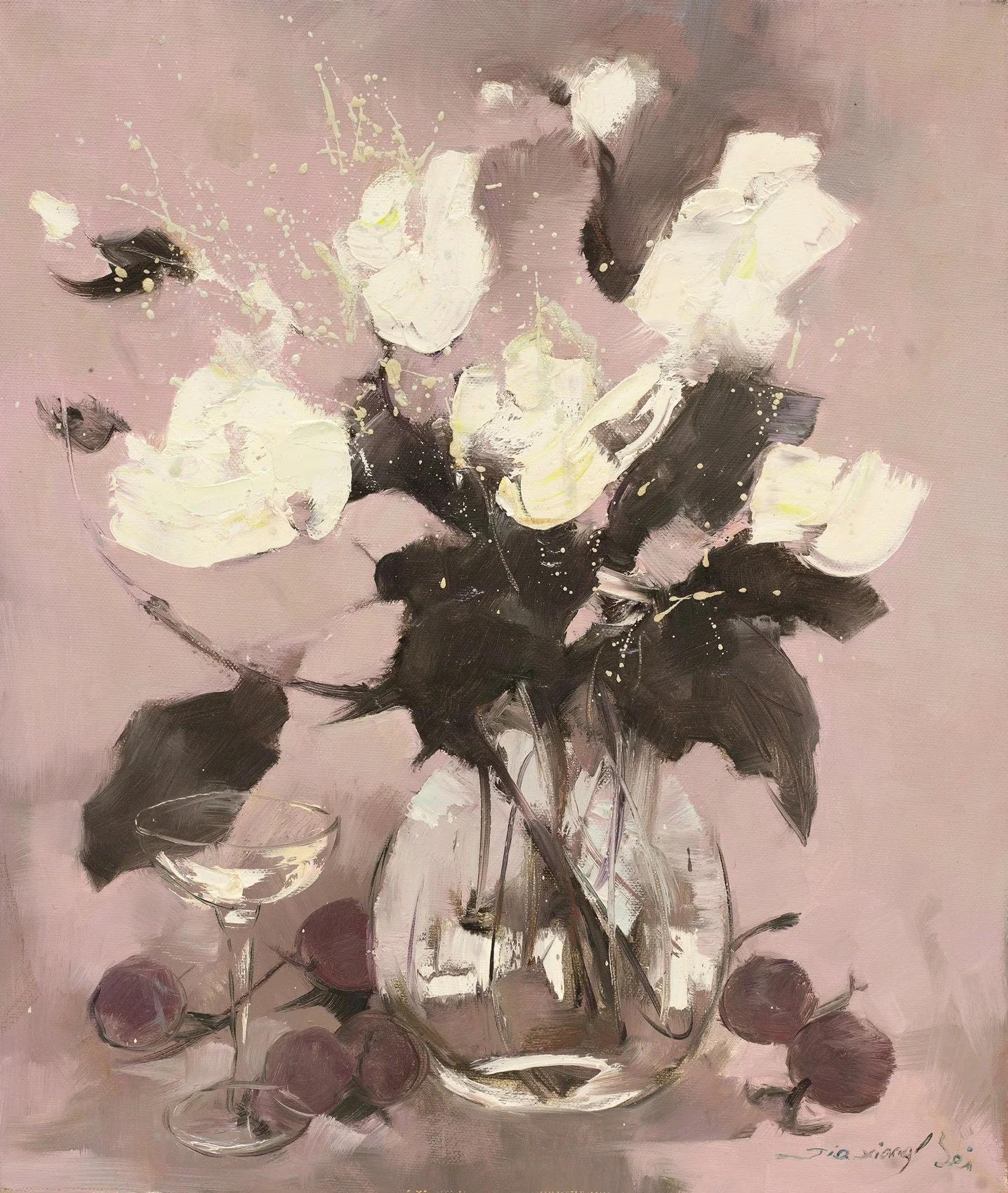
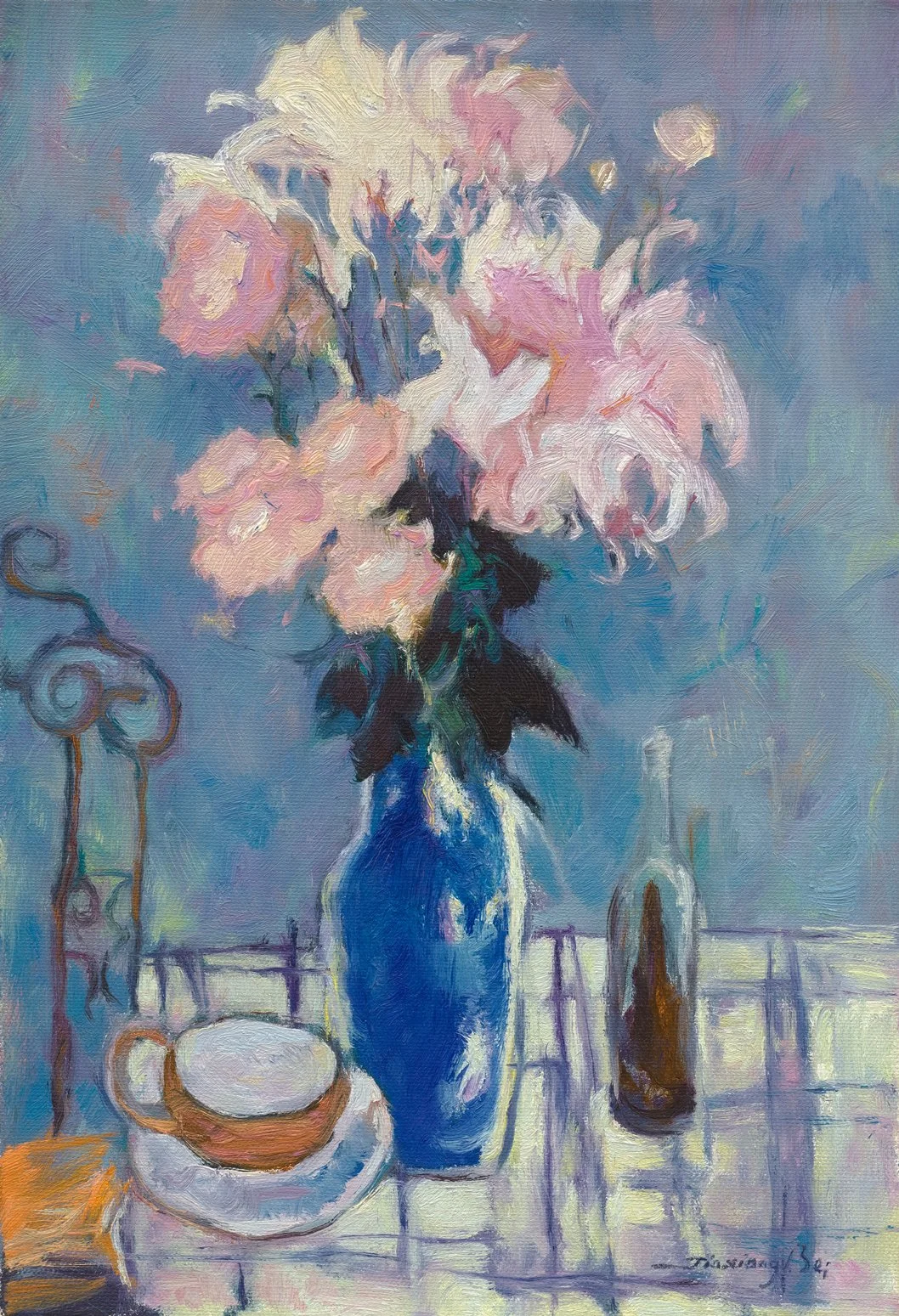
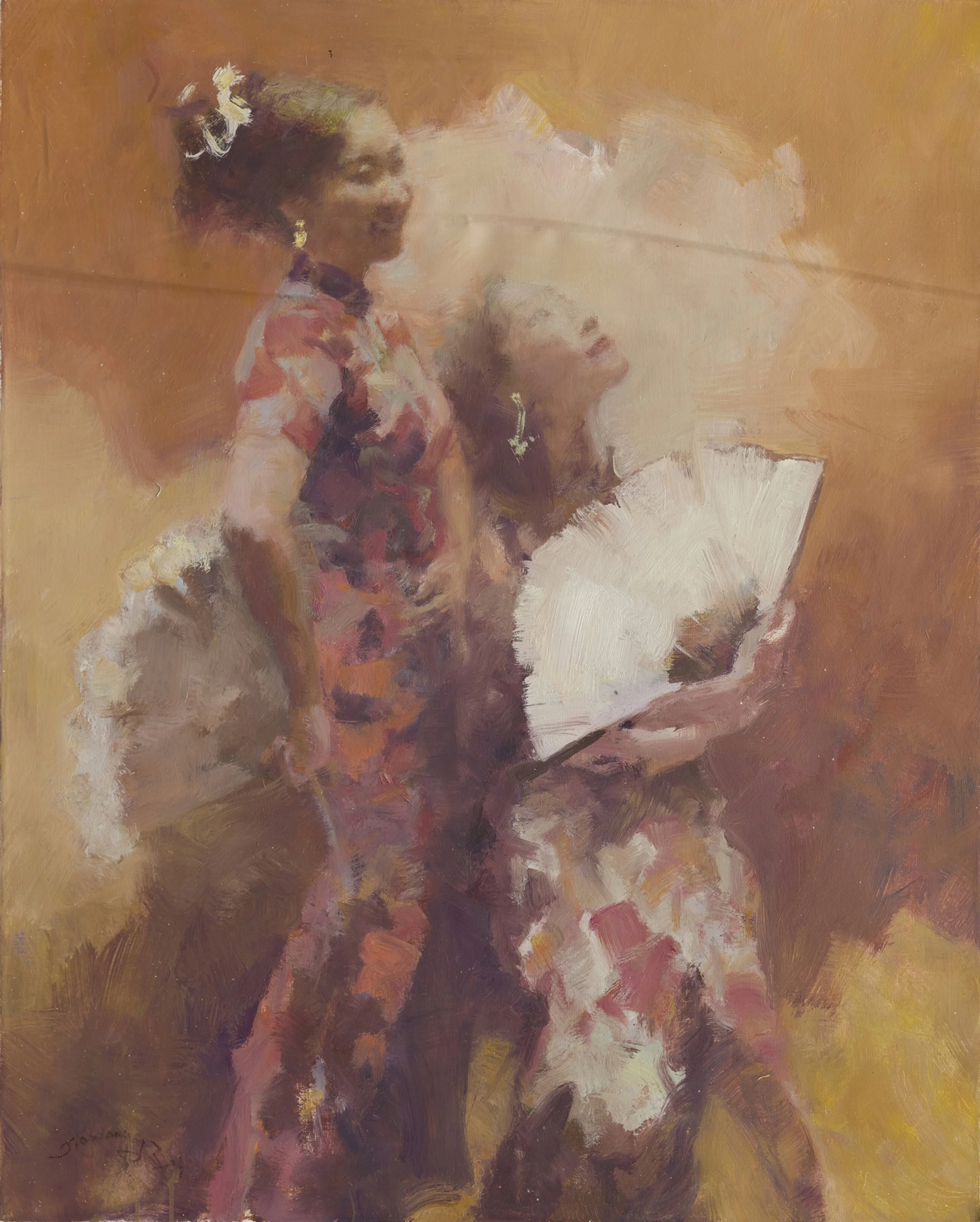
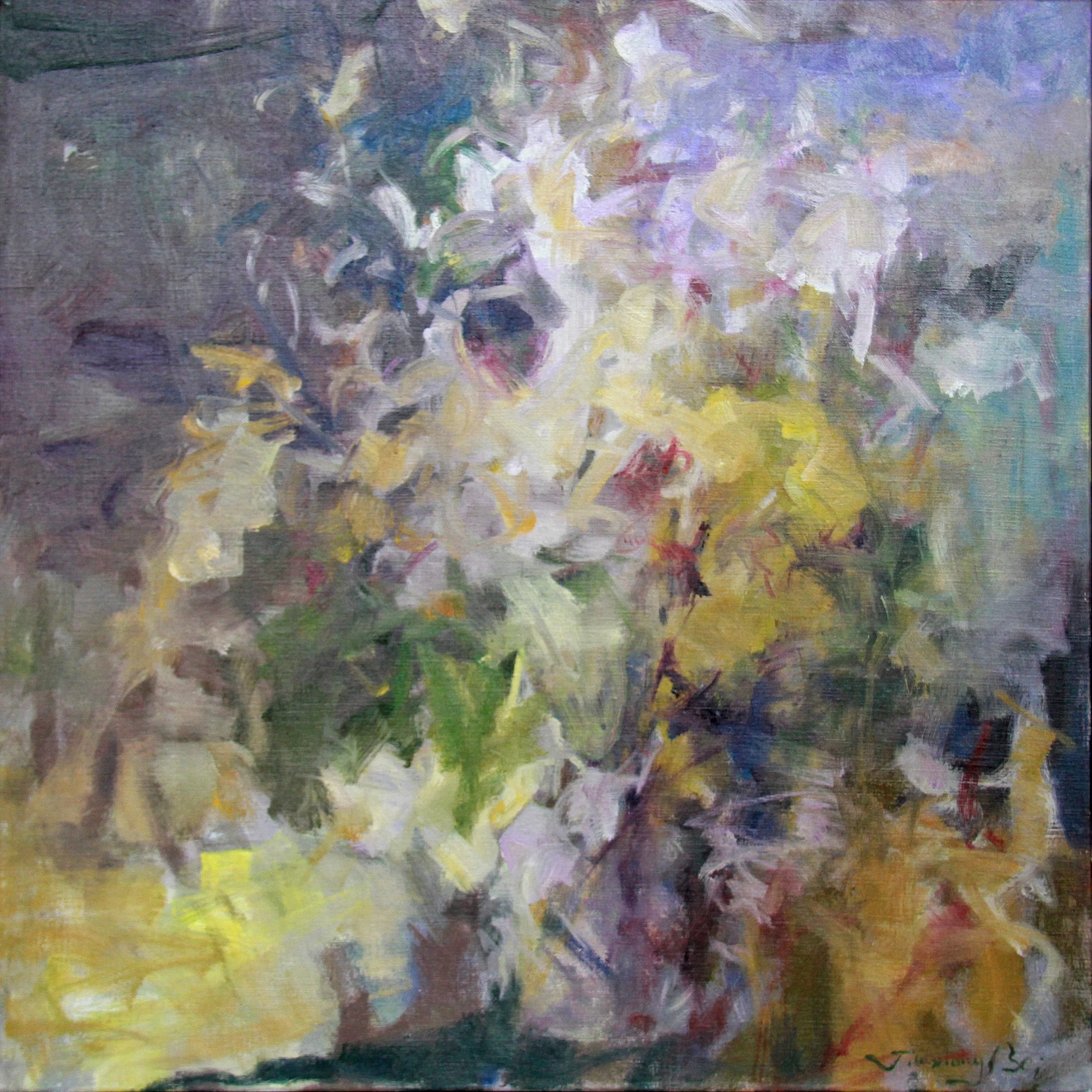
His aesthetic is rooted in the philosophy of “moderation.” In the Flora series, blossoms are set against vast emptiness—such contemplation of “void” echoes Morandi’s silent bottles, embodying a comparable meditative tranquility. While in the Shanghai Dialect series, the figures of alleyway women are often shrouded in Prussian blue twilight; yellow parasols and amber earrings serve as focal points, reminiscent of Vermeer’s luminous pearl, a small beacon that illuminates darkness. The intricate embroidery on qipao is not meticulously rendered but carved with a palette knife, revealing silvery cracks; and the vacant spaces on faces subtly expose the underlying canvas texture. This pursuit of “ingenious from emptiness” and the dissolution of figurative details elevate the artwork’s presence through controlled void, imbuing it with divine serenity.
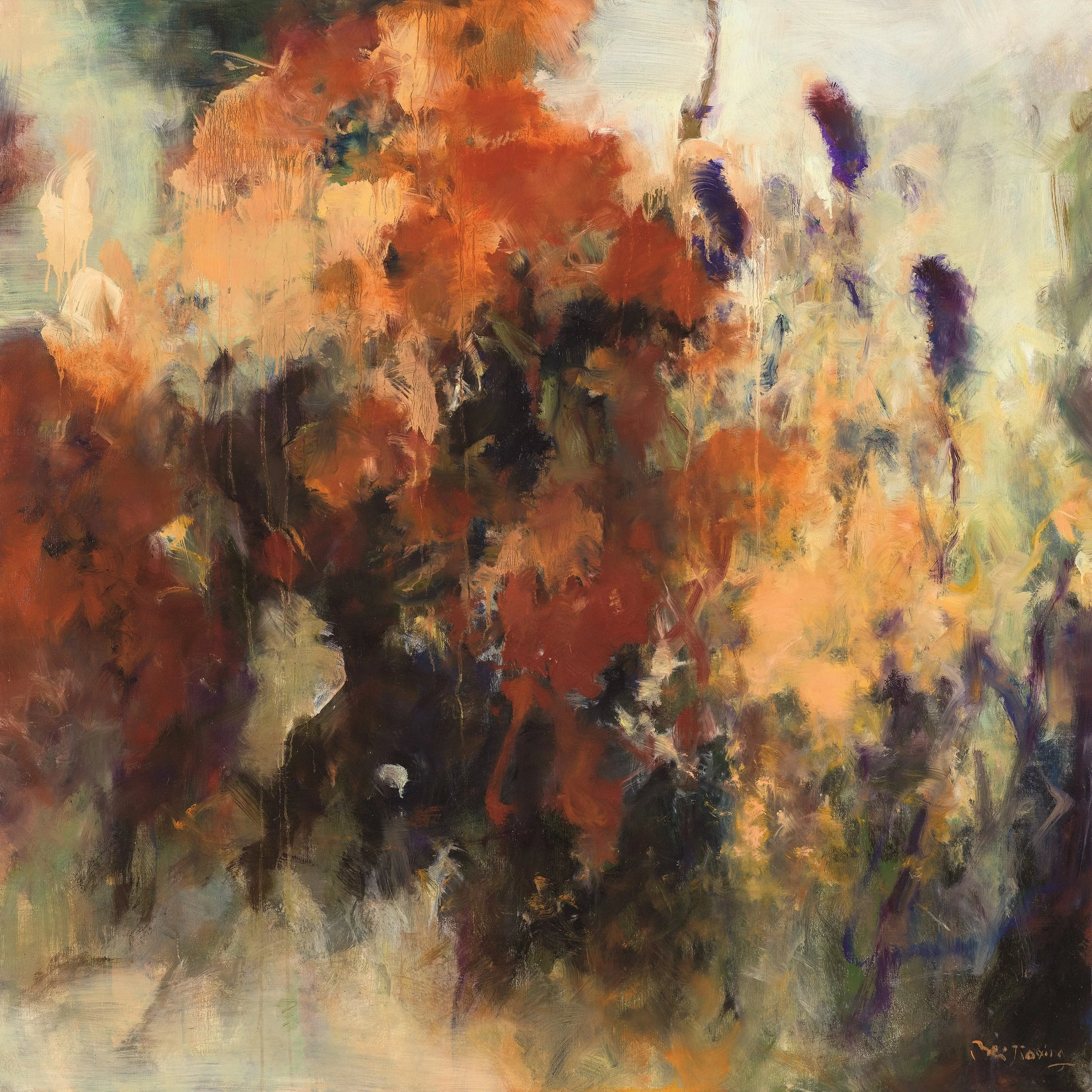
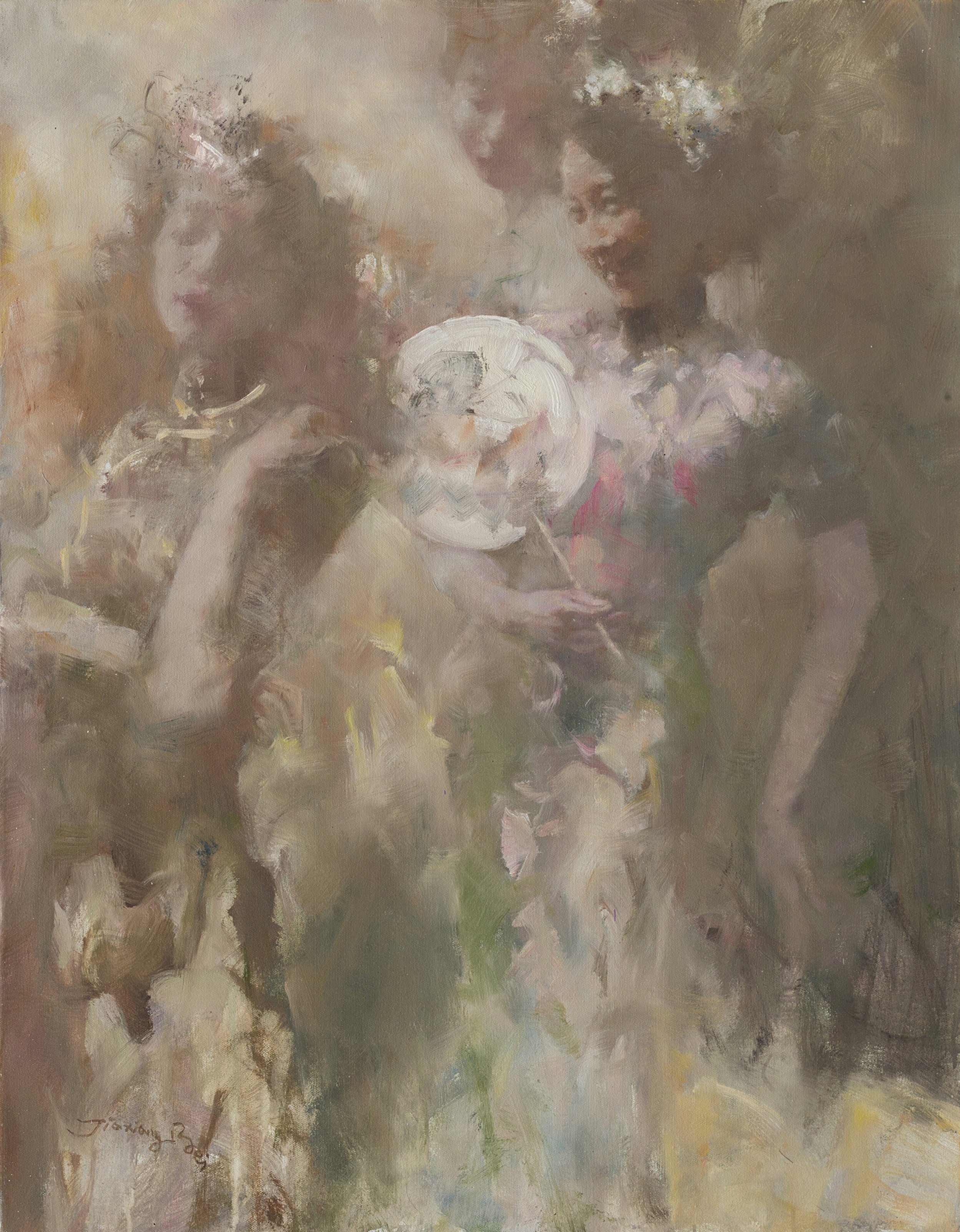
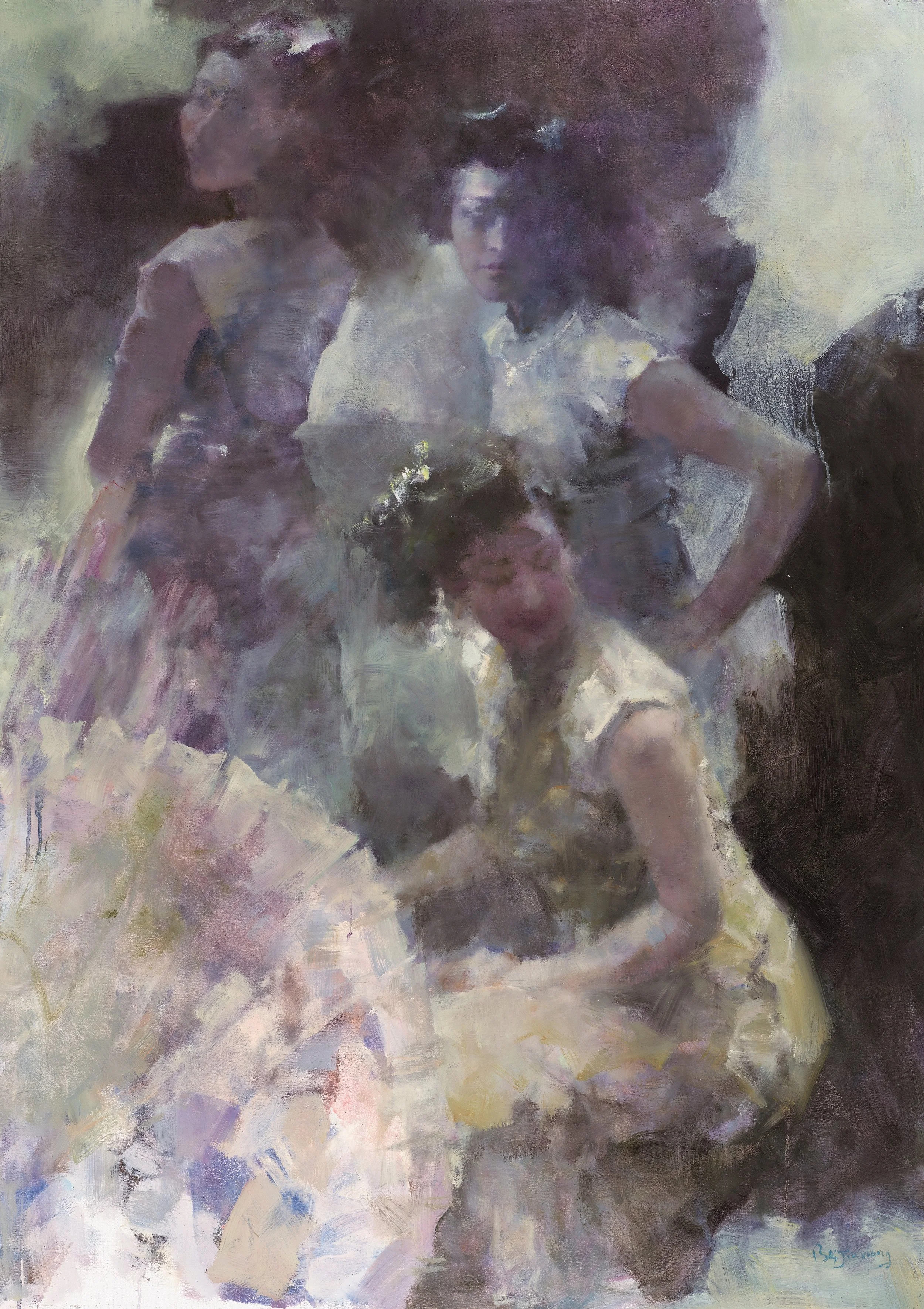
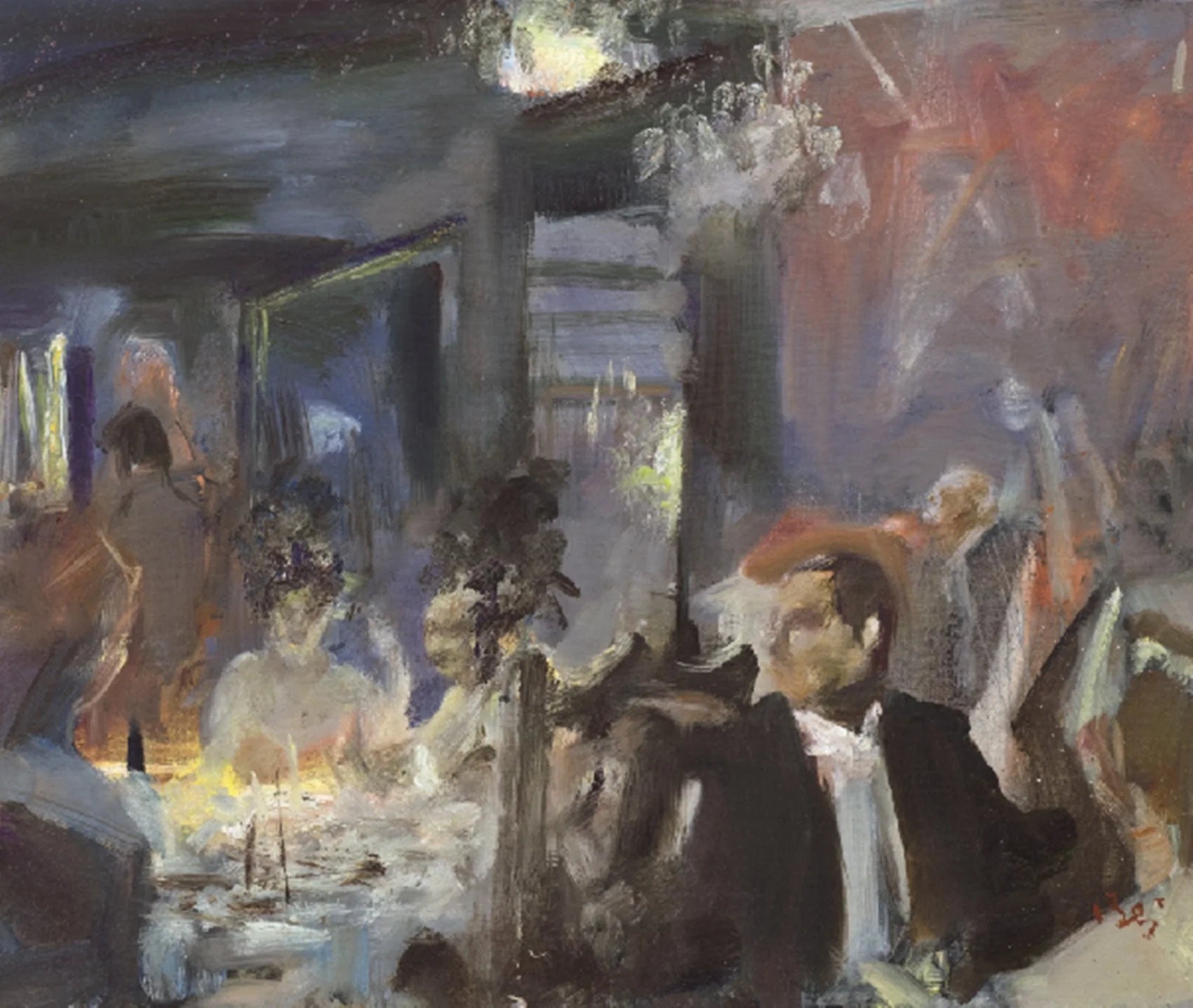
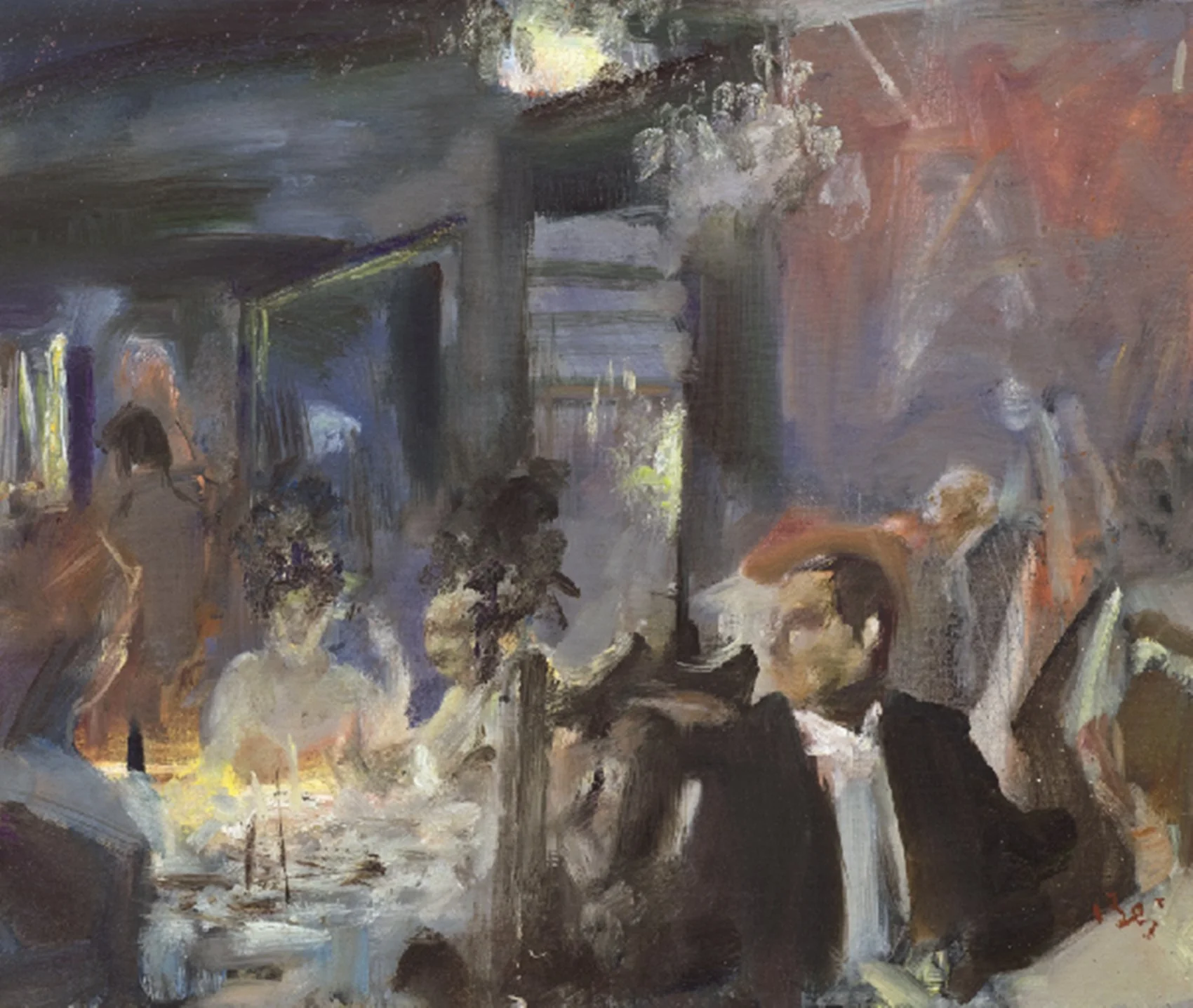
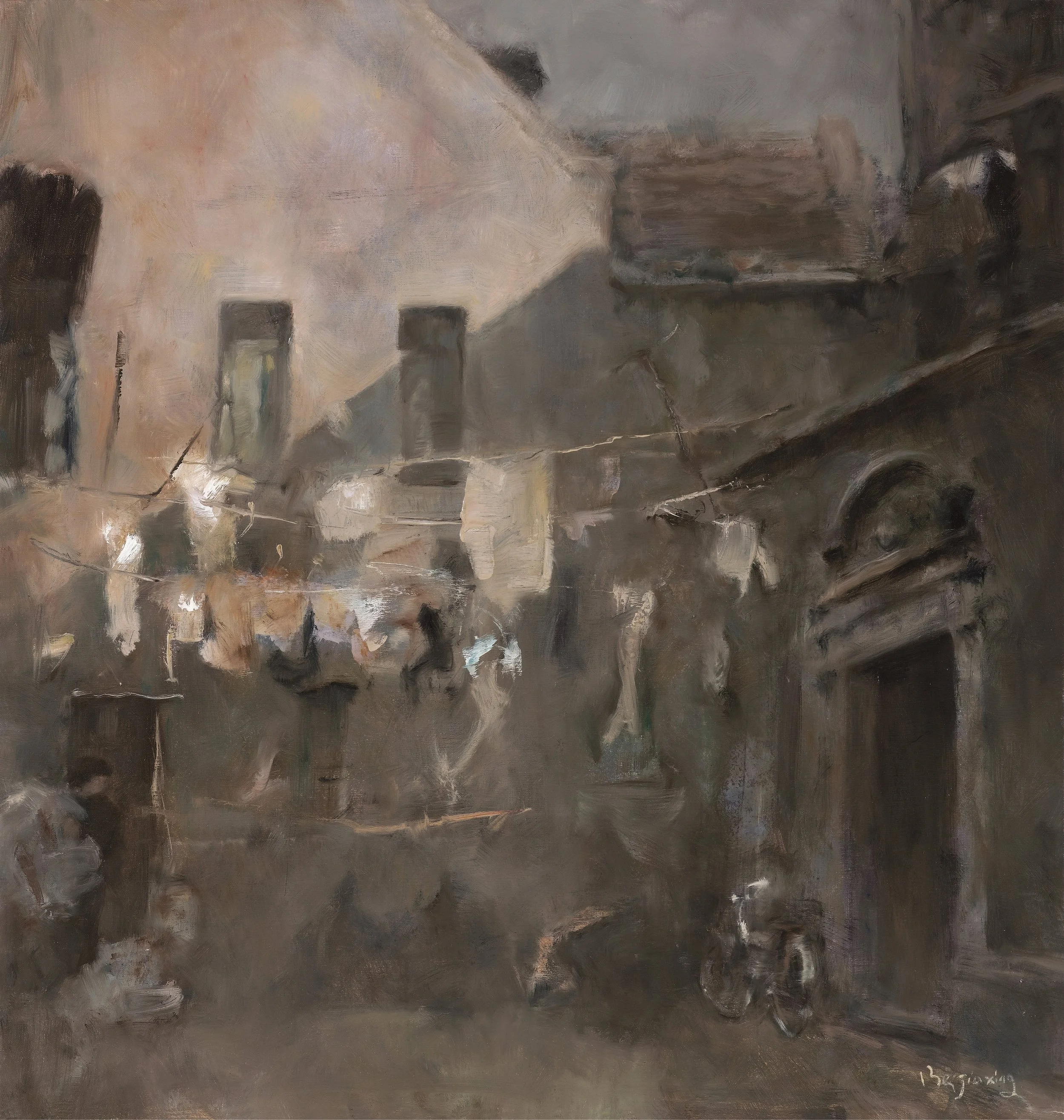
Another profound aspect of BEI’s aesthetic lies in “alchemy”, as he can always effortlessly transform the vulgar into the sublime. In the Bar series, dazed men and women, caught between cobalt blue and chromium yellow, evoke the sacred scene of Dionysian festivals. Wine glasses are depicted as silver-gray streaks, as if the beast motifs on bronzeware reviving under neon light. BEI’s ability to refine urban fumes into poetic grandeur evokes Rembrandt’s mastery in infusing worn wools with divine light. In the Shanghai Dialect street scenes, torn floral garments hanging on clotheslines intertwine with mottled walls, transforming rough realities through subtle gradations of gray into rhythms akin to calligraphic stroke — the harsh edges of life imbued with aesthetic dignity.
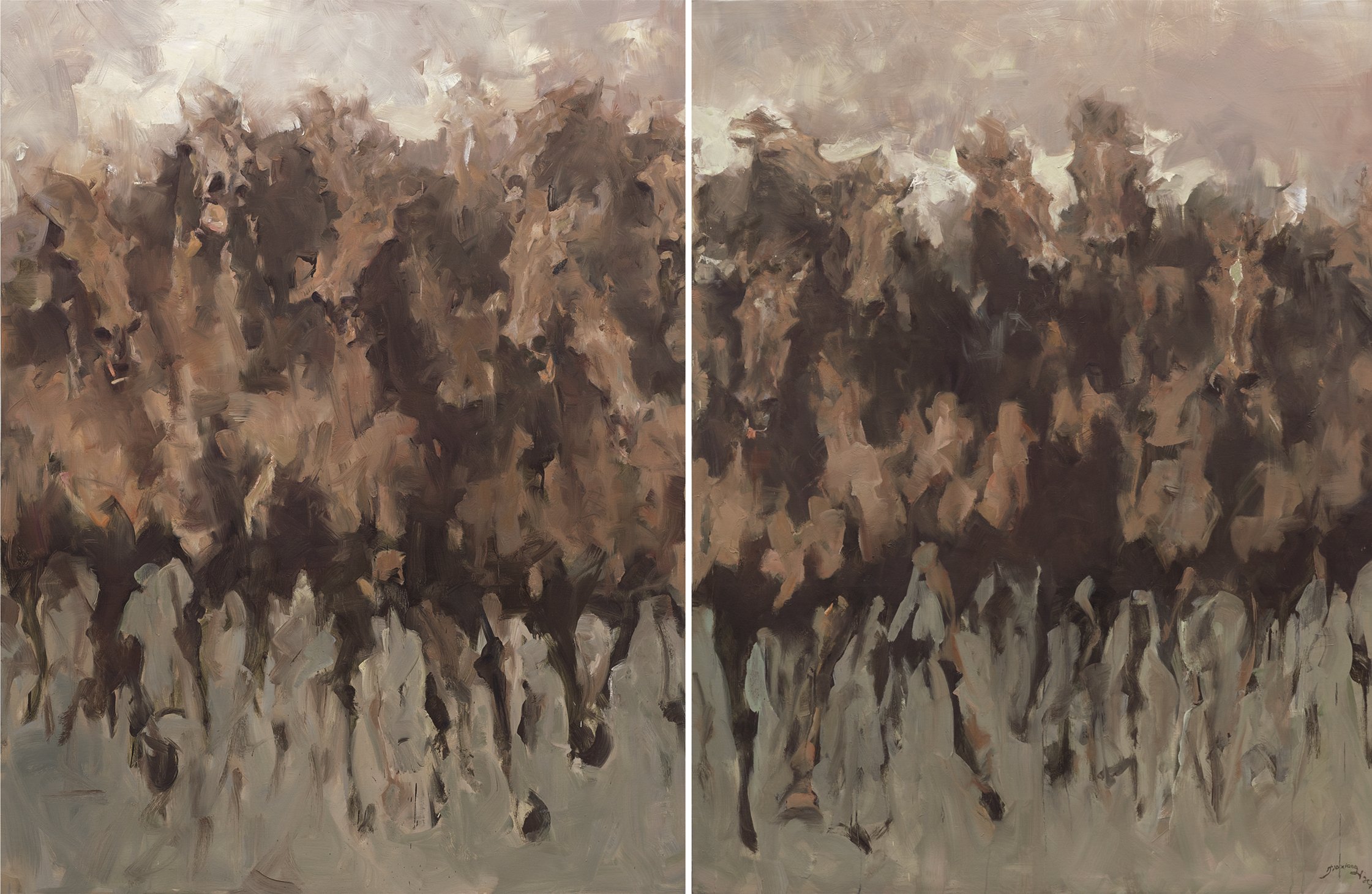
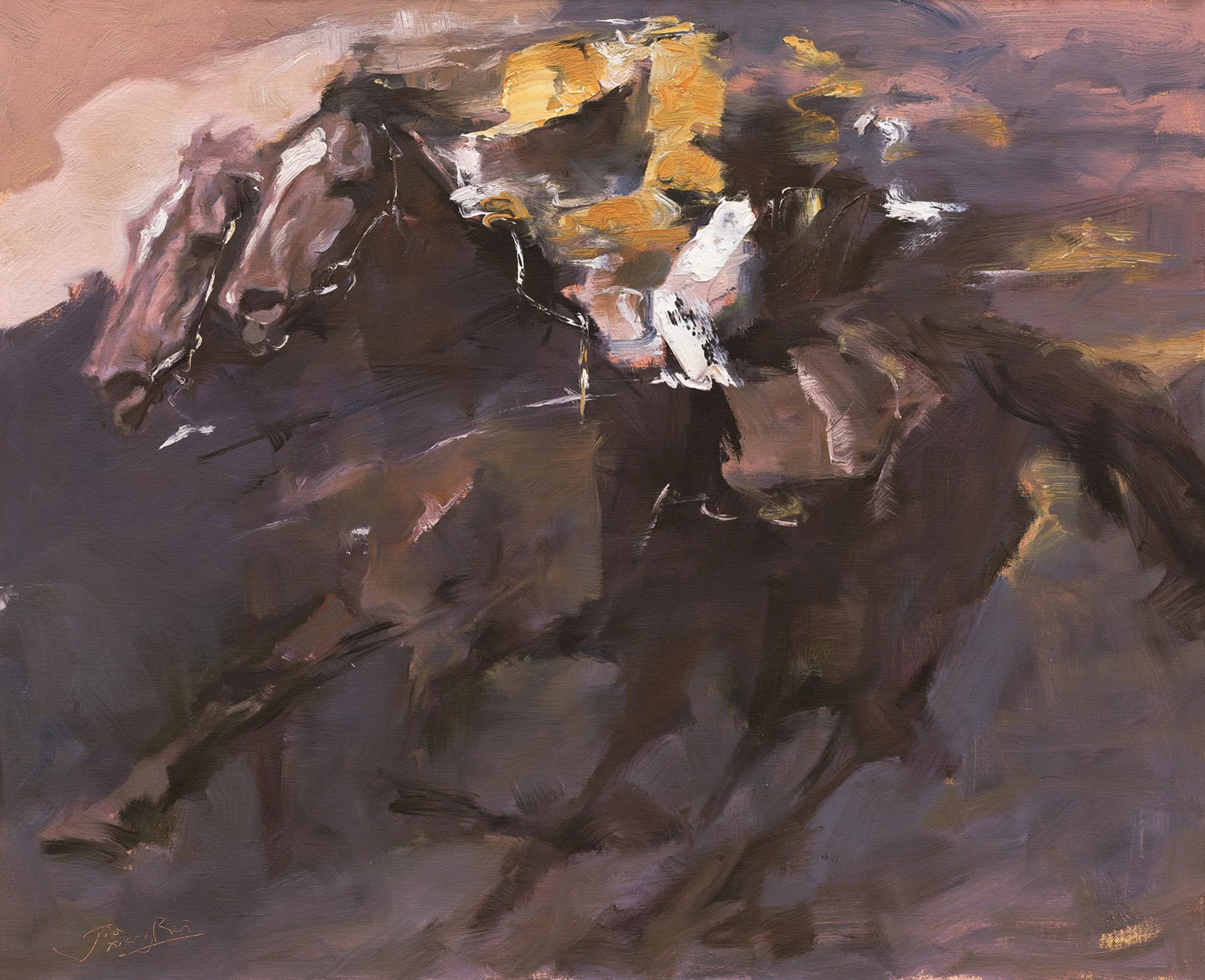
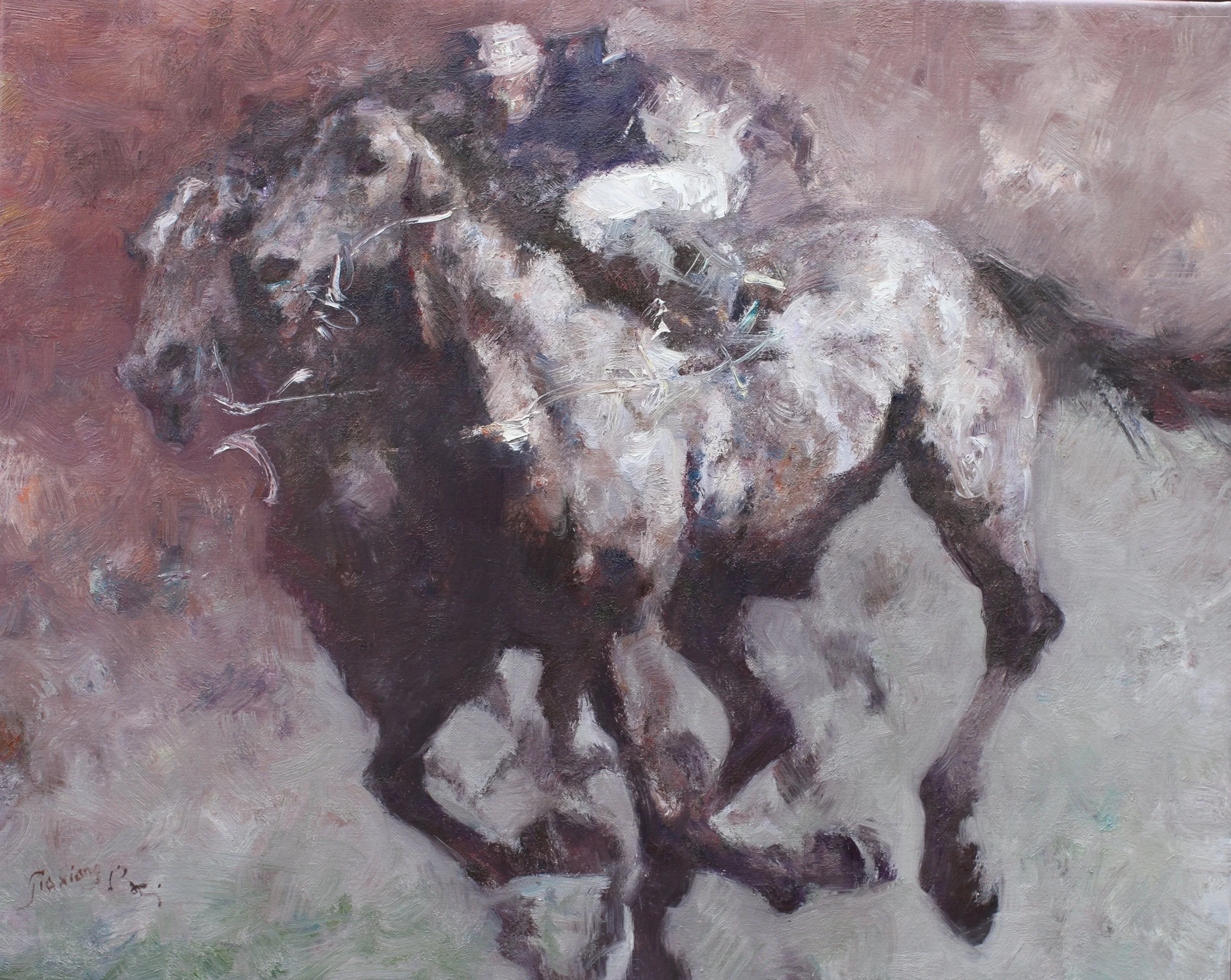
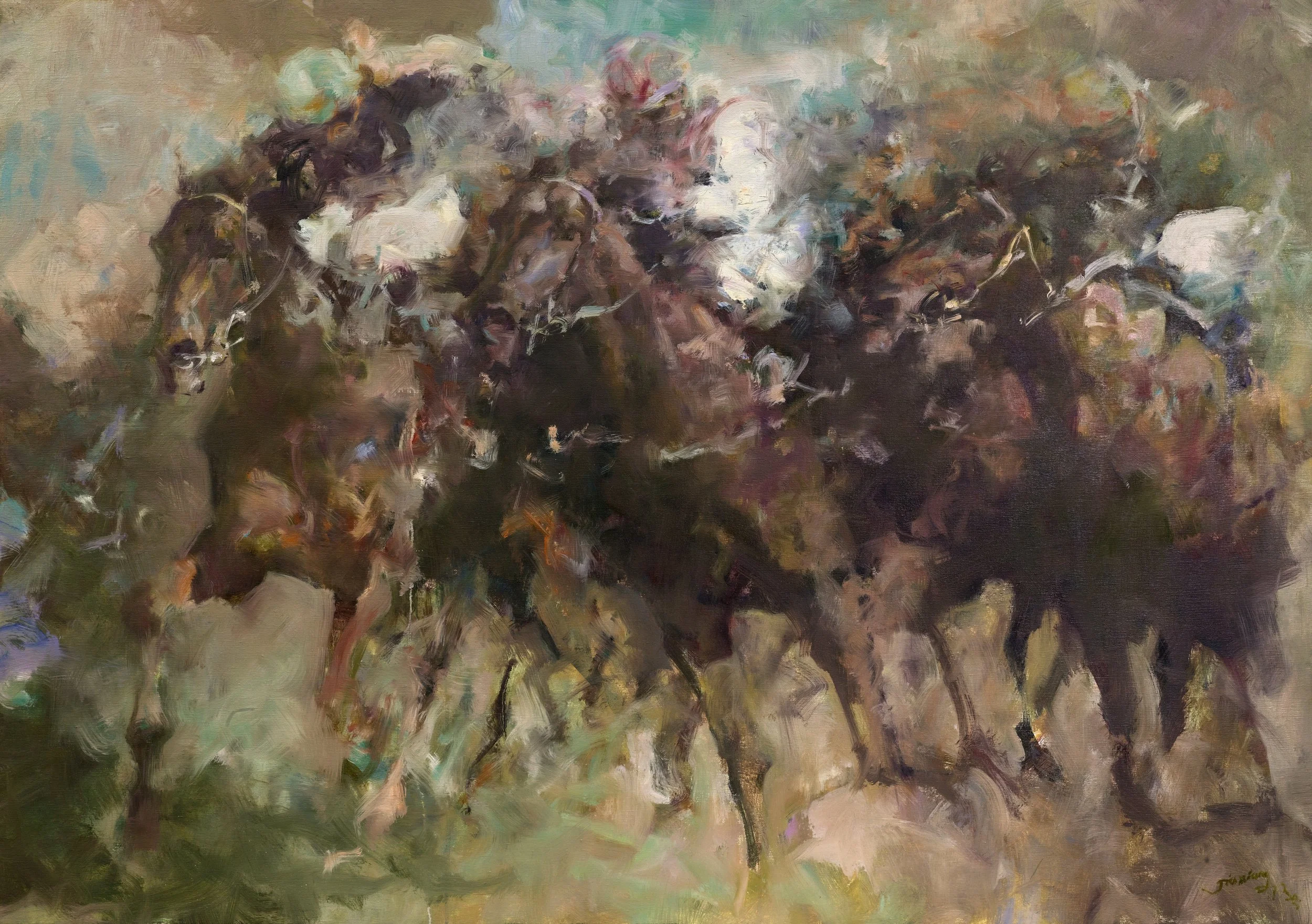
And this noble aura is further elevated into a metaphysical realm within the Galloping Horses series. The unleashed steeds gallop, with manes frozen in brushstrokes as sharp as blades and axes, while the pounding of hooves splatters not only pigment but also cosmic dust scattered across the sky. Much like ZhENG Banqiao’s depiction of bamboo transforms from “bamboo in the eye” to “bamboo in the heart,” BEI’s heart harbors countless raging horses as well—when he manifests horses, both objects and self dissolve, leaving only an unrestrained outpouring of vivid life passion.
Ultimately, BEI’s work embodies a dignity rooted in ancient culture. In the Opera series, flowing water sleeves become swift strokes of oil paint; the vividness of facial paintings sinks into solemn hues. BEI does not simply replicate stage splendor but re-embodies the soul of Chinese opera, asserting a cultural consciousness that is neither servile nor boastful. This awareness, rejecting mere symbolization, breathes new life into millennia-old patterns through the rhythmic pauses and whites of his palette knife, allowing the graceful and majestic spirit of traditional opera to seamlessly fuse with the texture of oil painting—without proclamation yet imbued with reverence.
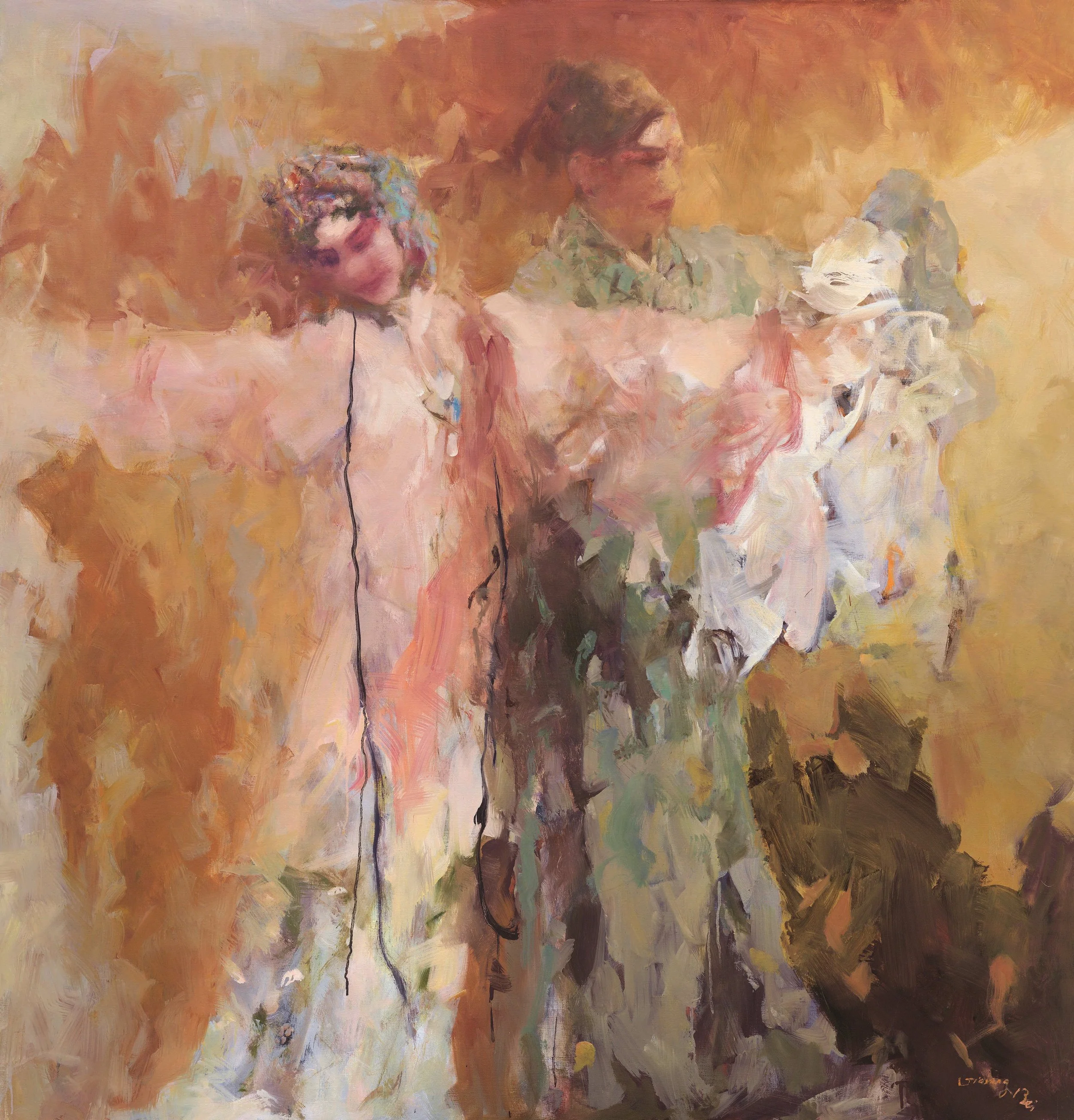
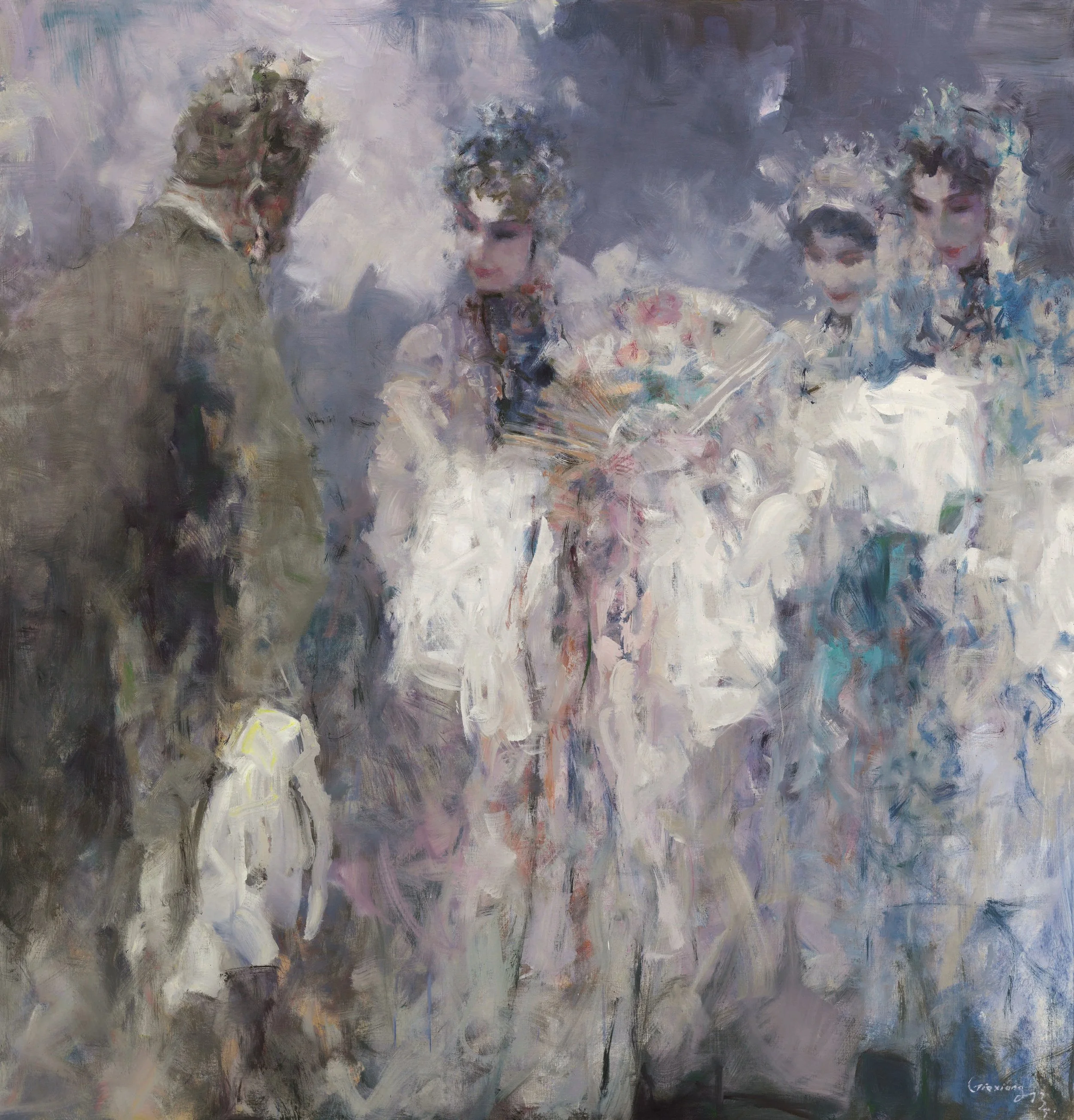
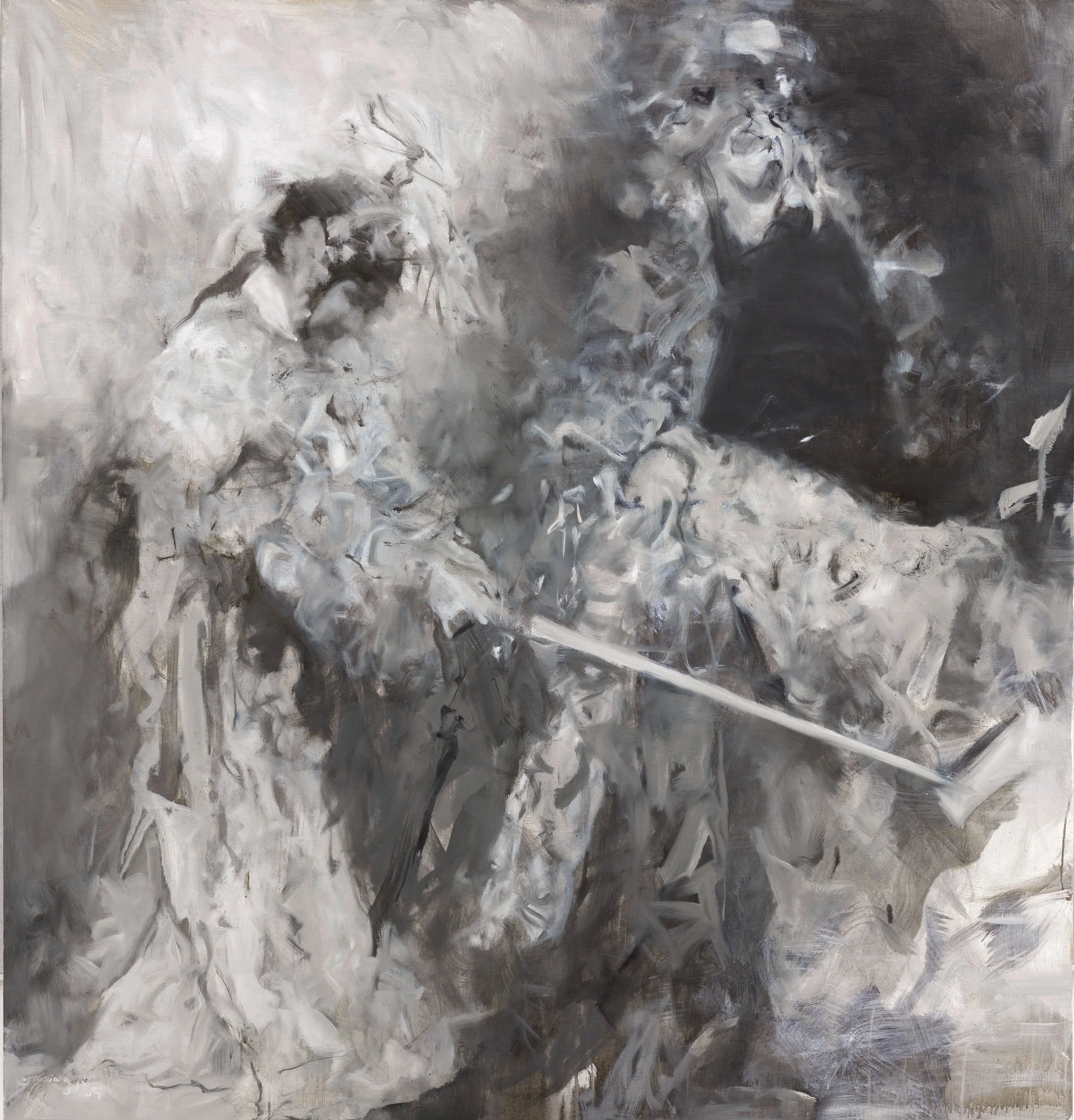
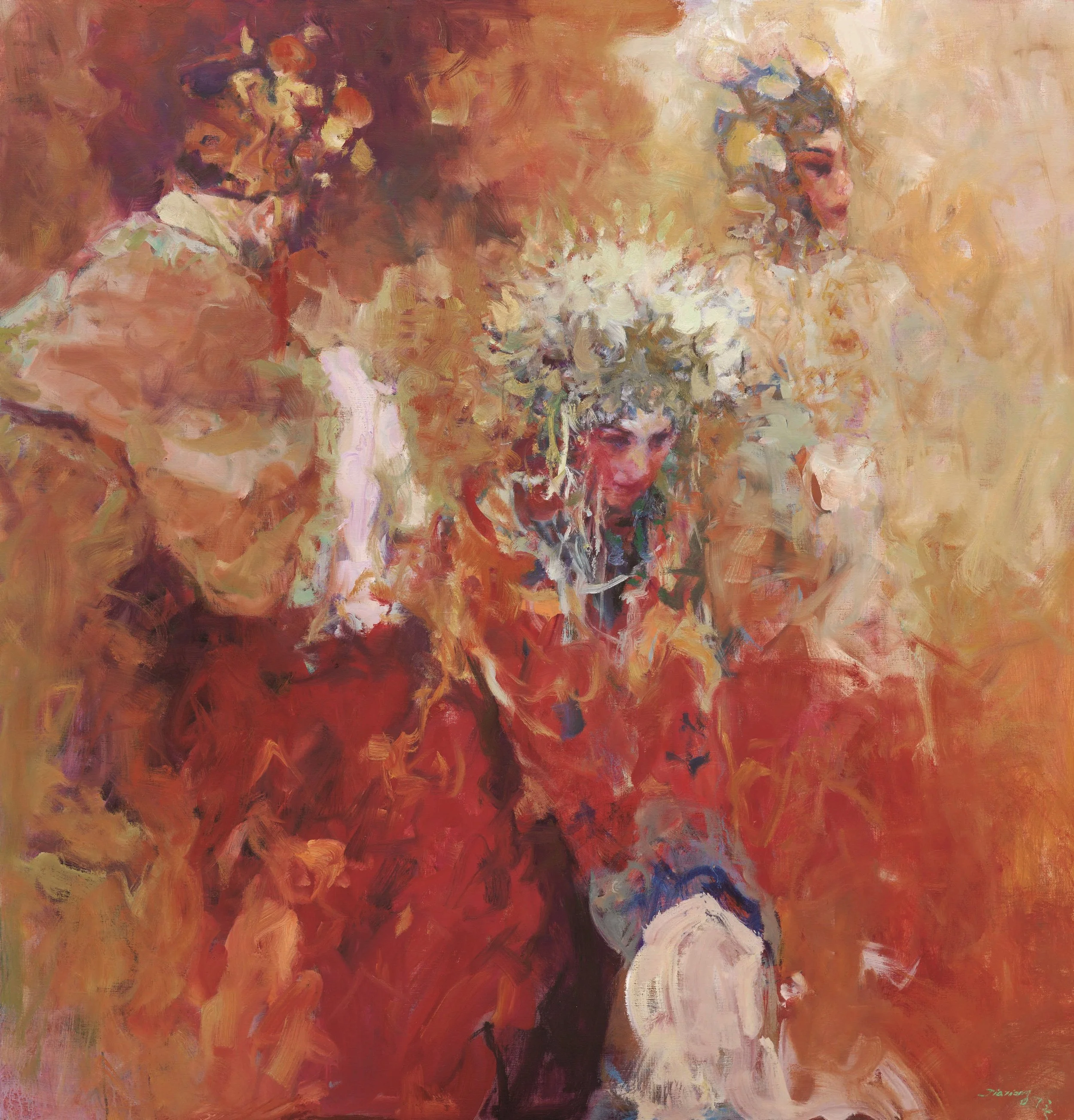
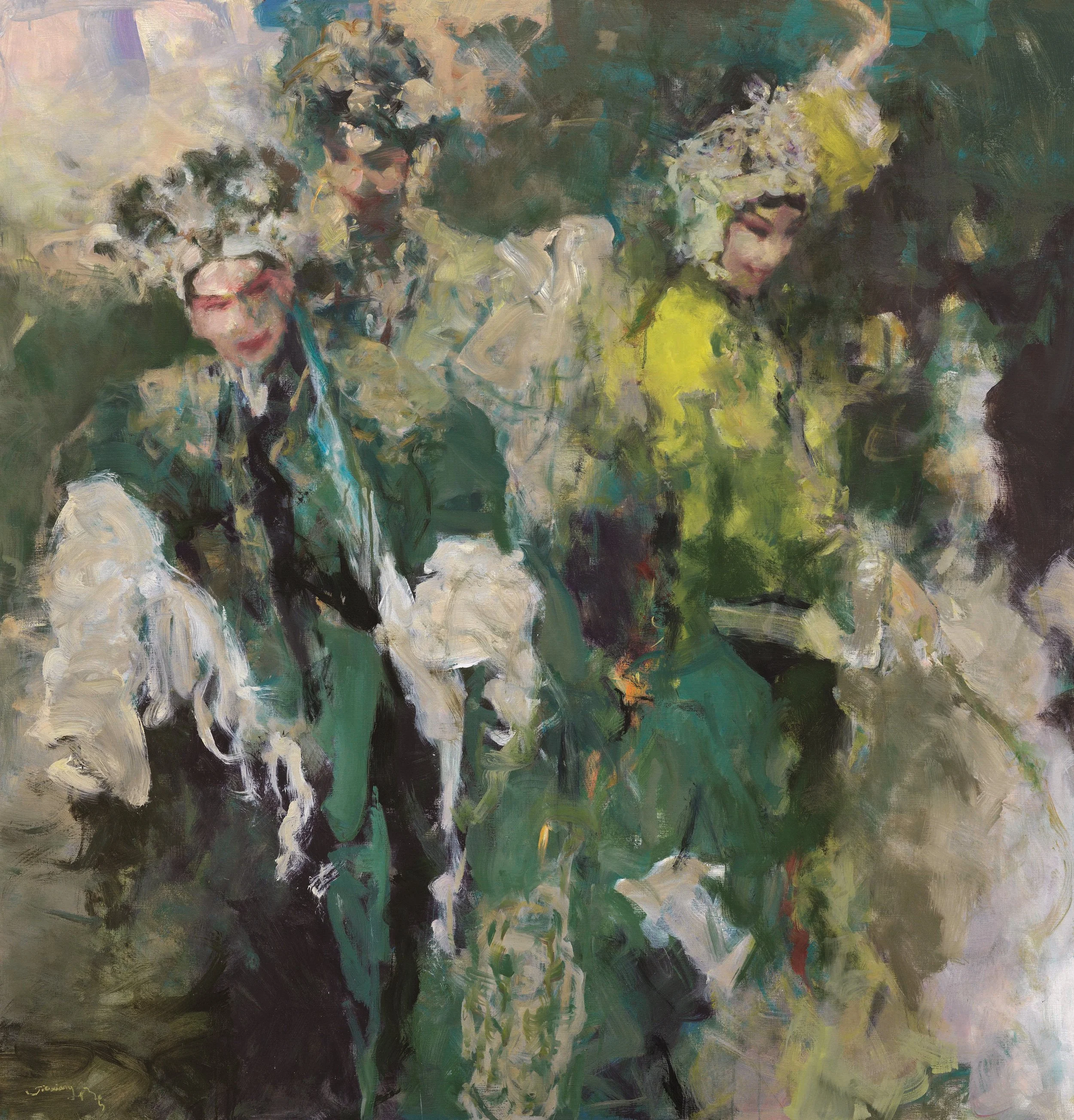
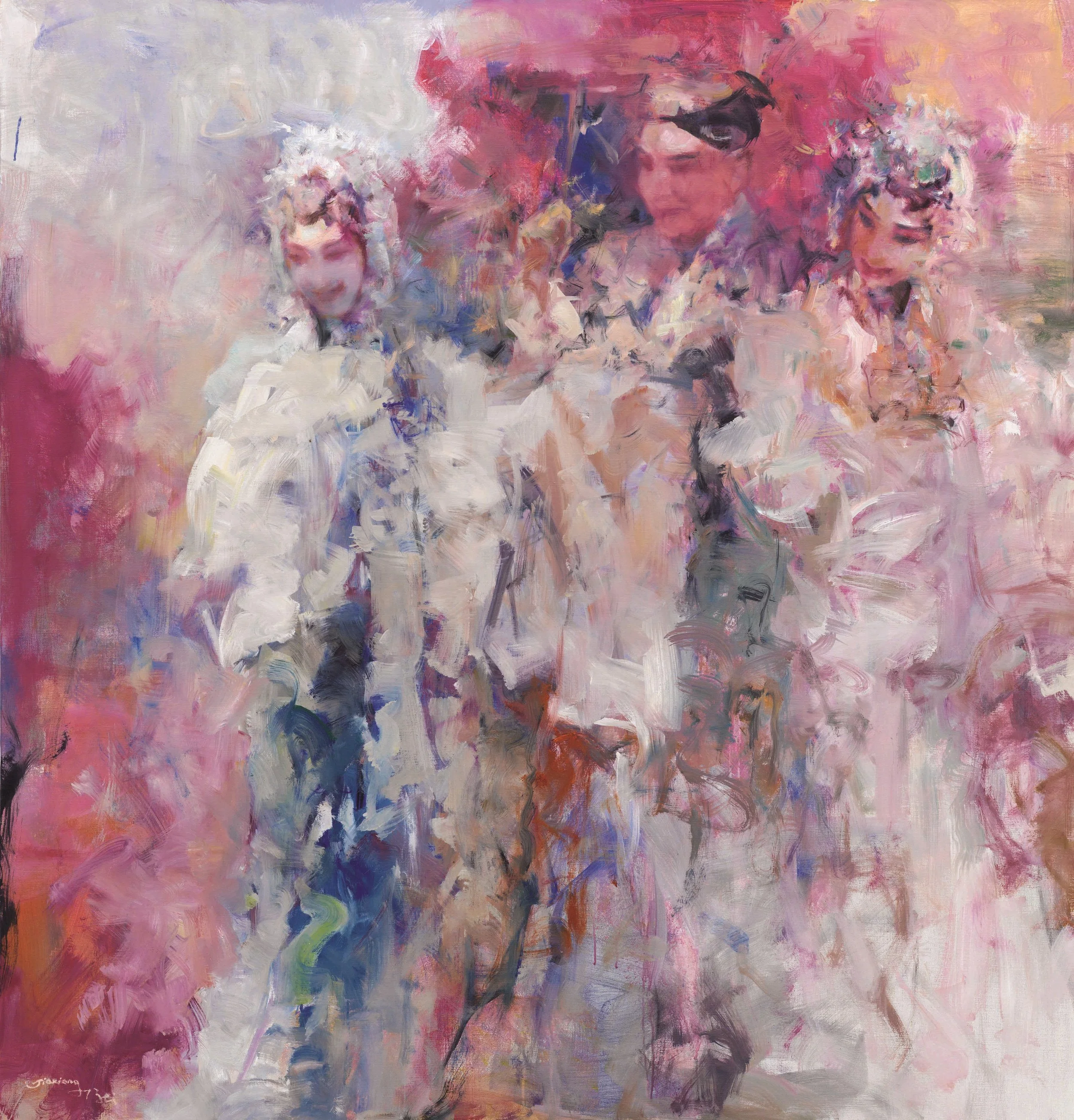
“As noble as an orchid in a hidden valley” is a Chinese idiom. BEI Jiaxiang’s oeuvre radiates from the composed confidence of his brushwork, the precise modulation of color, and the resonant silence stirred at the margins of empty space. Beneath the surface, a deep affirmation and creative transformation of his cultural roots surge—the vermilion touches and ink marks become subtle echoes of Chinese aesthetics, confident and self-assured in contemporary discourse. It opens a “third space” between East and West, where aesthetic dialogue shall flow unobstructed.