
The Oriental Abstract
BEI Jiaxiang’s 2025 Oriental Abstract series marks a decisive leap in his artistic inquiry, shifting from the imagistic distillation of specific motifs to an abstract paean to the life of color, line, and ink itself. The works emancipate the medium’s agency, elevating the act of making into the subject and erecting a visual cosmos of dynamic equilibrium on the threshold between chance and control, chaos and order.
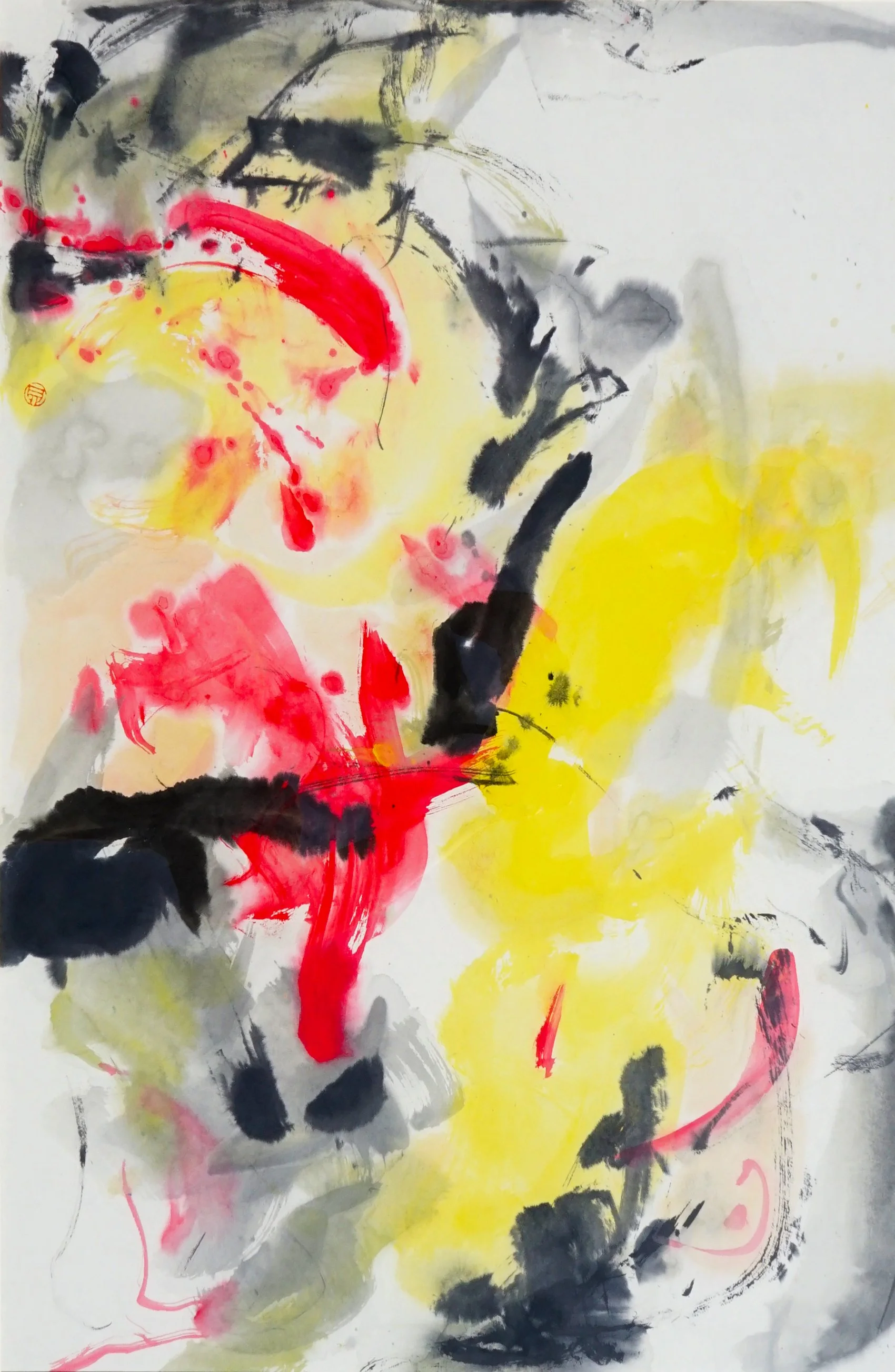
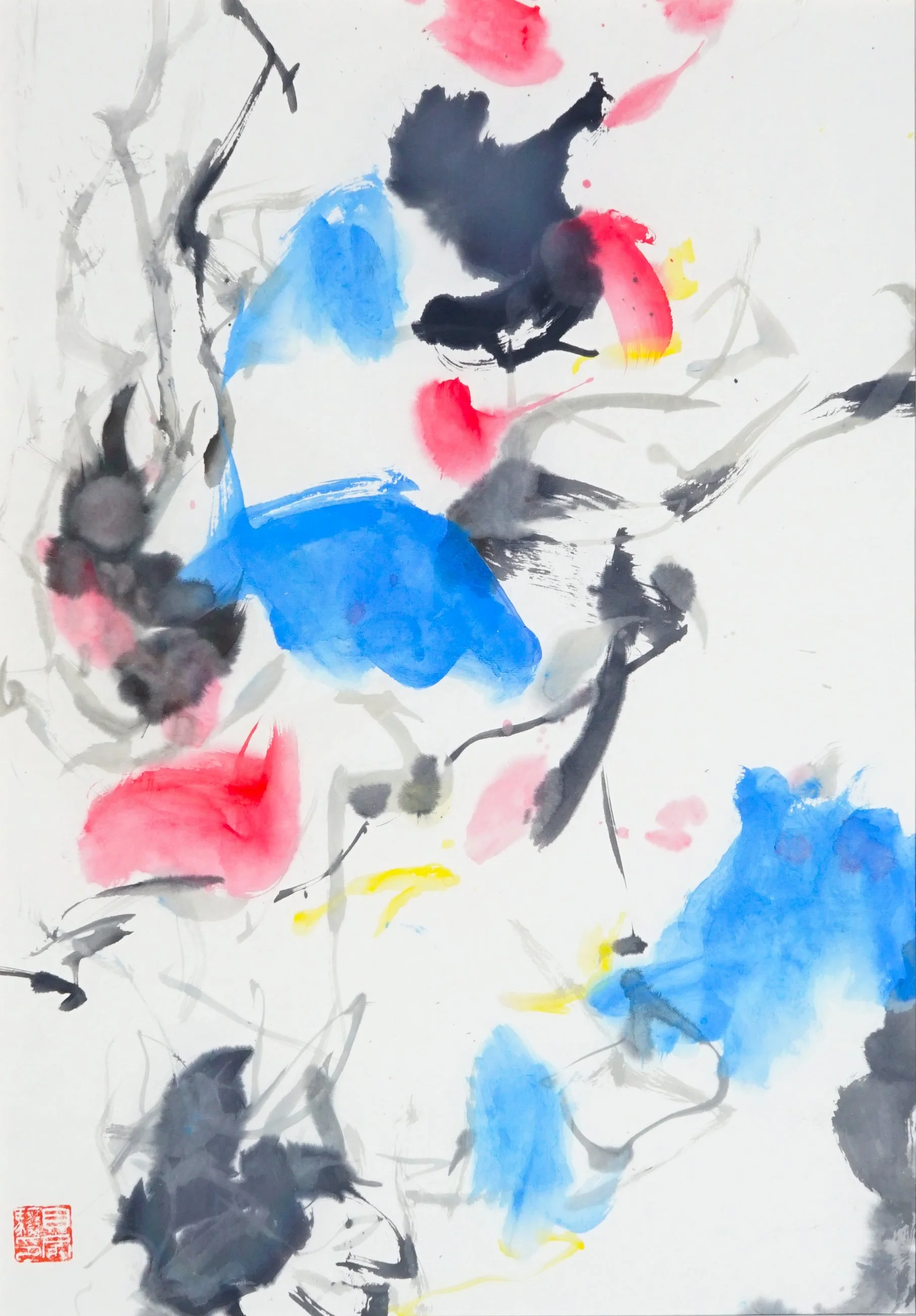
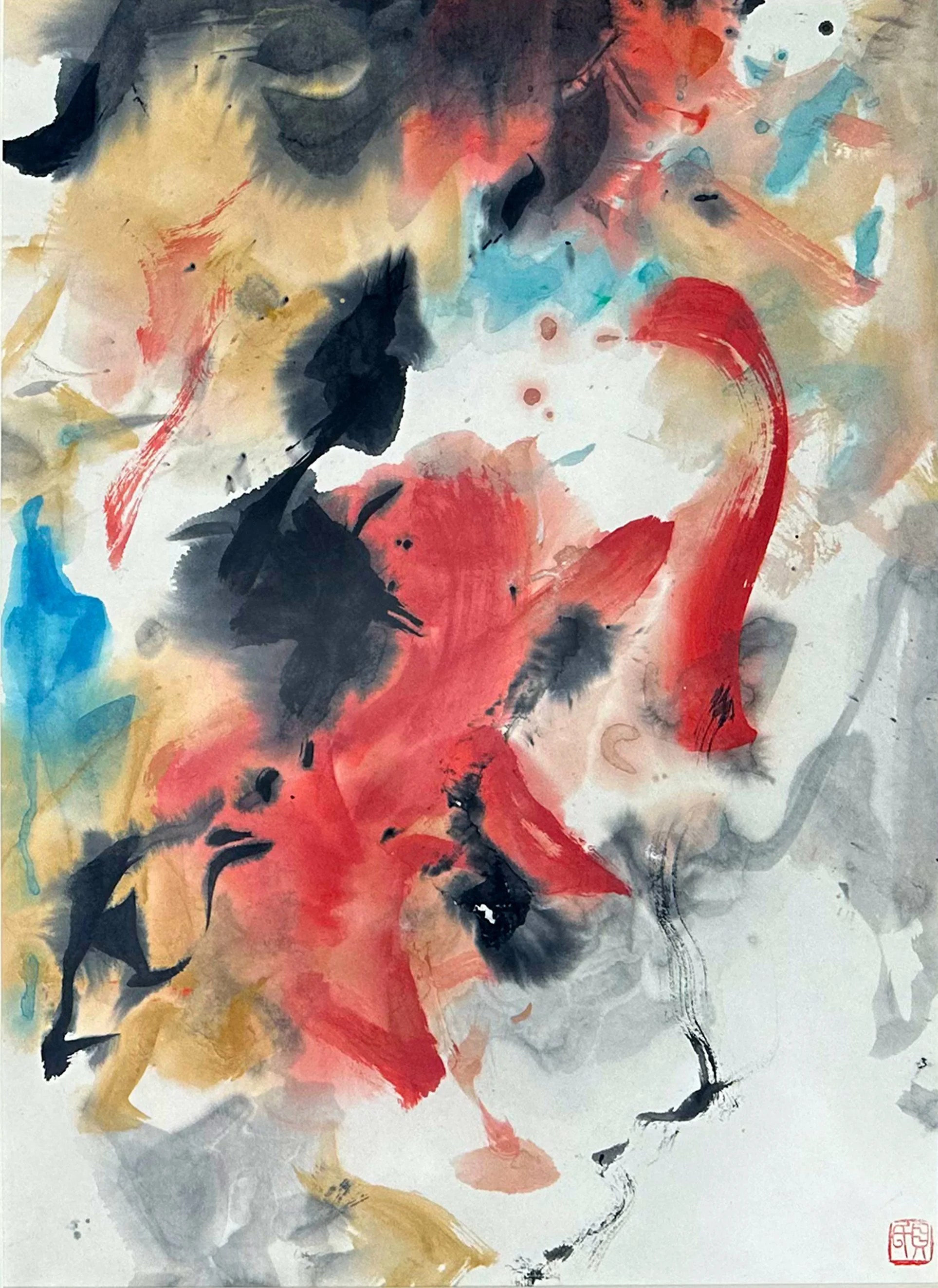
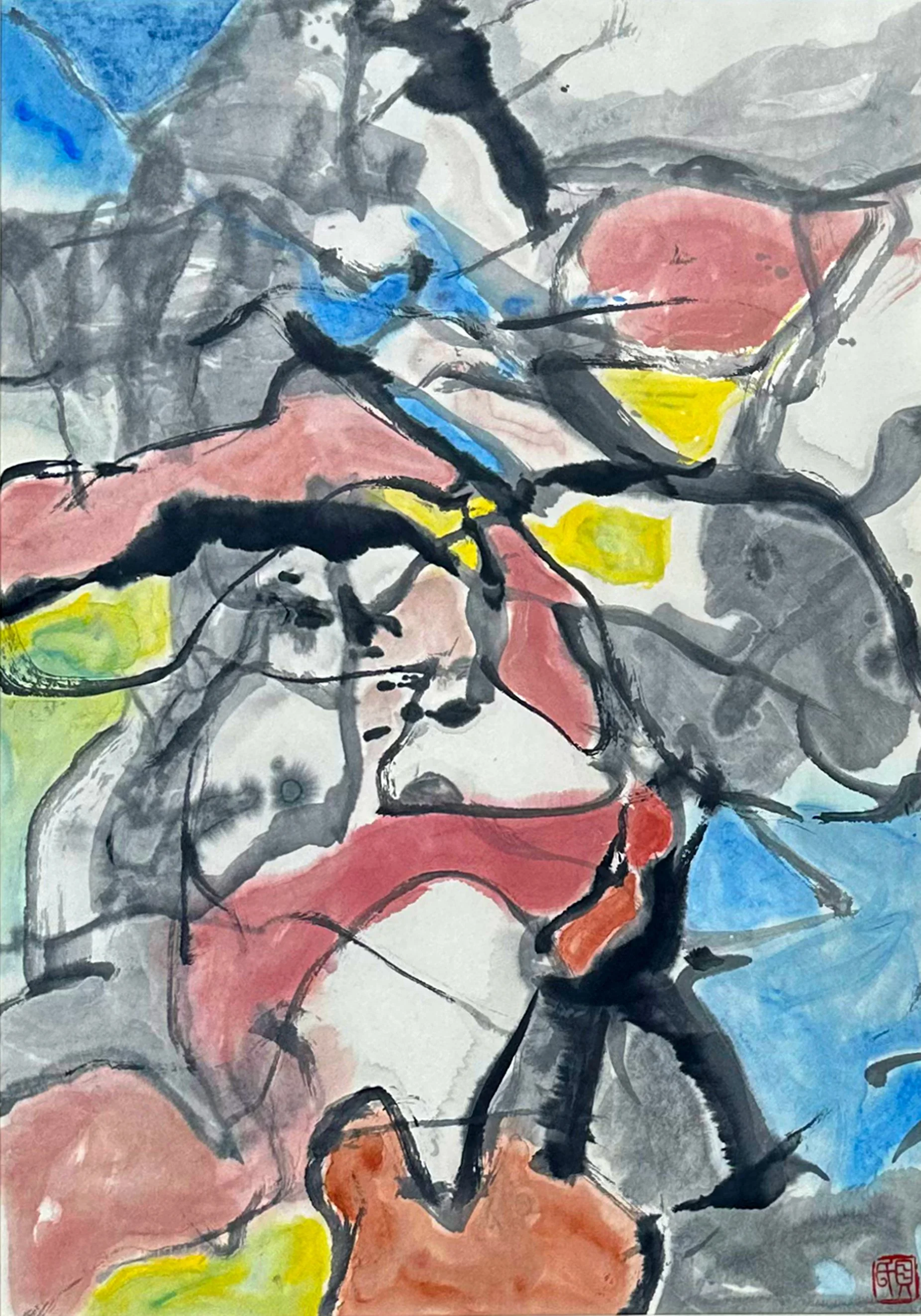
The series exudes a flowing vitality and introspective joy. Ink lines and color fields do not depict external things; they are traces of emotion and energy—real-time records of color breathing, spreading, and mingling across paper. Like Pollock’s action painting, they stress immediacy and bodily engagement; yet BEI’s chance is not merely physical dripping. His strokes and washes carry the subtle tactile force of Chinese calligraphy—the eastern freehand spirit extended into the abstract. Variations in line tempo and thickness, the congregation and dissipation of color masses, harbor an inner rhythm that, amid unpredictability, impart a literati refinement and a controlled sense of serendipity absent from Pollock’s primordial chaos.
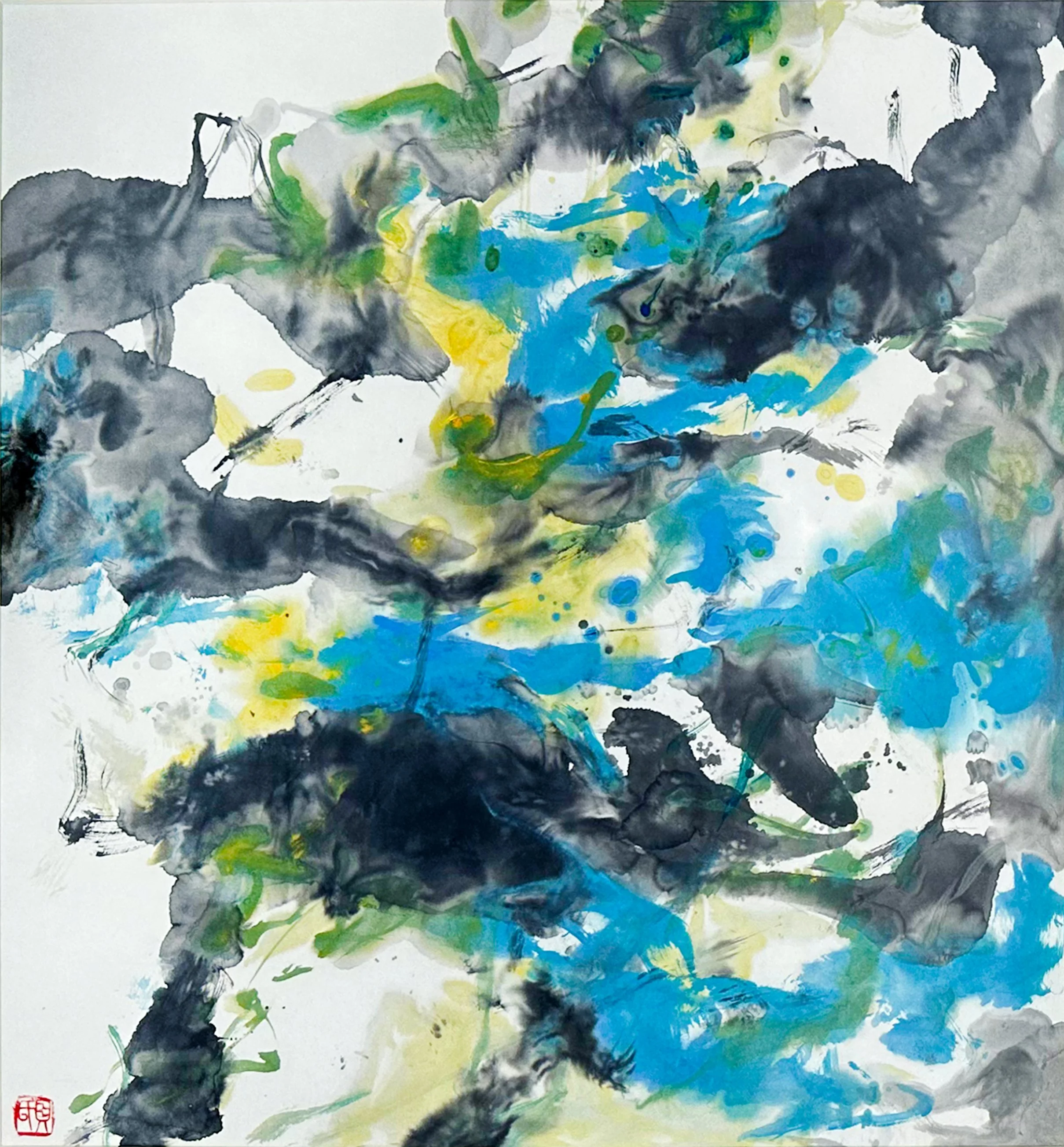
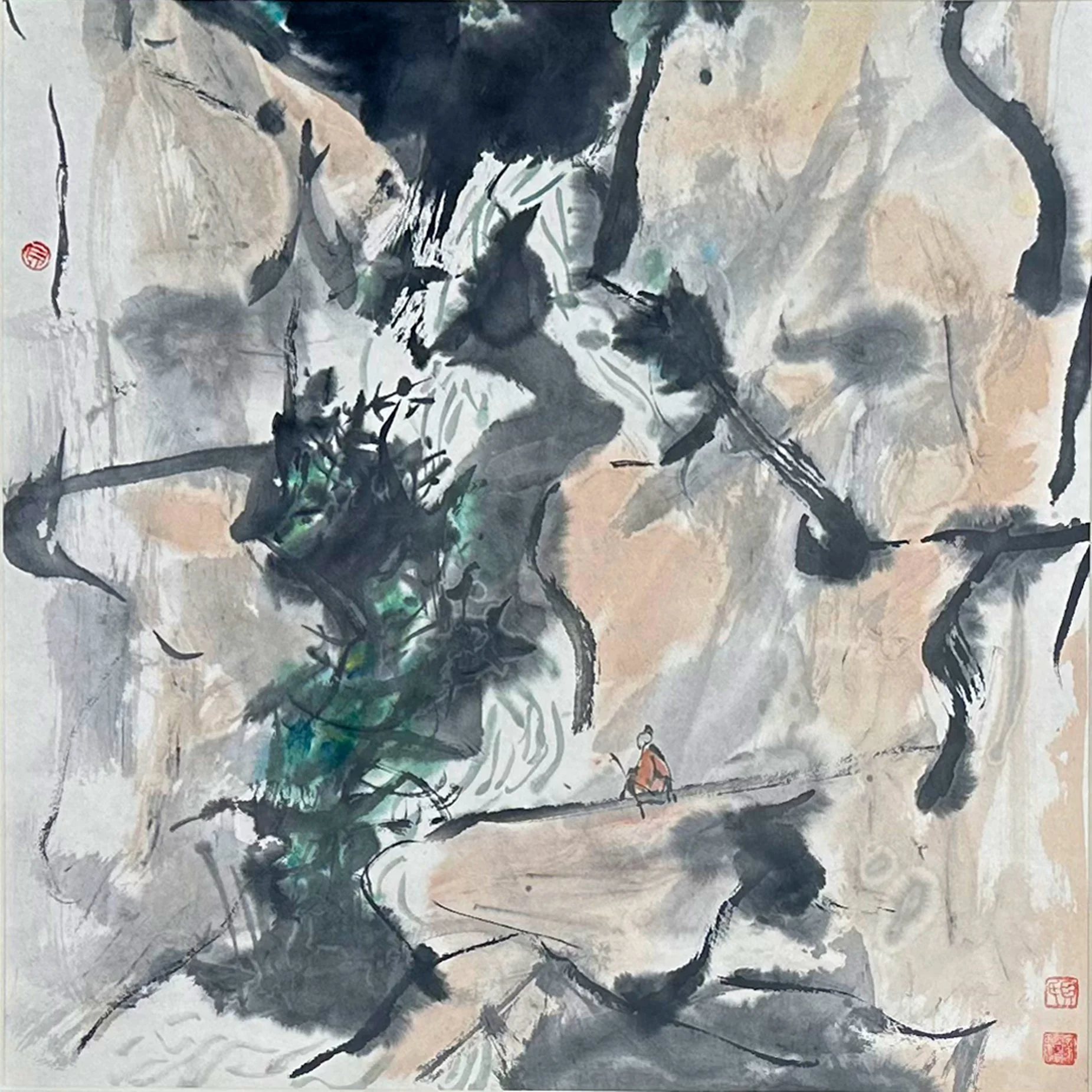
Philosophically, the series presents a radiant, harmonious Oriental modernity. BEI boldly deploys high-saturation reds, yellows, blues, greens, pinks, and ochres, letting them collide, overlay, and reconcile on an inked ground with white paint. His sensitive treatment of color relations enters into dialogue with Matisse’s late cut-outs—both achieve a joyous chorus of pure color—but while Matisse constructs a decorative, balanced paradise of planes, BEI’s hues grow from the wet matrix of ink: edges bleed, tones interpenetrate, and innumerable subtle intermediates arise, as if colors themselves converse in hushed intensity. The inventive use of white is crucial: not merely for highlighting or harmonizing, but as a modern reworking of intentional blank, acting as respiration and light within the composition.
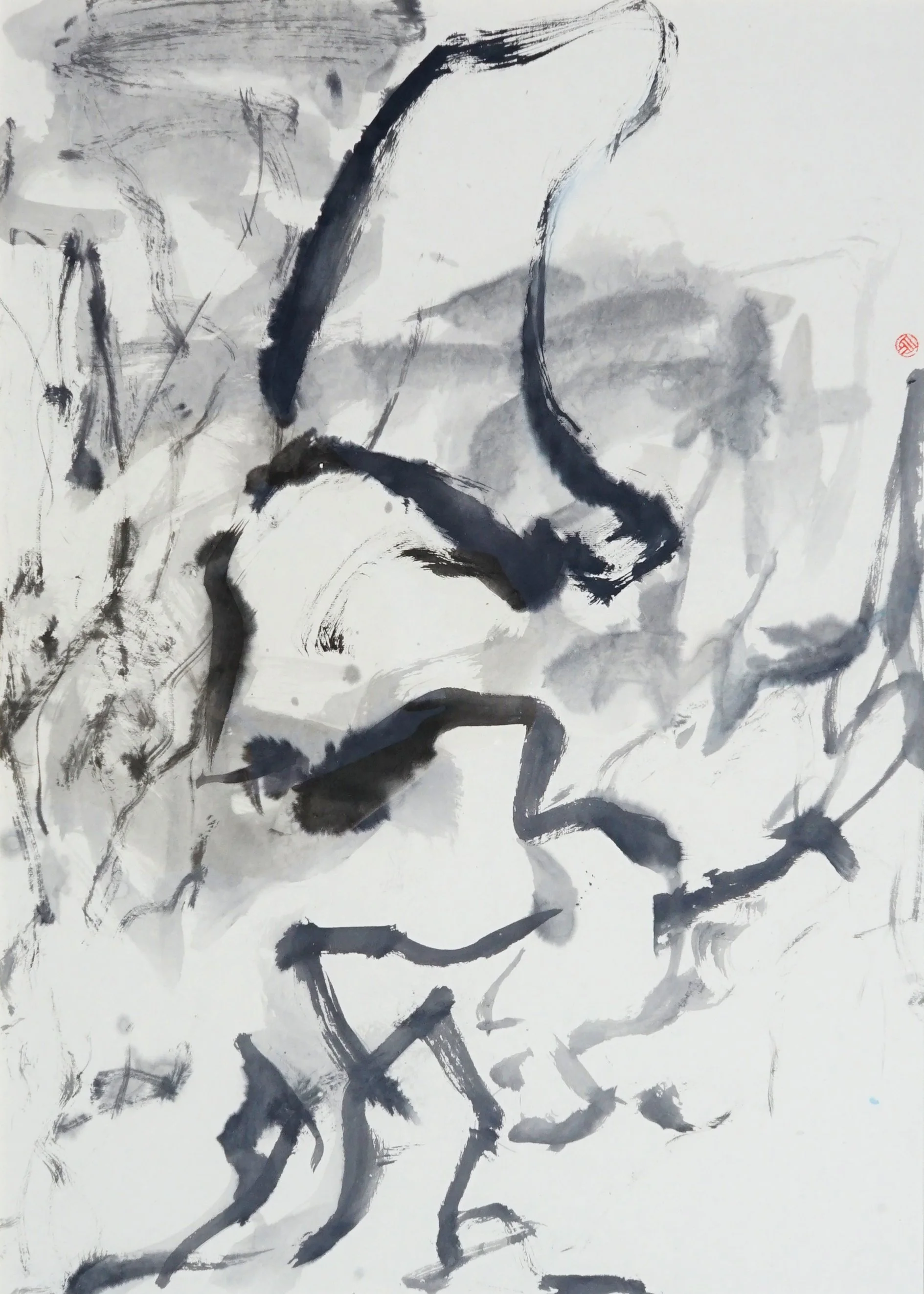
Ink Charm
Ink On Paper
50×70cm
2025
Although highly abstract, the tradition of Eastern “seeing-thing-and-taking-its-essence” offers interpretive routes. The flowing gestures and palettes may evoke “flowers and leaves,” “koi in pond,” or “tattered lotus stems.” These are not naturalistic likenesses but transmutations of lived impressions of life’s rhythms into distilled visual form. This mirrors Mondrian’s early extraction of verticals and horizontals from trees and churches, yet BEI’s reduction never hardens into austere geometry; it preserves ink’s warmth, permeability, and exuberant life. His spirit aligns more closely with Ming Dynasty master XV Wei’s grand freehand florals—abandoning literal likeness for unrestrained, fulsome ink outpouring—while fusing that expressive ethos with the color-energy dynamics of Western Abstract Expressionism. The result is a language both internationally legible and deeply rooted in Eastern aesthetics.
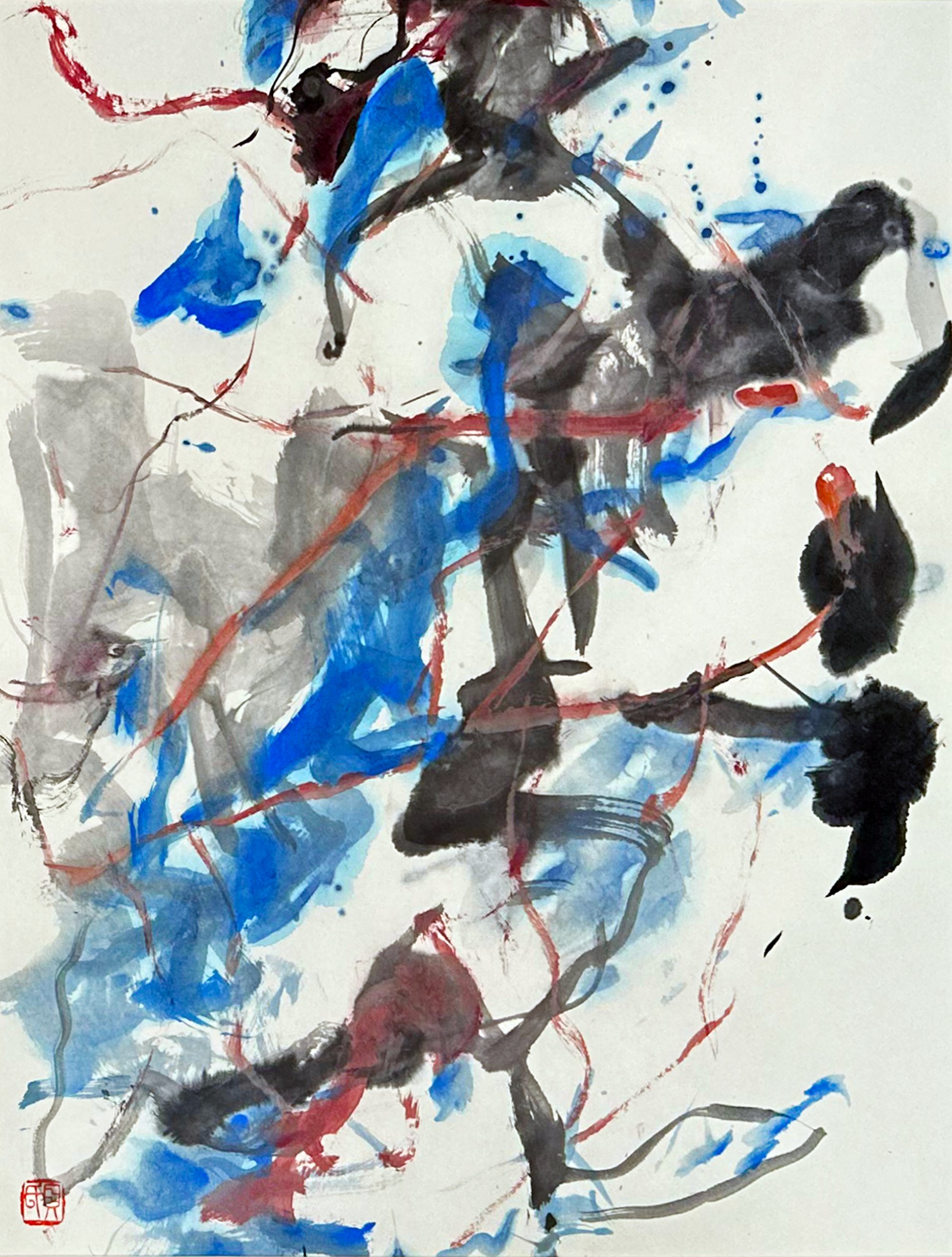
Oriental Abstract 12
Ink On Paper
53×70cm
2025
This is a successful, audacious departure. BEI Jiaxiang revitalizes the ancient medium of ink within contemporary abstraction, demonstrating that Oriental “Spirit Resonance” and Western “formal discipline” can resonate at the highest level.