
Imagery · Form I — A Formal Analysis of BEI Jiaxiang
For BEI Jiaxiang, imagery is always founded on a concrete formal language; the deconstruction and recomposition of form and color underpins his pictorial poetics.
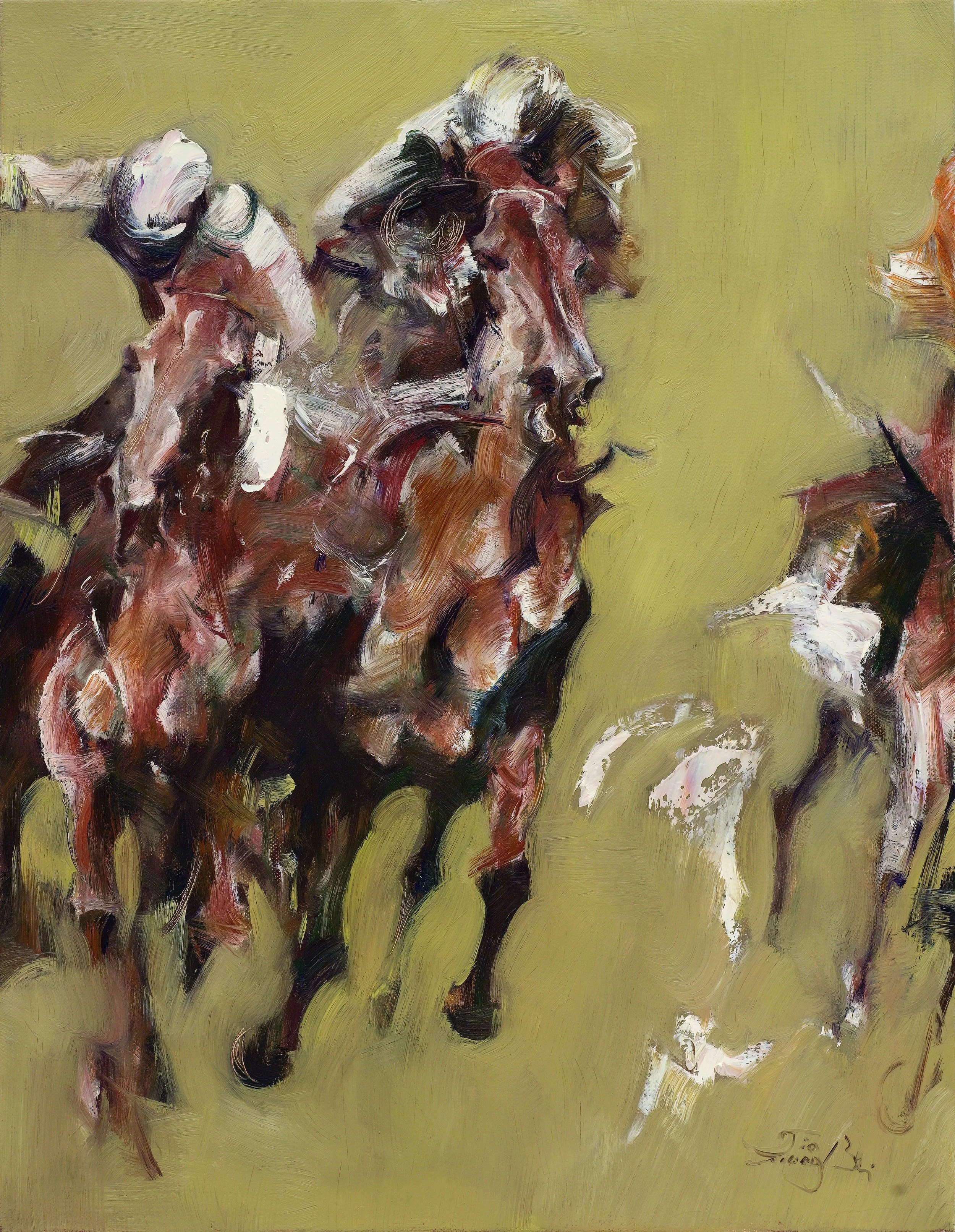
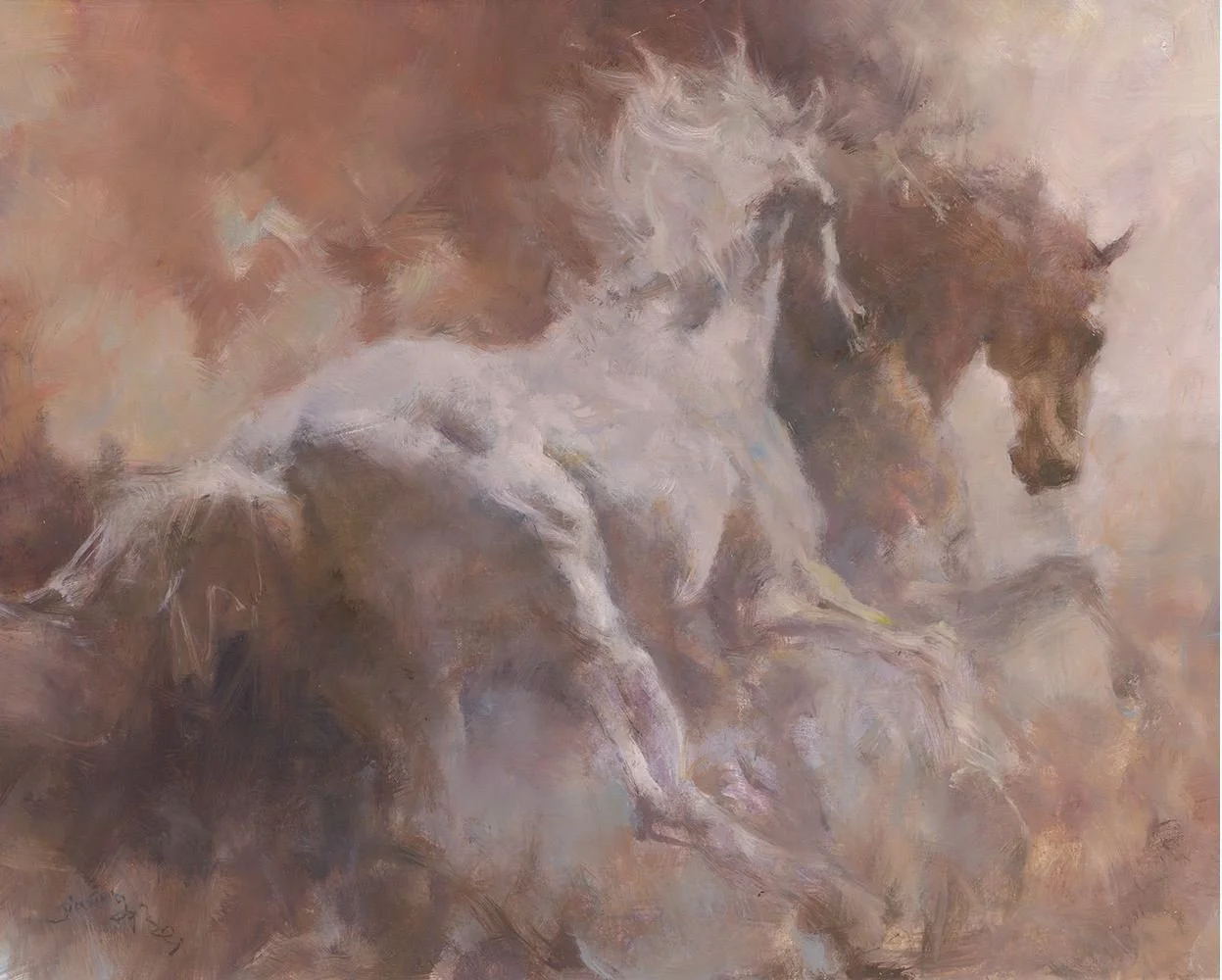
This strategy is most evident in the Galloping Horses series. Works such as 2015’s TheKnight and 2016’s Horse Whispers demonstrate his contemporary reworking of traditional subjects. As Robert Hughes observed, “great formal simplification always comes from a profound understanding of complexity.” BEI’s simplification is not superficial subtraction but an intentional distillation rooted in rigorous early realist training: the horse’s mass is compressed into taut contours and geometric volumes; color detaches from objective mimicry to function as markers of subjective feeling.
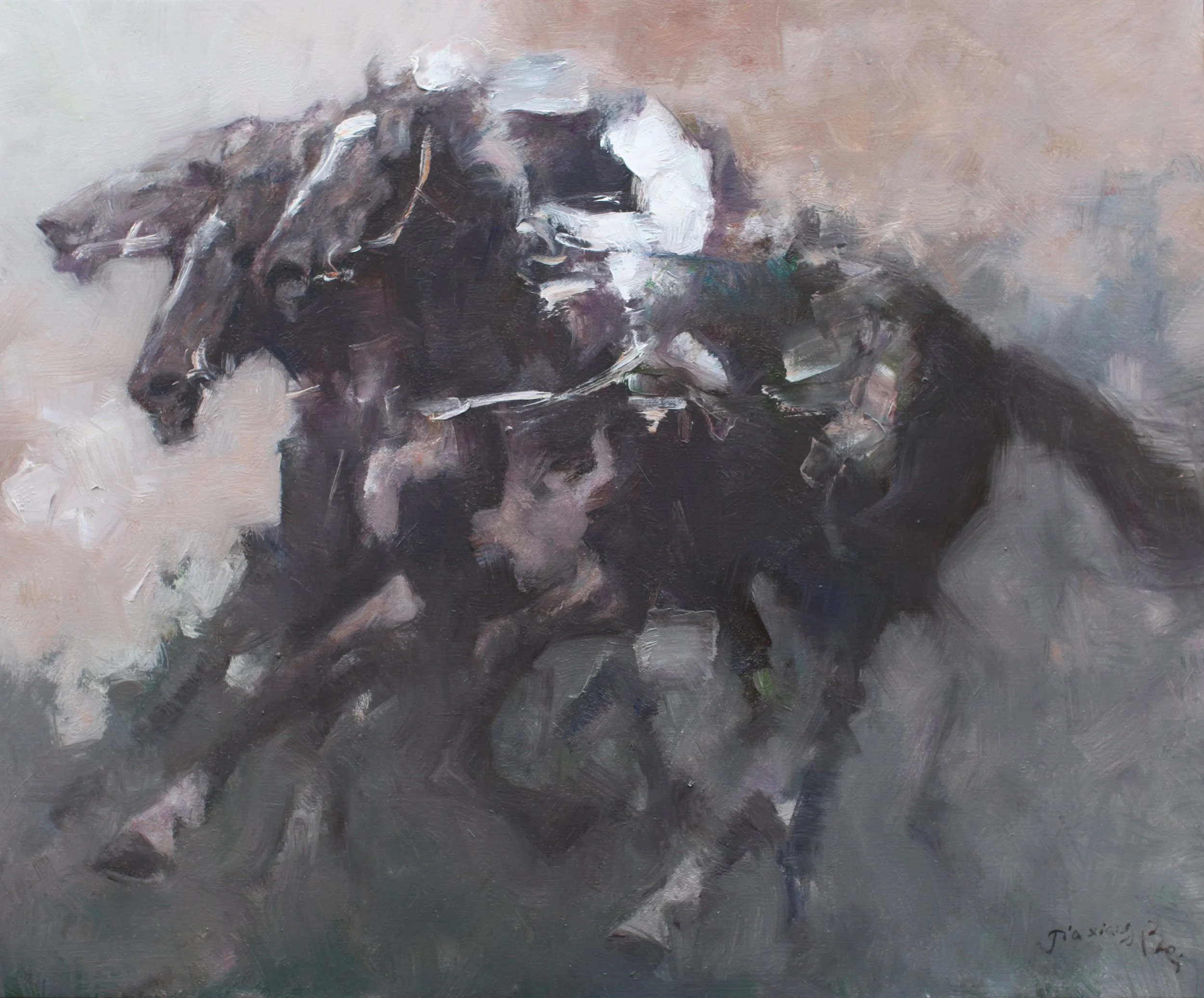
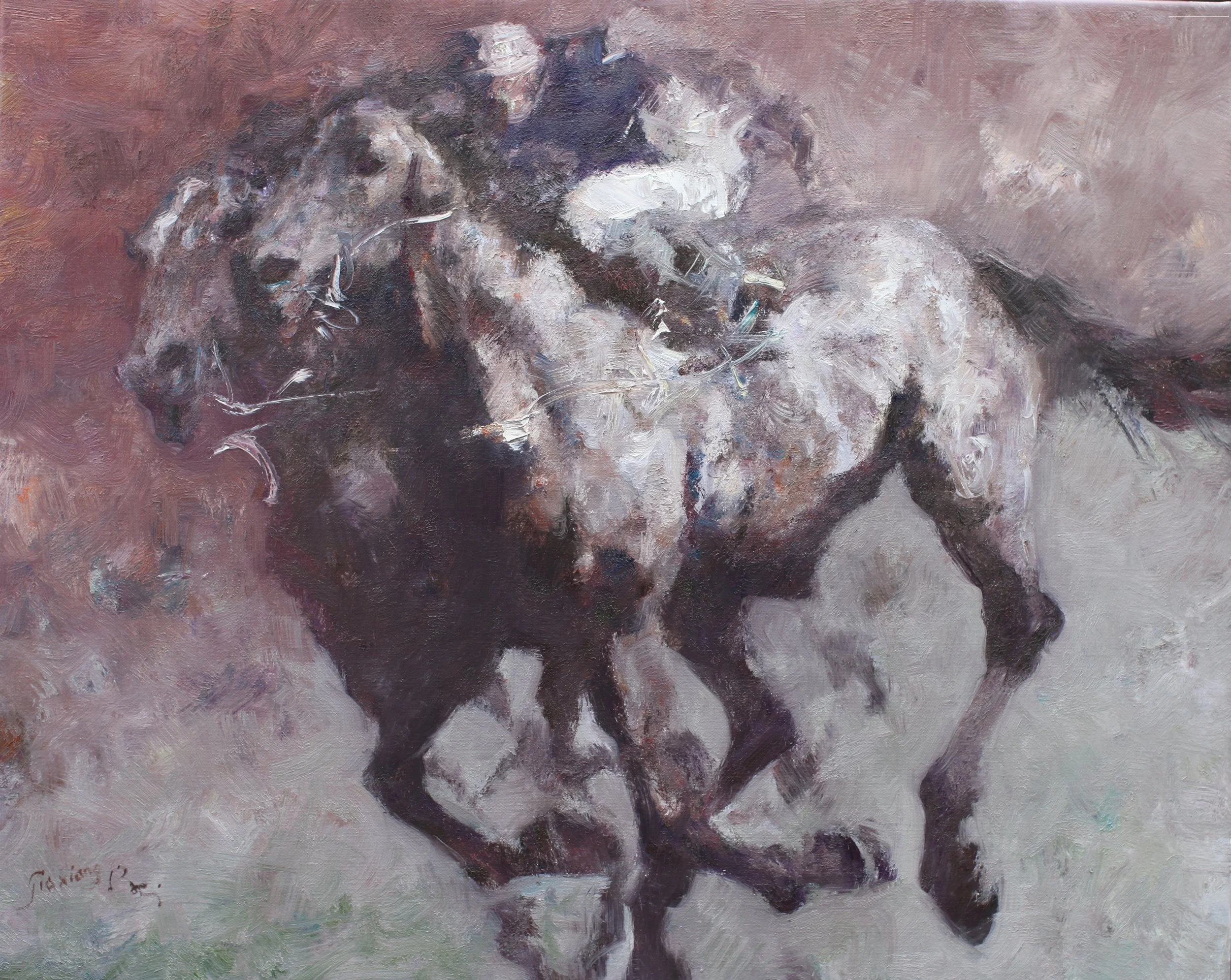
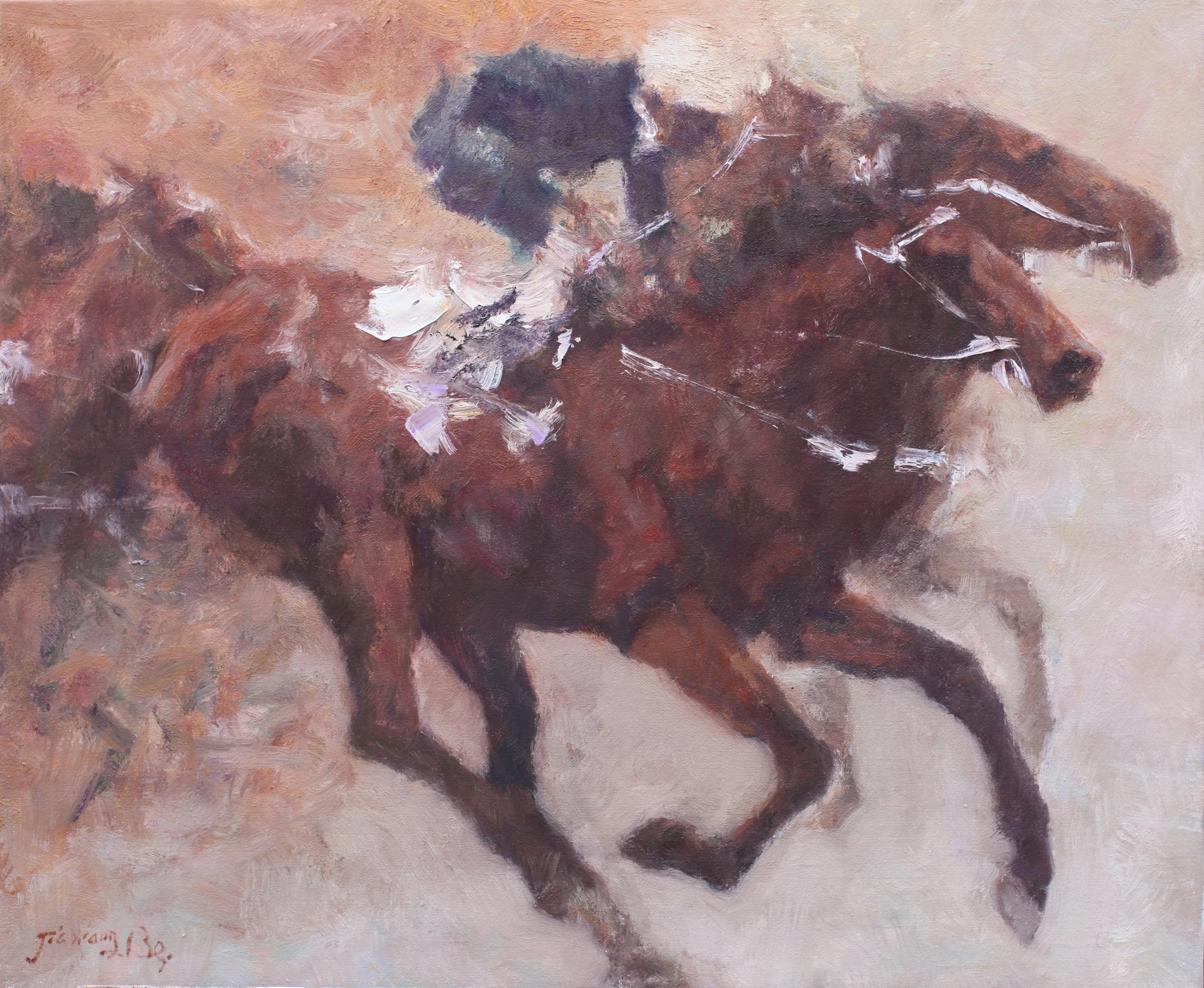
In The Knight the equine body is reduced to compact outlines and geometric blocks, texture and musculature rendered as signs. This approach is neither Degas’s anatomical method nor Dubuffet’s grotesque distortion — it preserves recognizability while executing precise formal pruning, yielding an archetypal horse: not a specific individual but the visual essence of “horse” as category. Color plays a decisive role: umber, off‑white, and ink black establish the tonal and emotional lexicon; sporadic ochre‑red or indigo serve as “precise images” within the pictorial poem, creating visual and semantic accents in the structure.
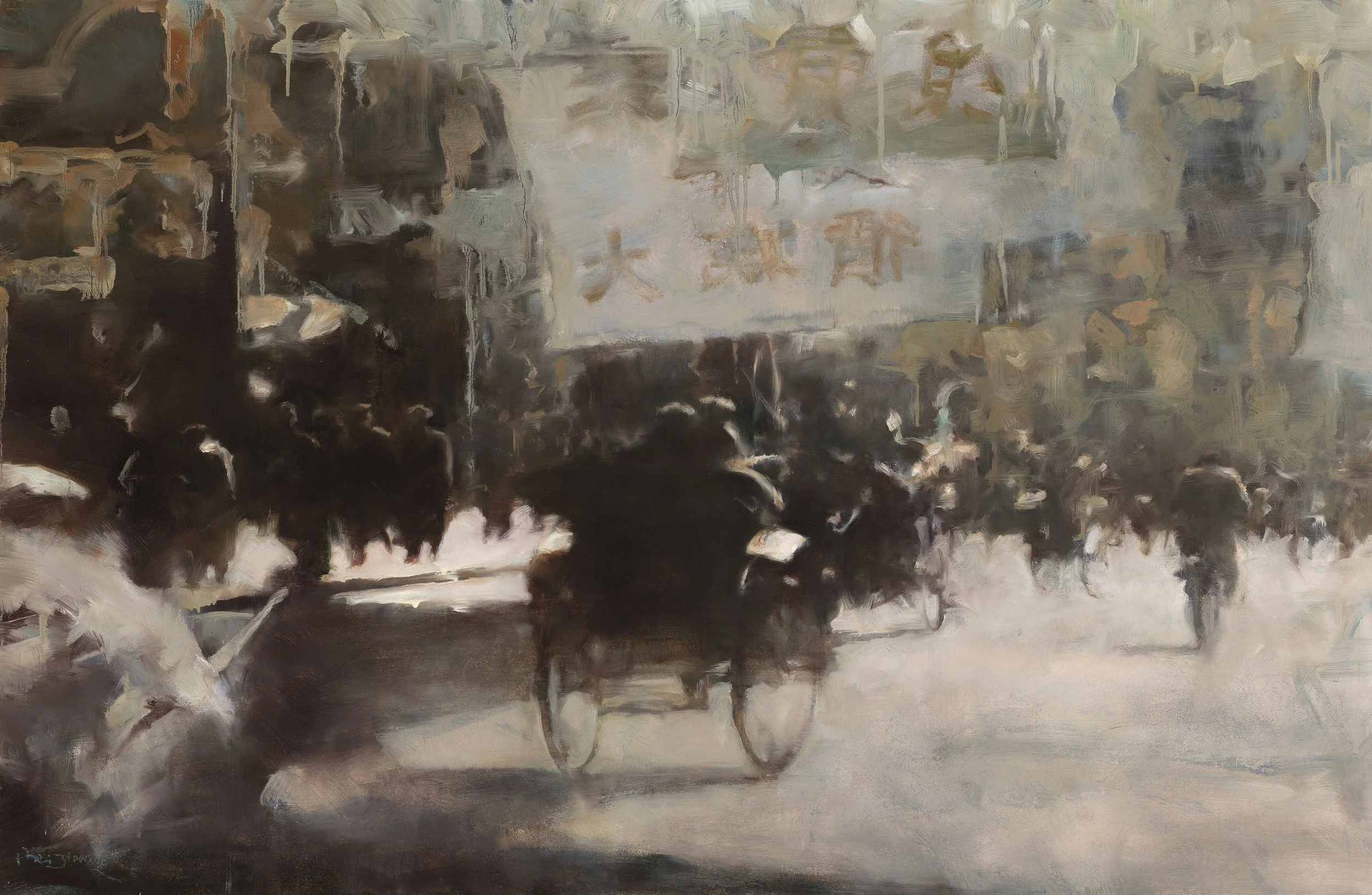
In the Old Shanghai series BEI develops a visual grammar of memory: by subjectively reassembling historical images he produces urban visions that are simultaneously referential and dreamlike. Figures and buildings dissolve into blurred outlines; detail is distilled into textured color planes and brushwork. The intent resembles Monet’s Rouen Cathedral studies — not to replicate form but to render the flux of perception. Beyond capturing transient light, BEI attempts to encode sedimented historical memory within the subject’s experience — a temporal sensibility mediated through the color of gray.
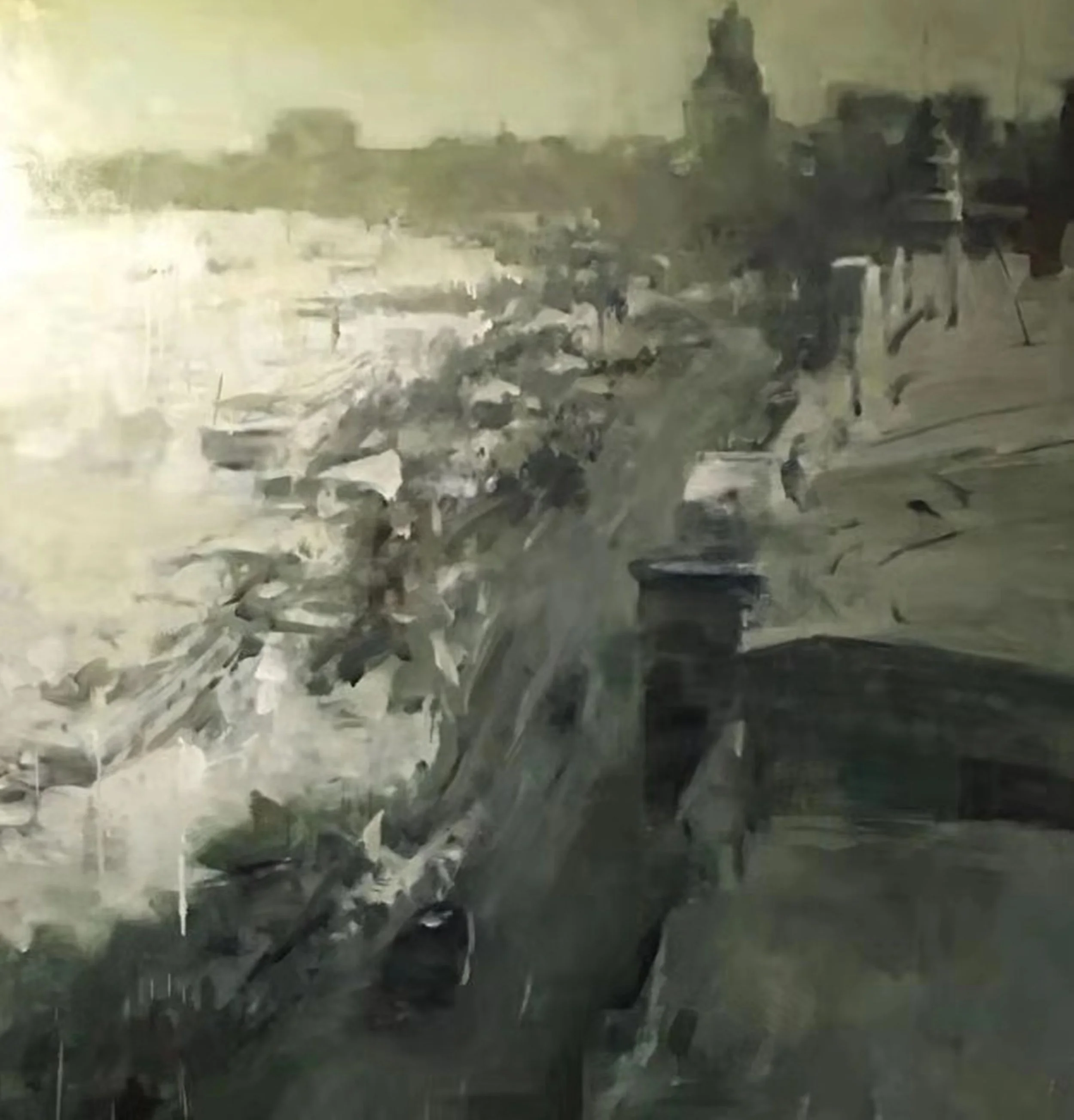
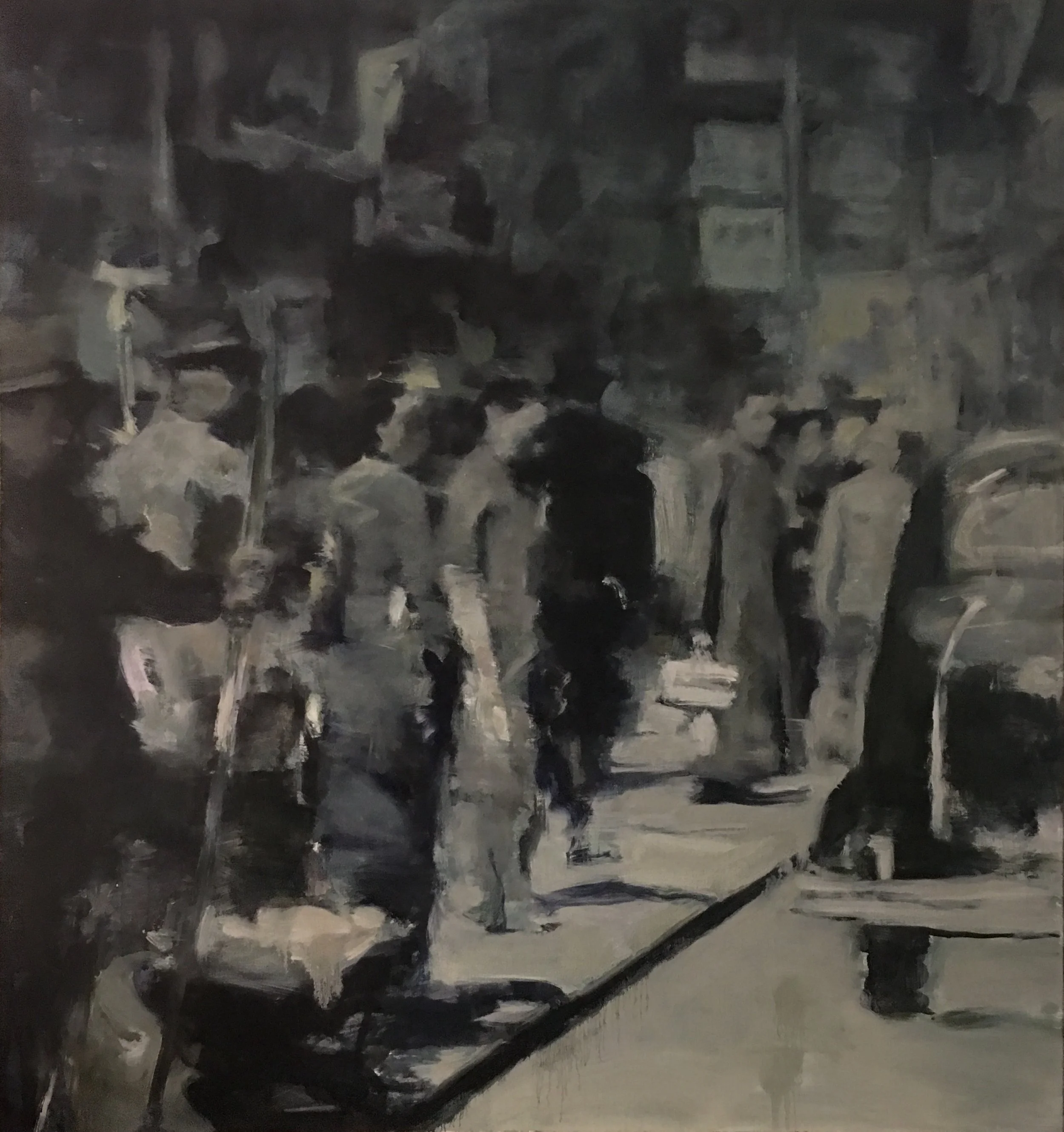
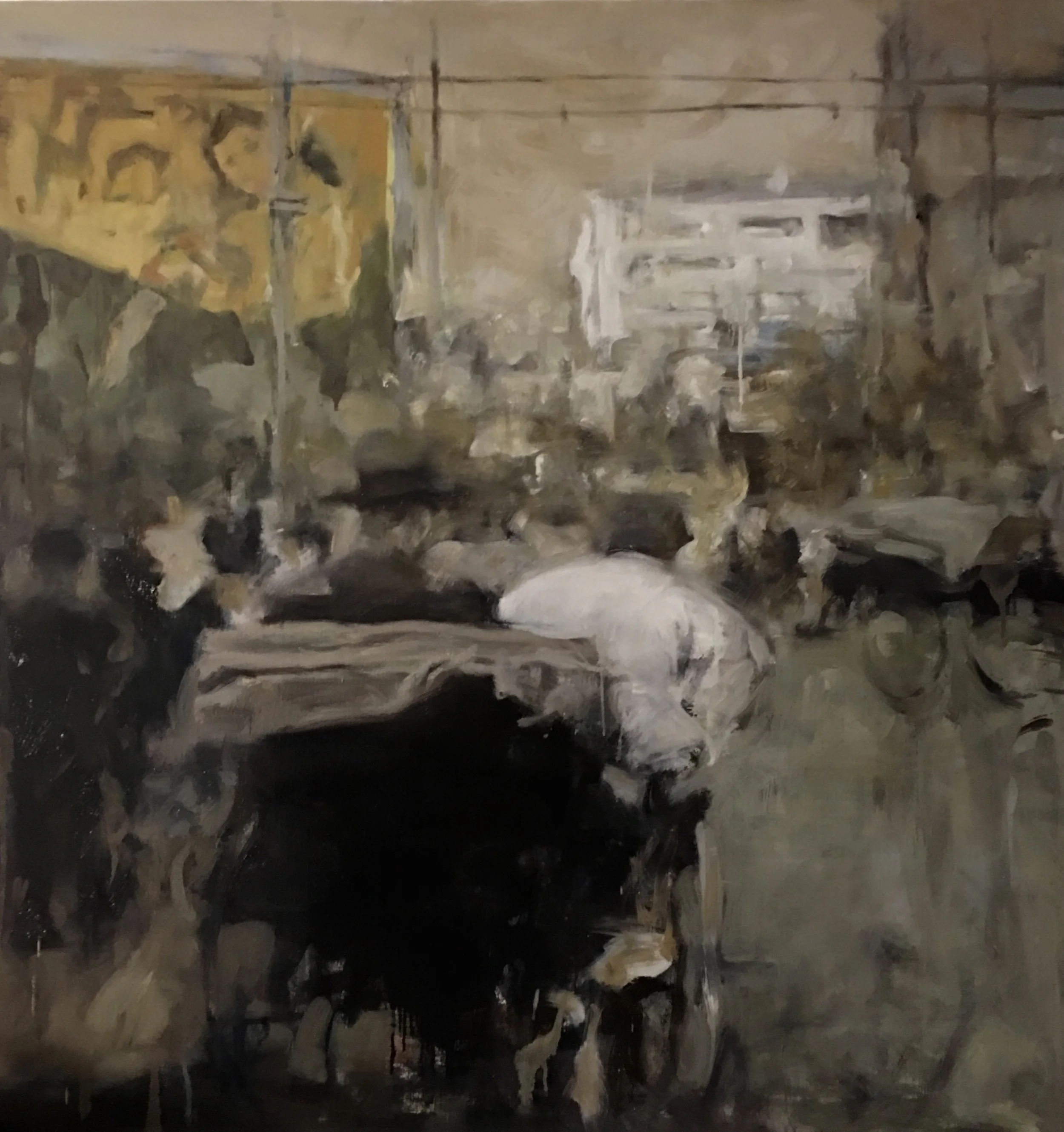
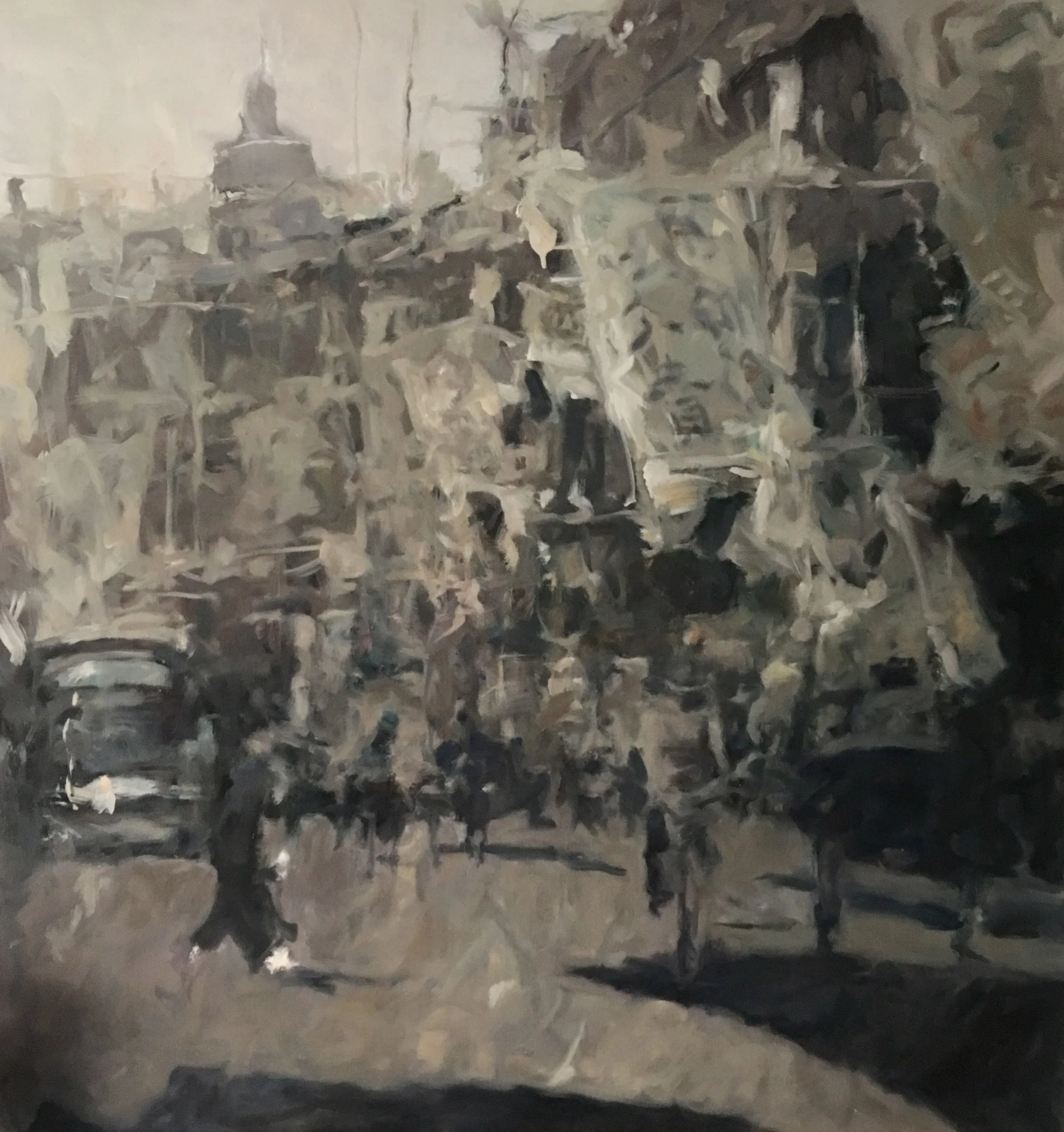
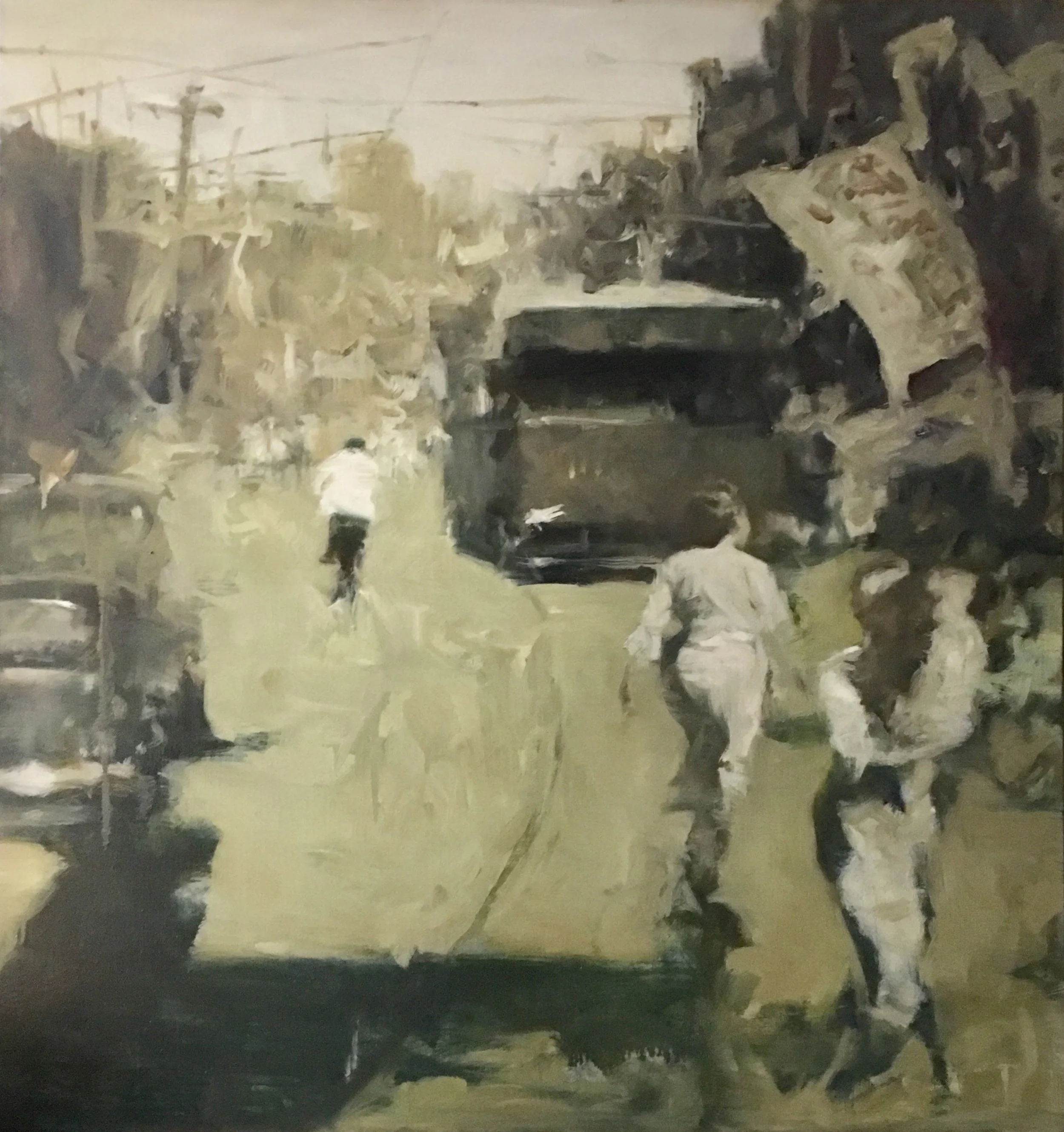
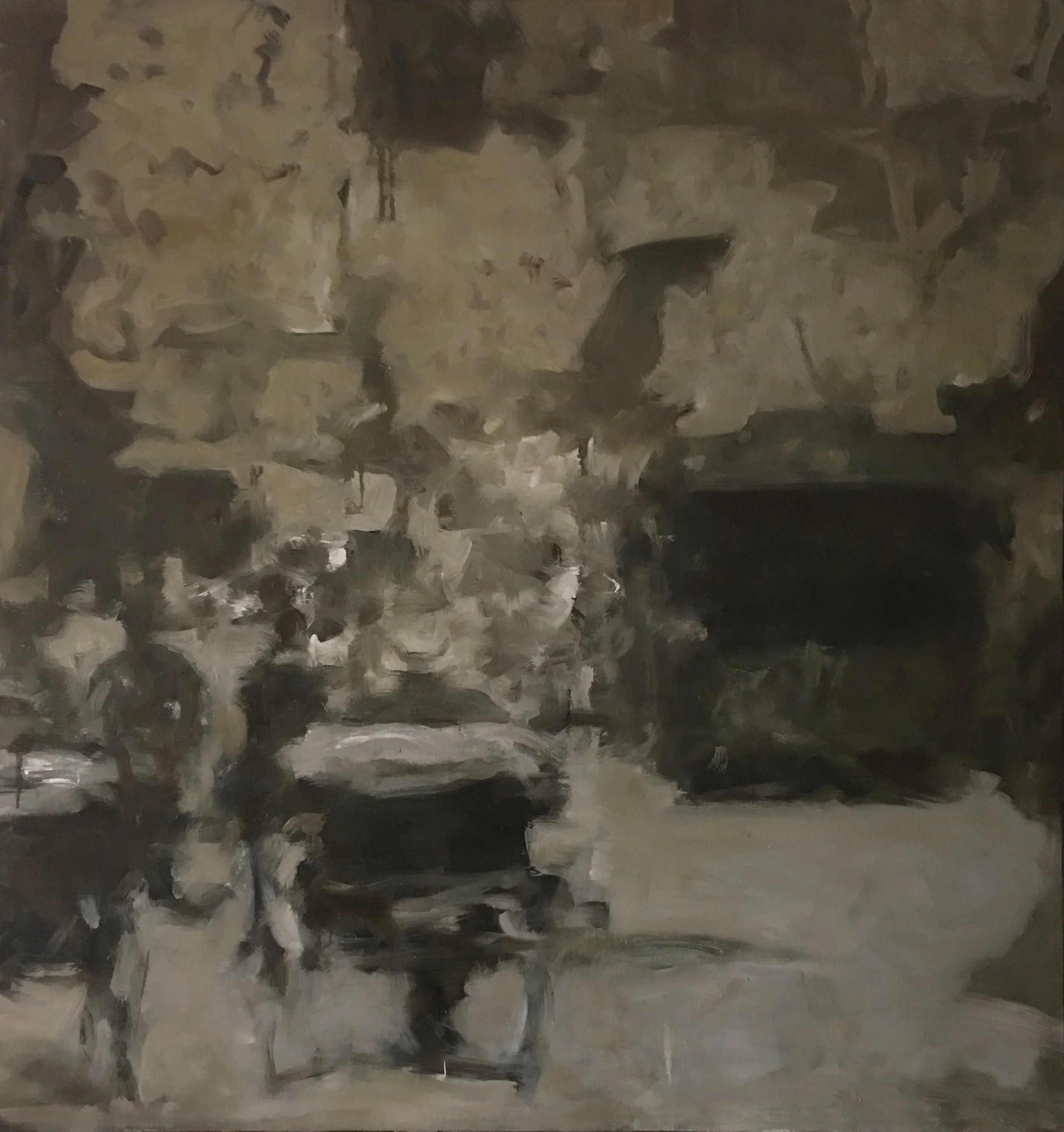
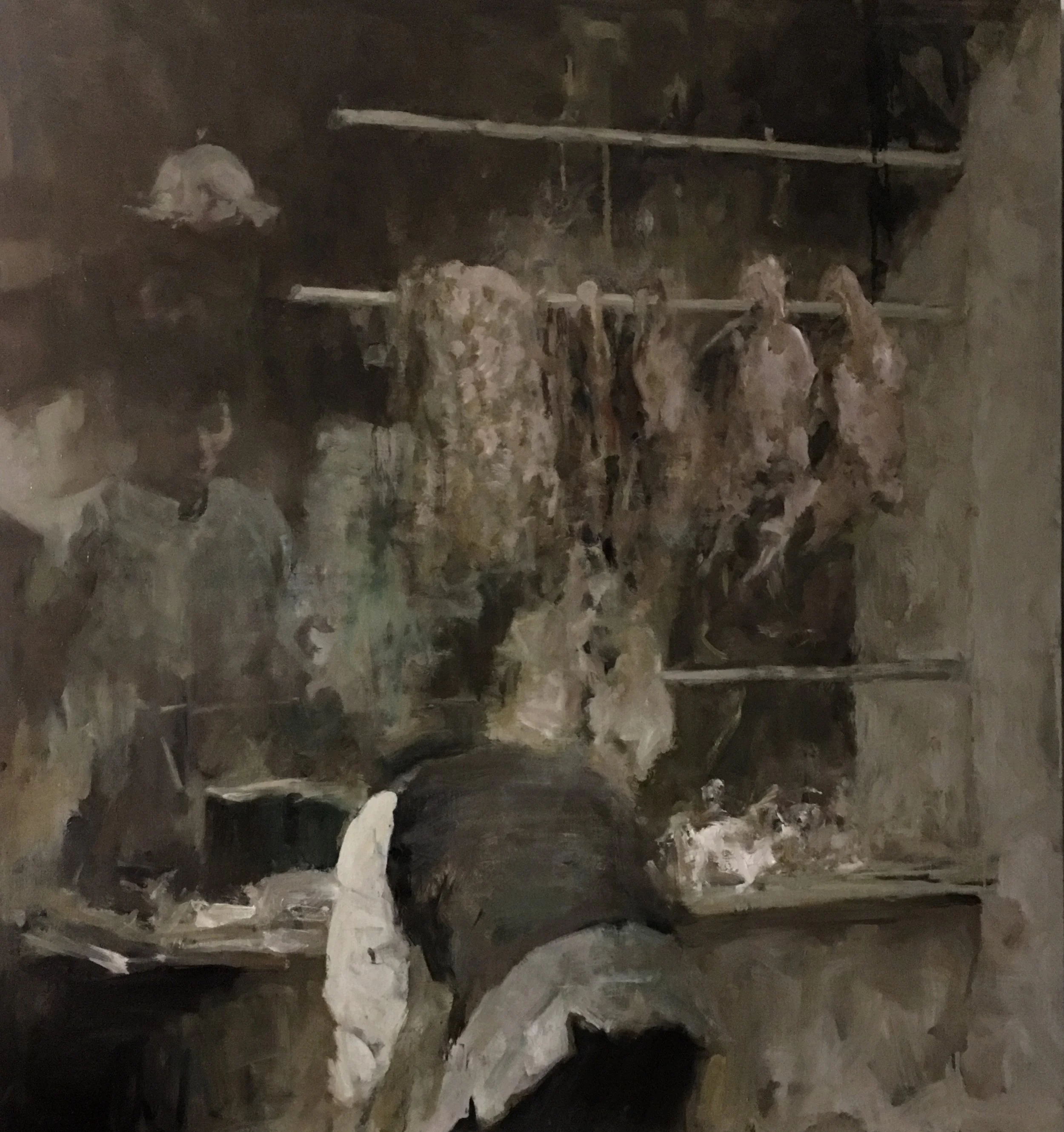
Gray is pivotal in Old Shanghai. For BEI, gray is neither neutral void nor passive transition but a visual medium linking past and present, memory and reality. Where German theorist Johannes Itten defines gray as “without character,” BEI refashions that “lack” into semantically rich gradations. Through subtle shifts of hue, value, and saturation he composes a polyphonic gray spectrum — silver‑gray, blue‑gray, warm gray, green‑gray — woven and seeping through the surface to form both visual texture and strata of memory.
In the Shanghai Echoes series his gray treatment reaches maturity: it is not a mere black‑white mix but a multi‑layered transparent coloration that creates depth — underlayers half‑veiled, surface grays like a thin mist, producing the illusion of temporal depth as if archaeological strata of eras coexist. The technique inherits Rembrandt’s tradition of glazing while inflecting it with distinct Chinese cultural resonance: gray becomes the hue of time, bearing historical weight and mnemonic haze. As Kenneth Clark put it, “color may be the carrier of feeling”, BEI’s practice of gray can be read as a contemporary extension and deepening of that proposition.
Through formal distillation and chromatic reinvention, BEI Jiaxiang elevates particular visual objects into broadly referential images. By means of layered grays he forges a close union of form and imagery, transmuting form into palpable history.