
Artwork Interpretation: Rivertown Series
BEI Jiaxiang’s Rivertown series oil paintings use the Chinese water towns as their theme, connecting various historical layers through permanent architectural symbols.
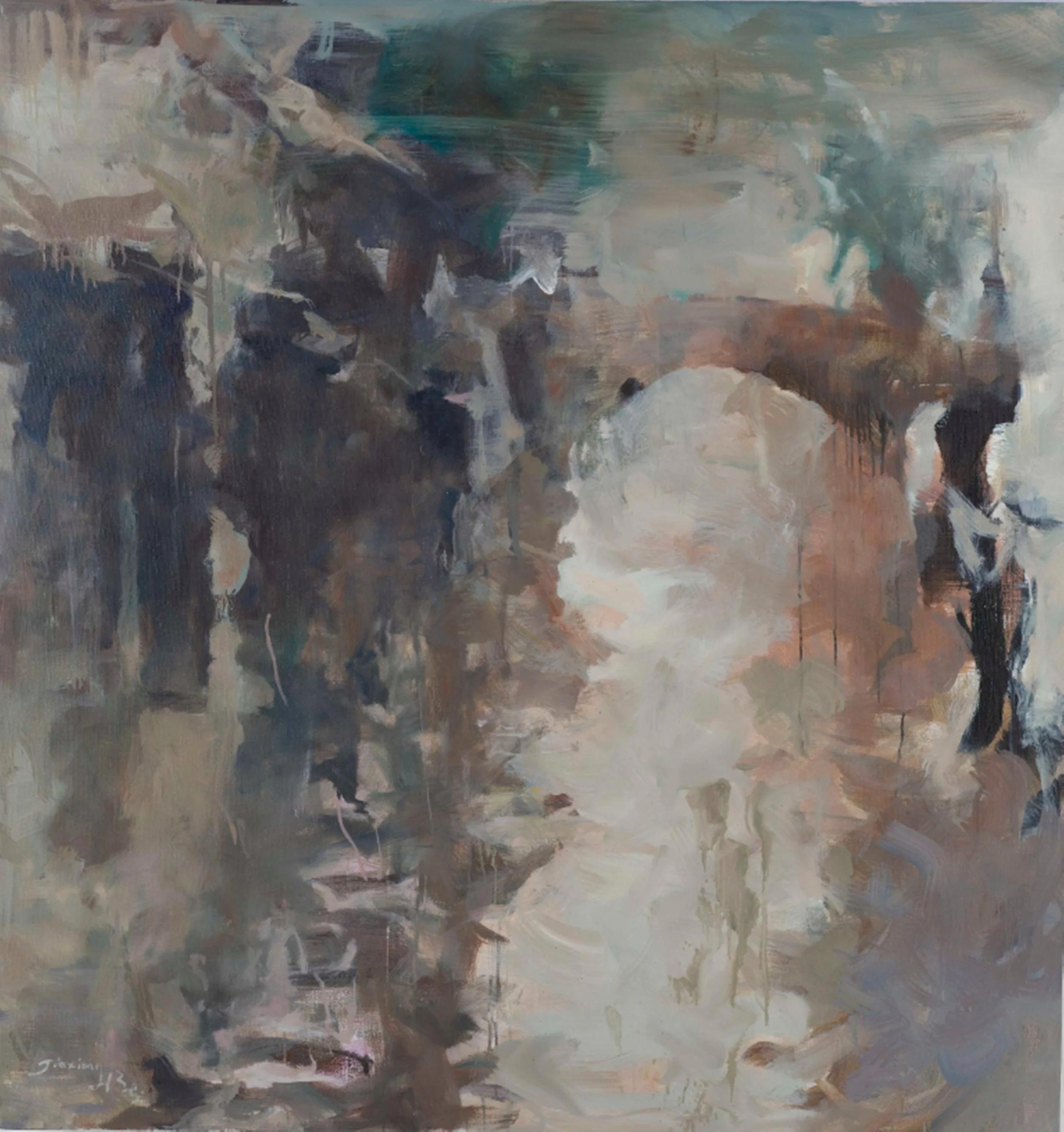
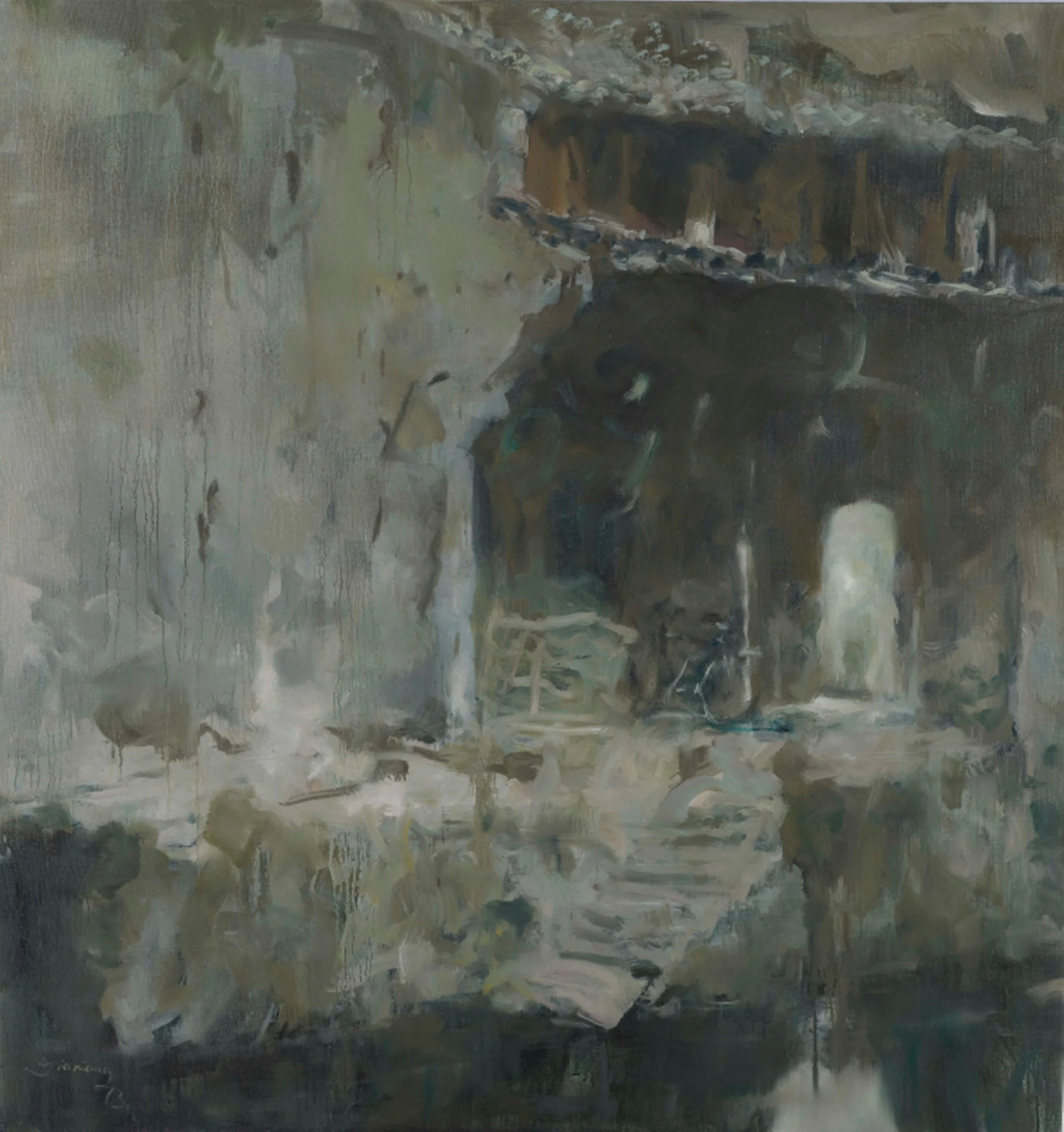
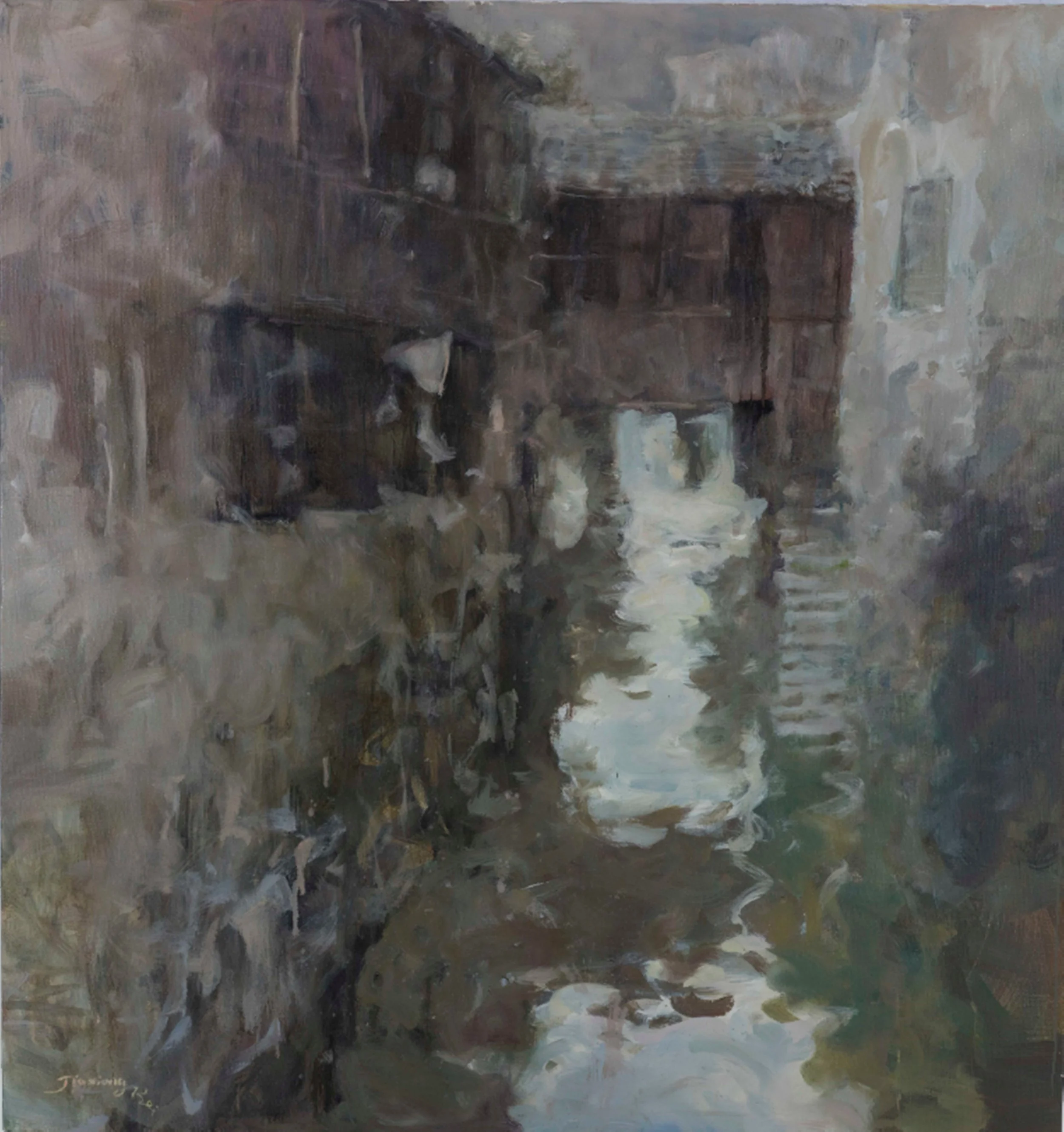
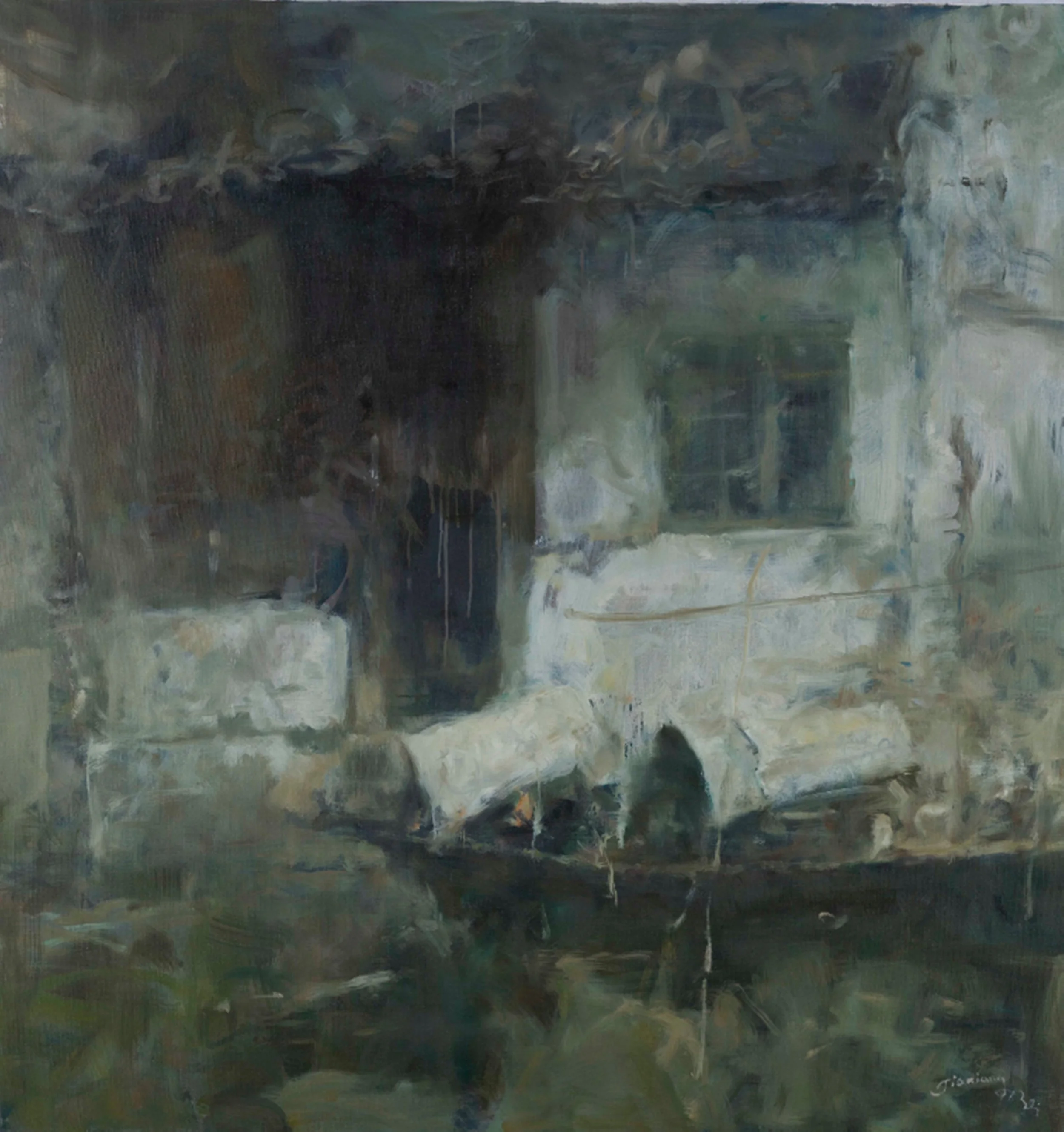
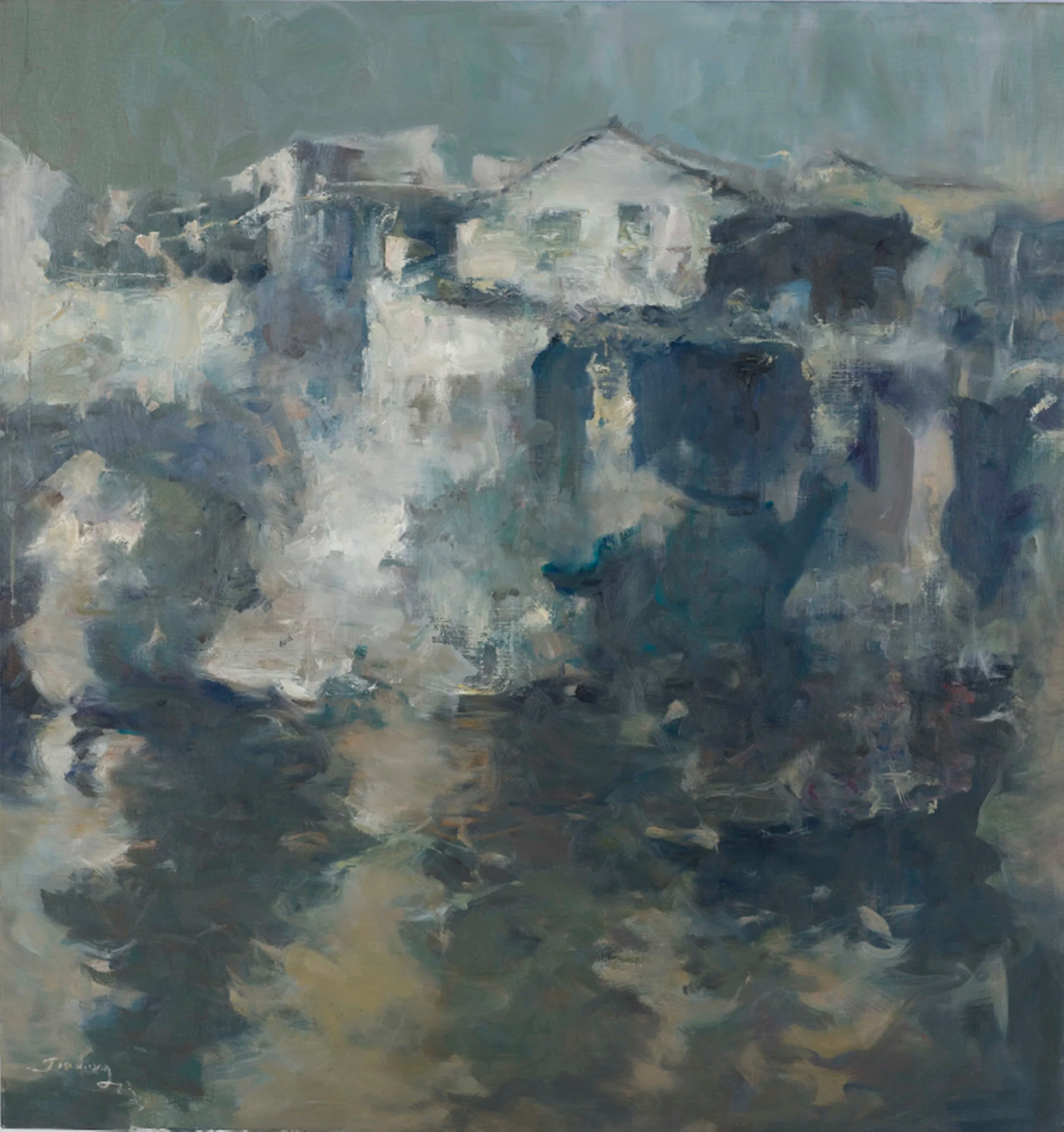
His unique “water inked” oil painting language finds rich nourishment in this subject. By diluting oil paints and using palette knife techniques, he simulates the mist engulfing the riverbanks and the rippling water patterns, combining the thick texture of oil paint with the light, permeable qualities of ink wash. While this method resembles WU Guanzhong’s Chinese water town paintings, BEI emphasizes the tension between materials—where the viscosity of oil paint meets the fluidity of ink on the canvas. Compared to Western Impressionism, BEI’s brushwork possesses calligraphic style, often using dry brush strokes to outline forms, echoing the ink techniques in HUANG Gongwang’s Dwelling in the Fuchun Mountains.
The Rivertown series primarily features a palette of blue-gray, dark green, and off-white, creating the unique, moist atmosphere and tranquility characteristic of Jiangnan. This color application visually resonates with Whistler’s Nocturne series’ gray-scale aesthetic; however, Whistler’s gray tends towards formalist abstraction, whereas BEI's gray emphasizes the visual re-excitation of memory. The blue-gray suggests the natural climate of mist and rain, the off-white conveys the historical wear of crumbling walls, while fragmented warm tones symbolize the lively essence of life in the water towns.
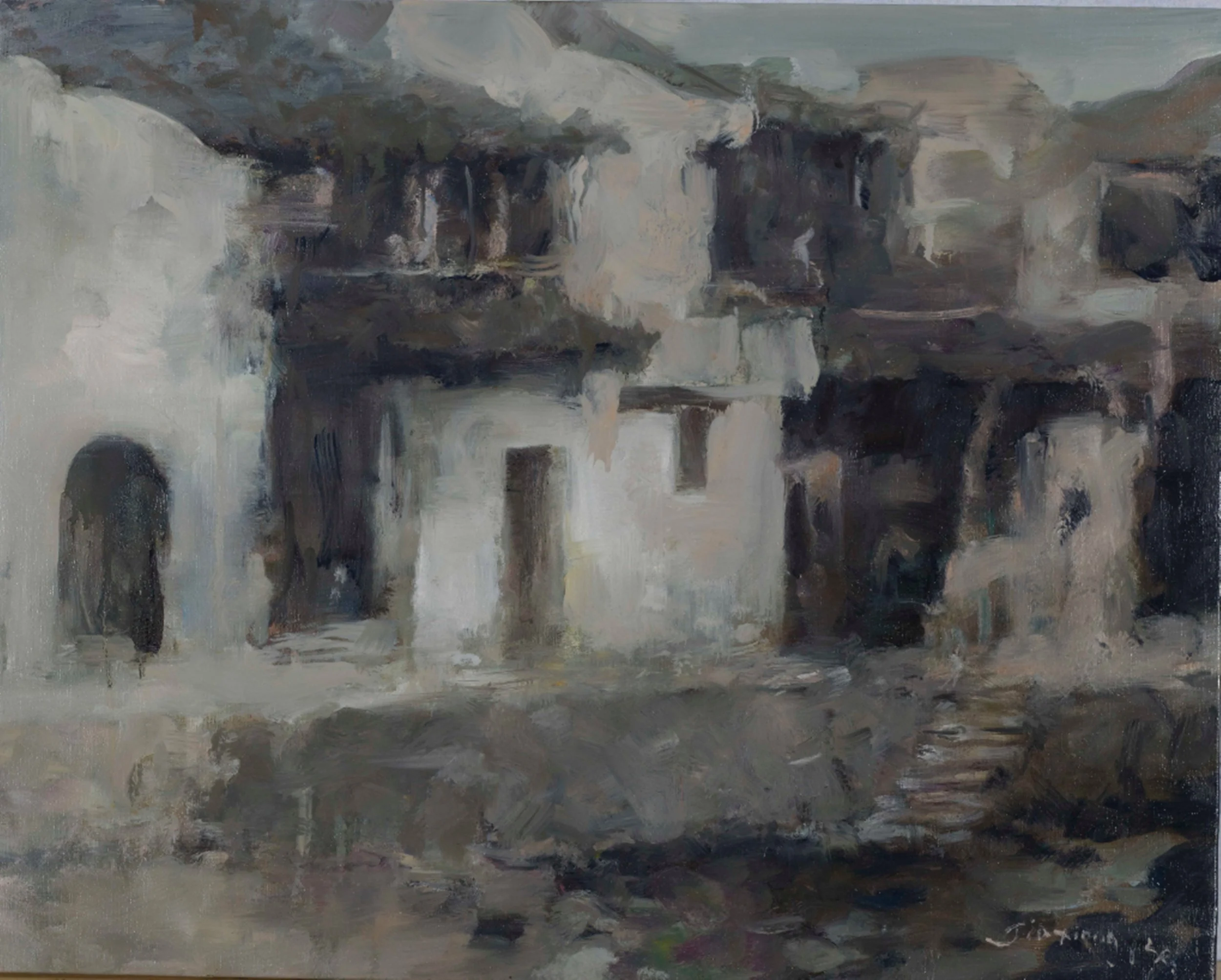
Rivertown 15
Oil On Canvas
76×61cm
These works essentially represent a cultural return that transcends media. Unlike CHEN Yifei’s romanticized narratives of the Jiangnan water towns, BEI Jiaxiang focuses more on the spirituality and subjective projections of architectural spaces. Through the dialectical fusion of oil paint and ink, he liberates Jiangnan from the clichéd imagery of “small bridges and flowing water”. As SHI Ttao once said, “brush and ink must follow the times,” BEI attempts to recode the poetics of the East through oil painting within a contemporary context.