
Artwork Interpretation: Shanghai Dialect Series
In the Shanghai Dialect series, Bei Jiaxiang uses the image of women in Qipao to construct a bridge connecting the historical essence of old Shanghai with contemporary artistic aesthetics.
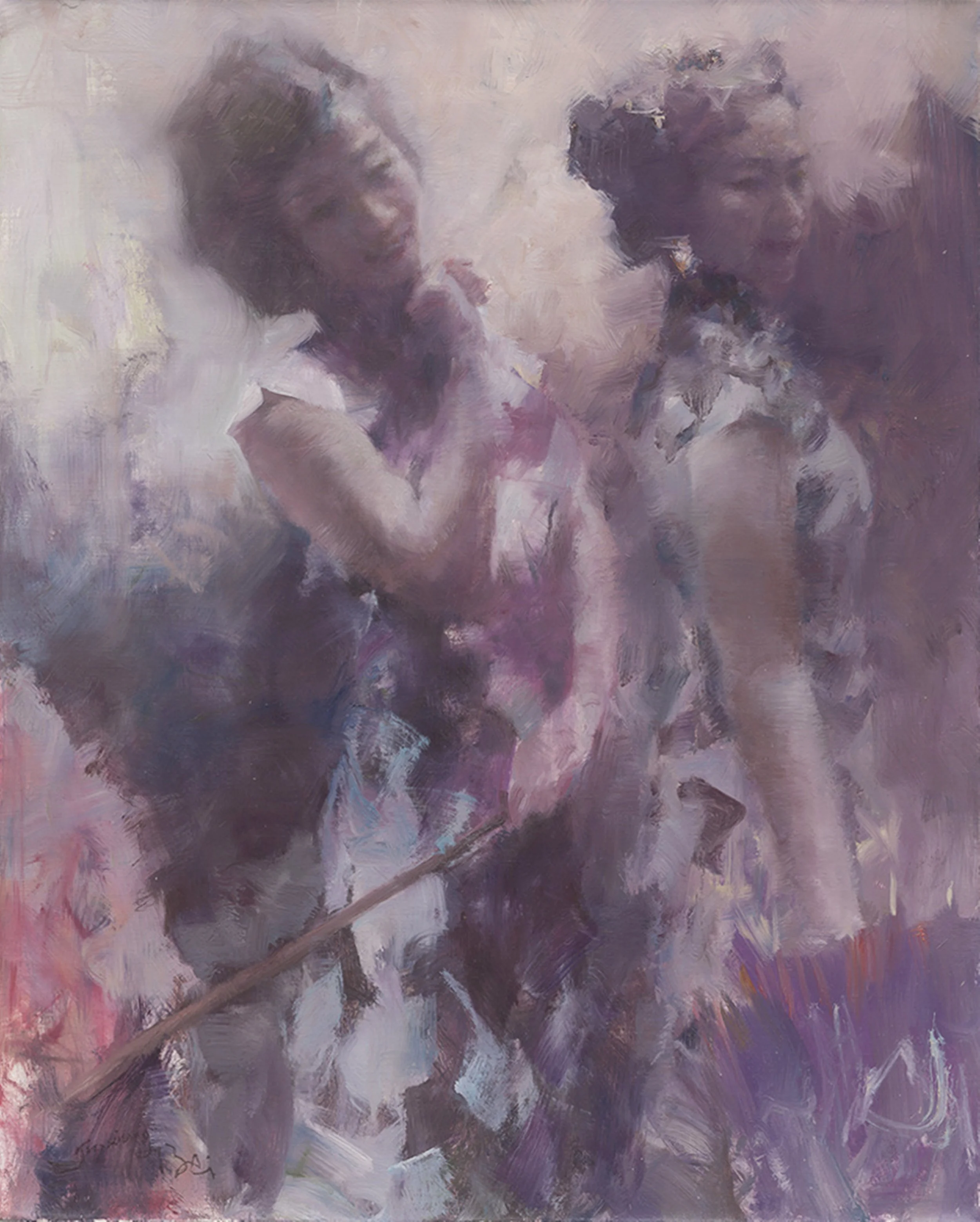
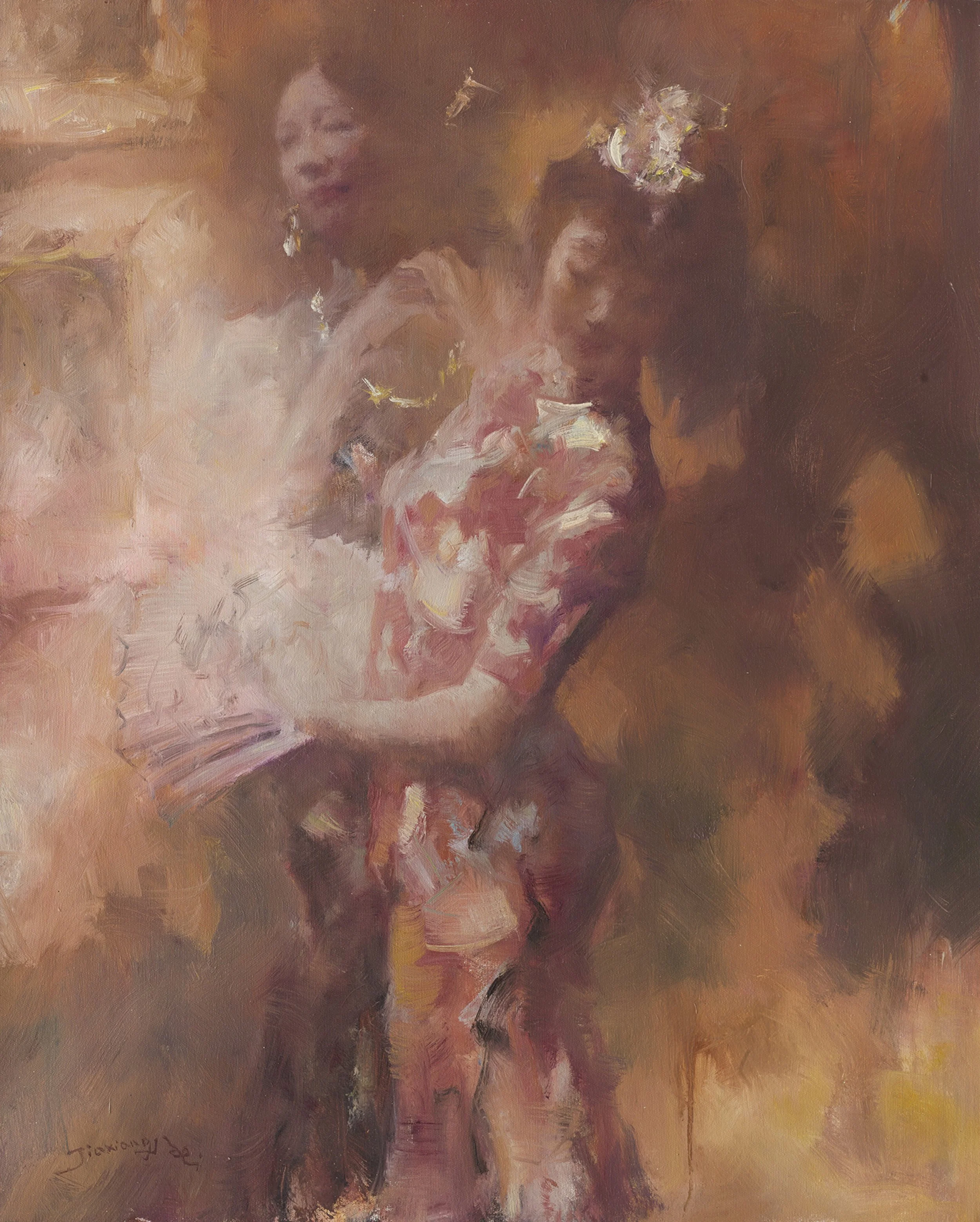
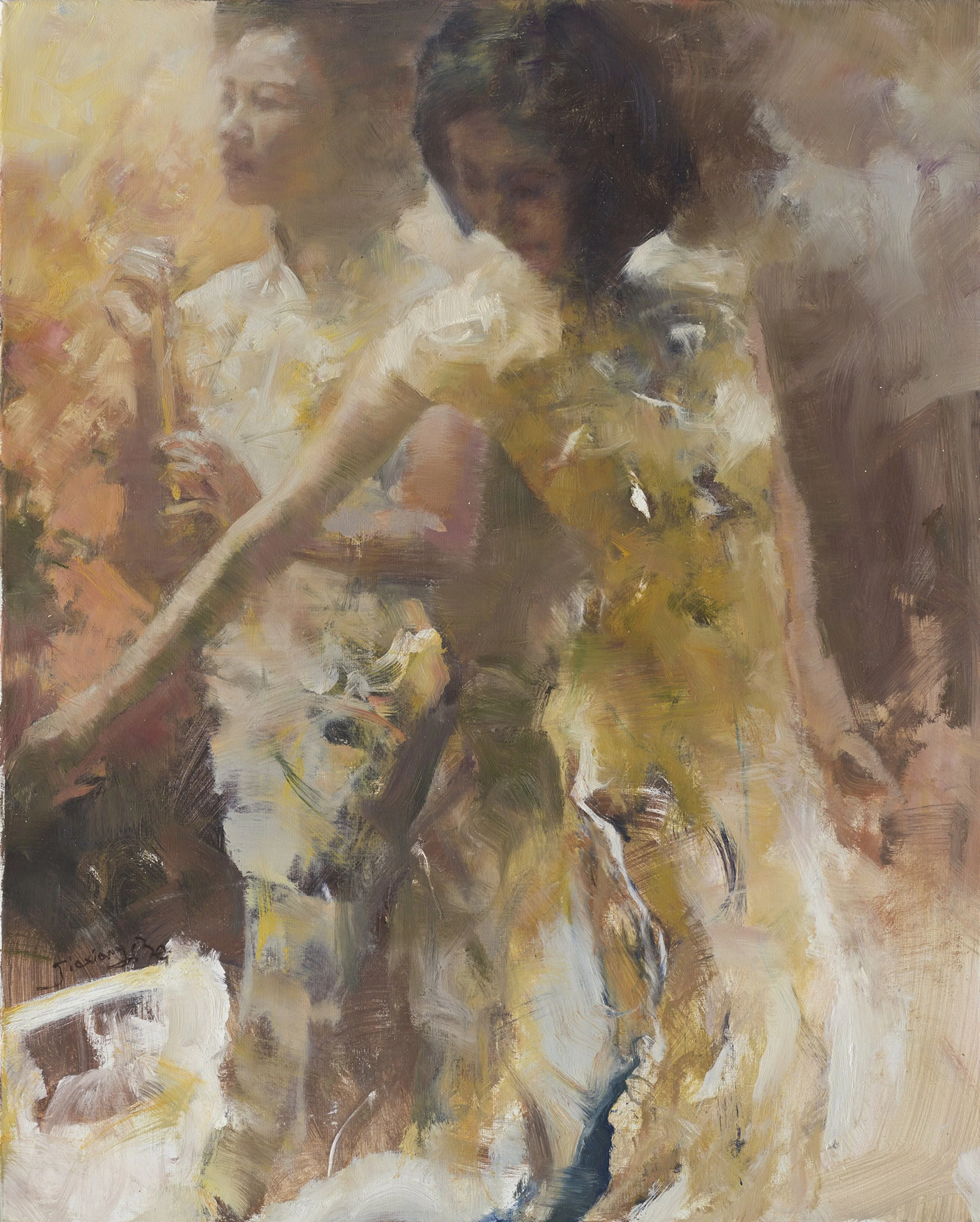
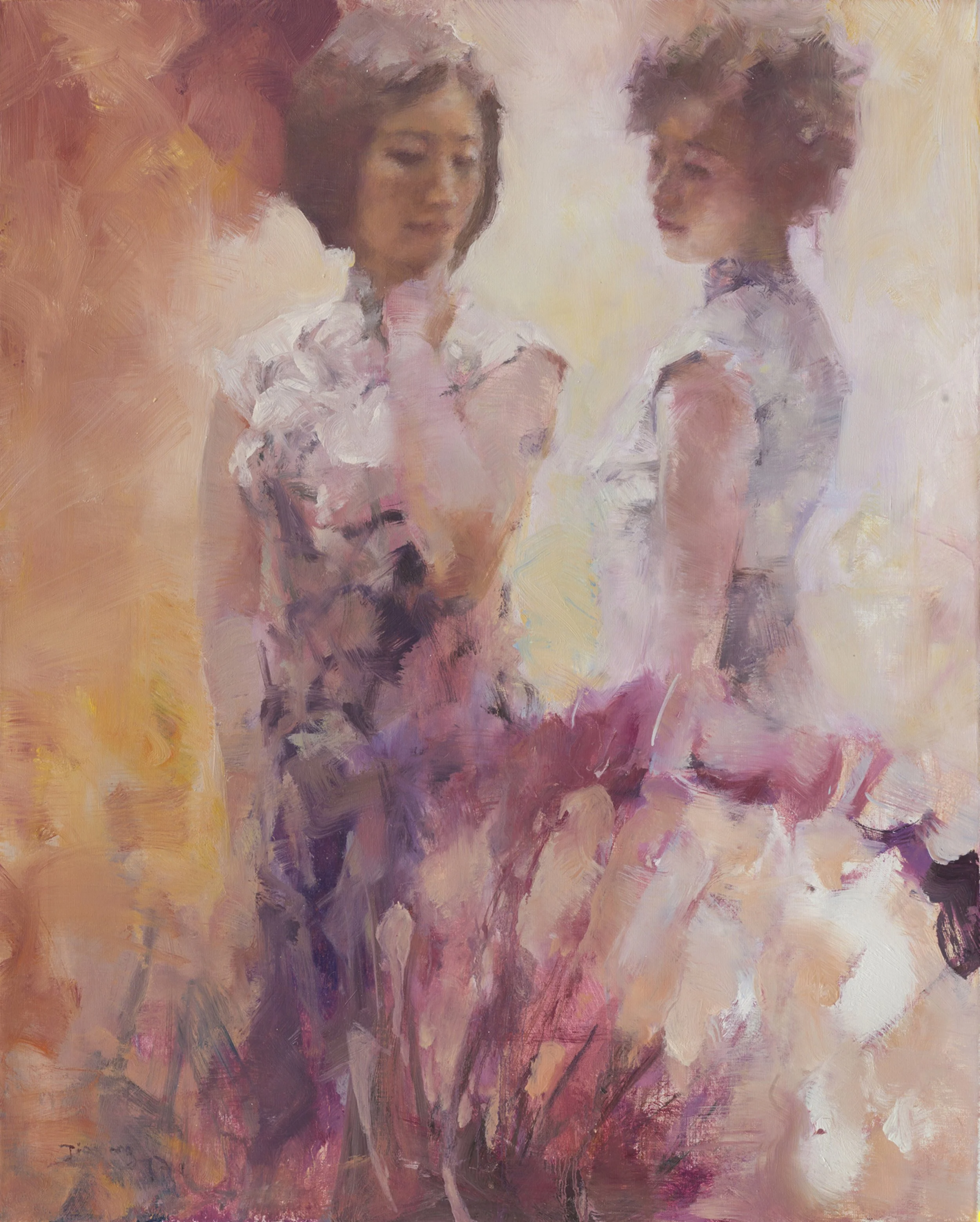
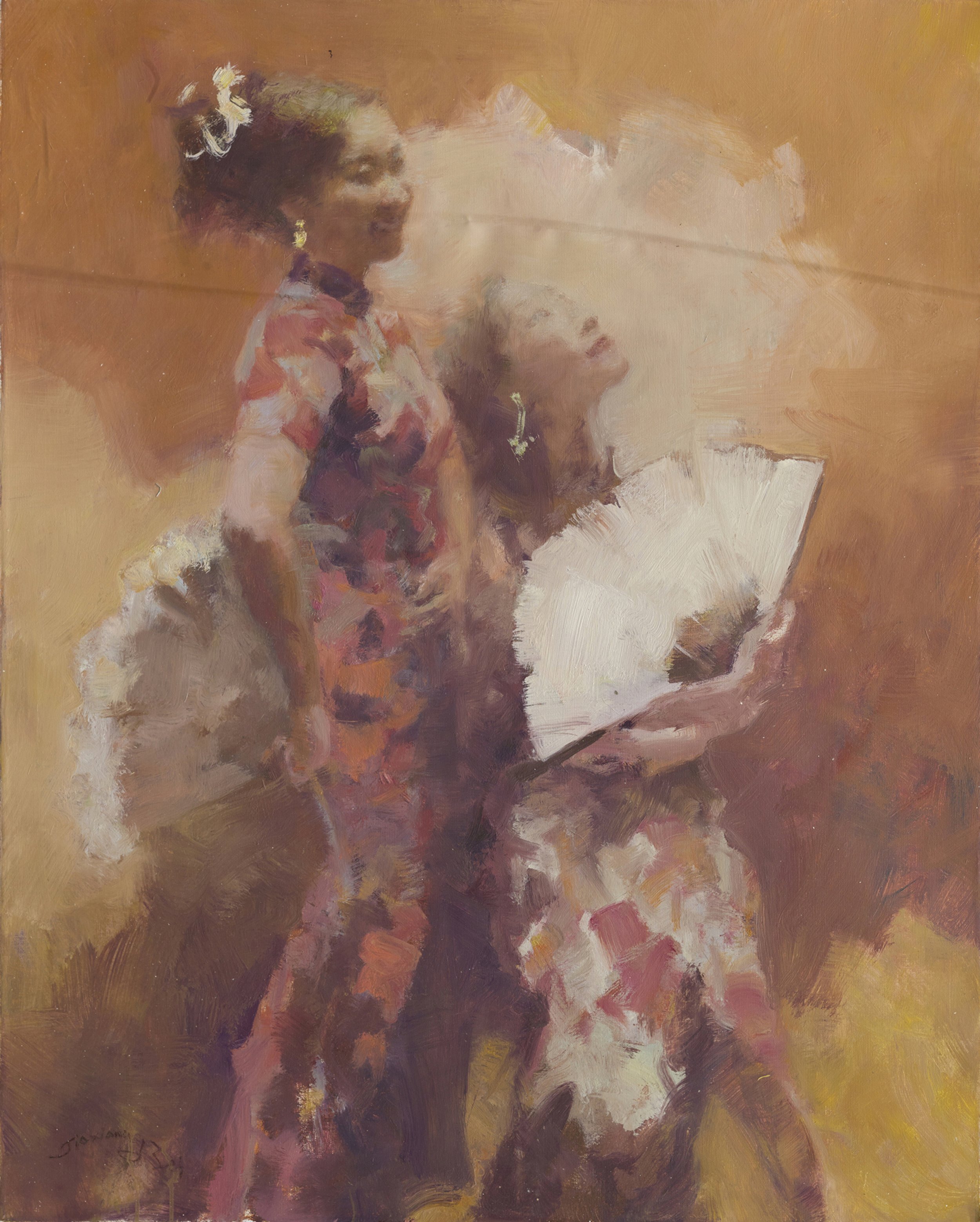
BEI’s compositions break away from traditional narrative logic, employing a blend of “non-specific time and space.” The temporal coordinates of the paintings are deliberately blurred, with no clear backgrounds or focal points. Women dressed in traditional attire appear to float between the mottled light and abstract color blocks, symbolizing the vibrancy of urban life. The static figures convey a poetic sense of time suspended.
Although the contours of the figures are not sharply defined, their elegant silhouettes stand out, enhanced by the dazzling shimmer of their accessories. Through techniques such as palette knife application and dry brushwork, the sheen and folds of the silk are delicately rendered, adding realistic details while imbuing the scene with a fluid, ink-like quality. In this interplay of reality and abstraction, BEI transforms the charm of old Shanghai into symbols of collective memory, echoing the traditional Chinese artistic practice of “using form to express spirit.”
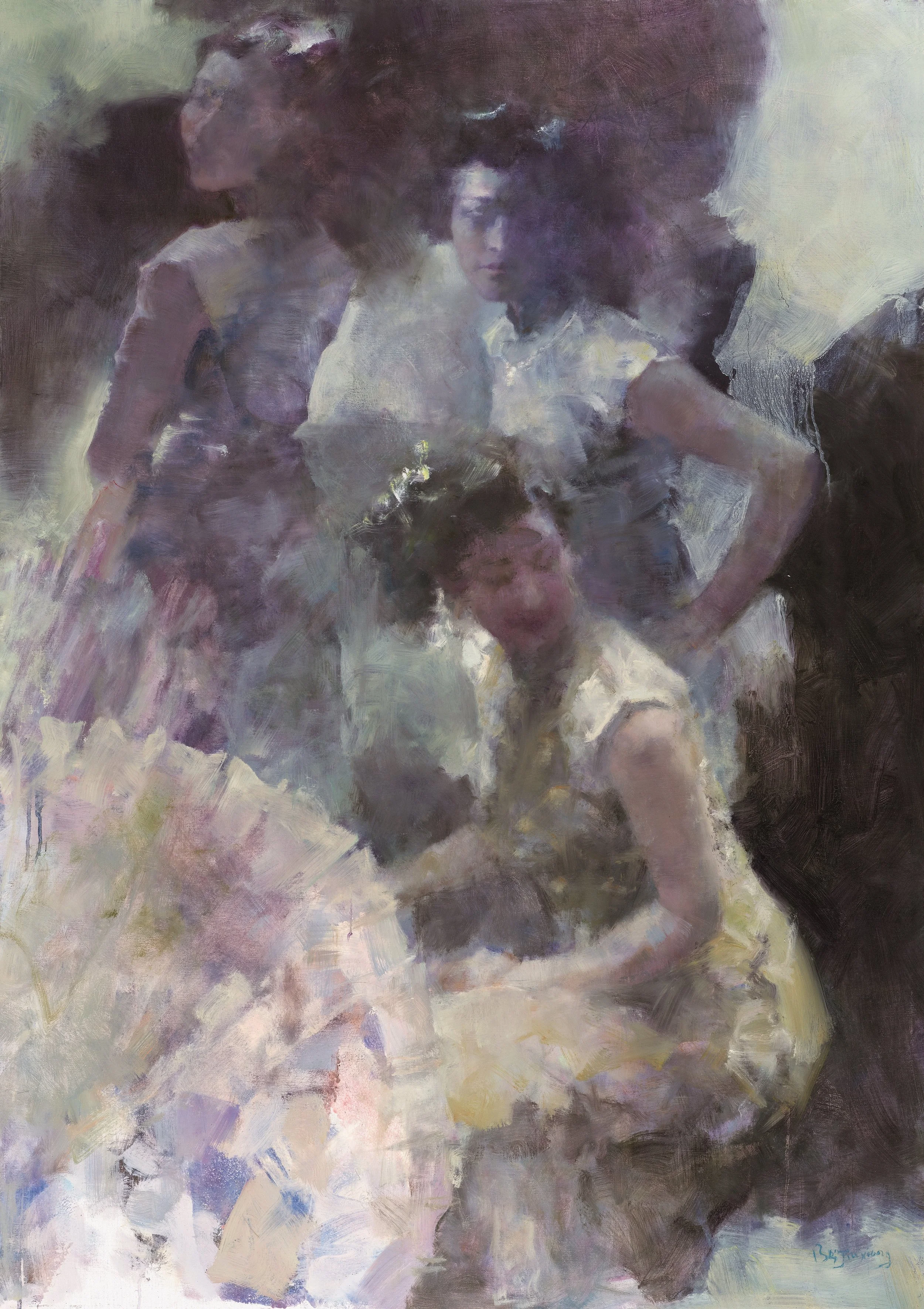
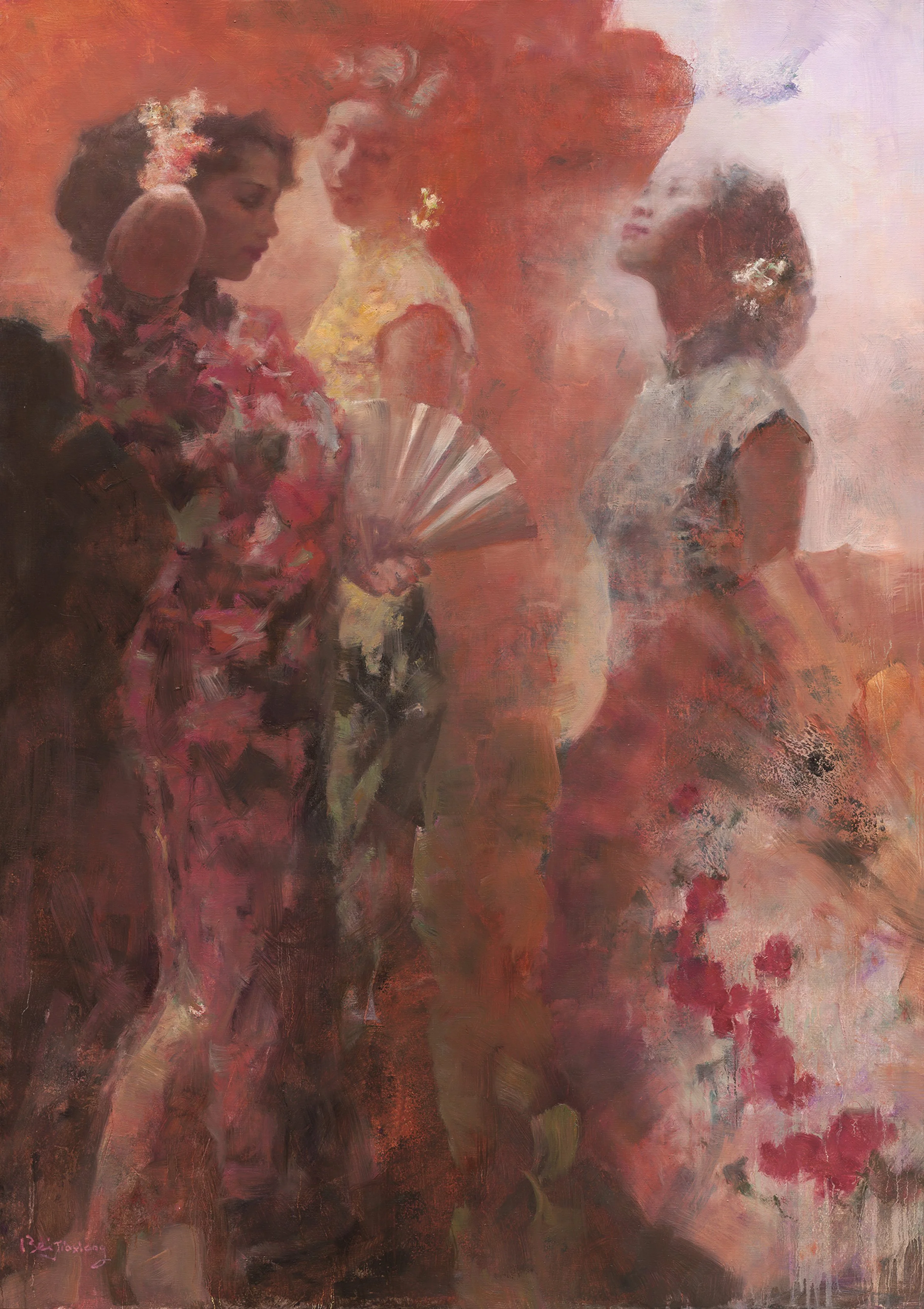
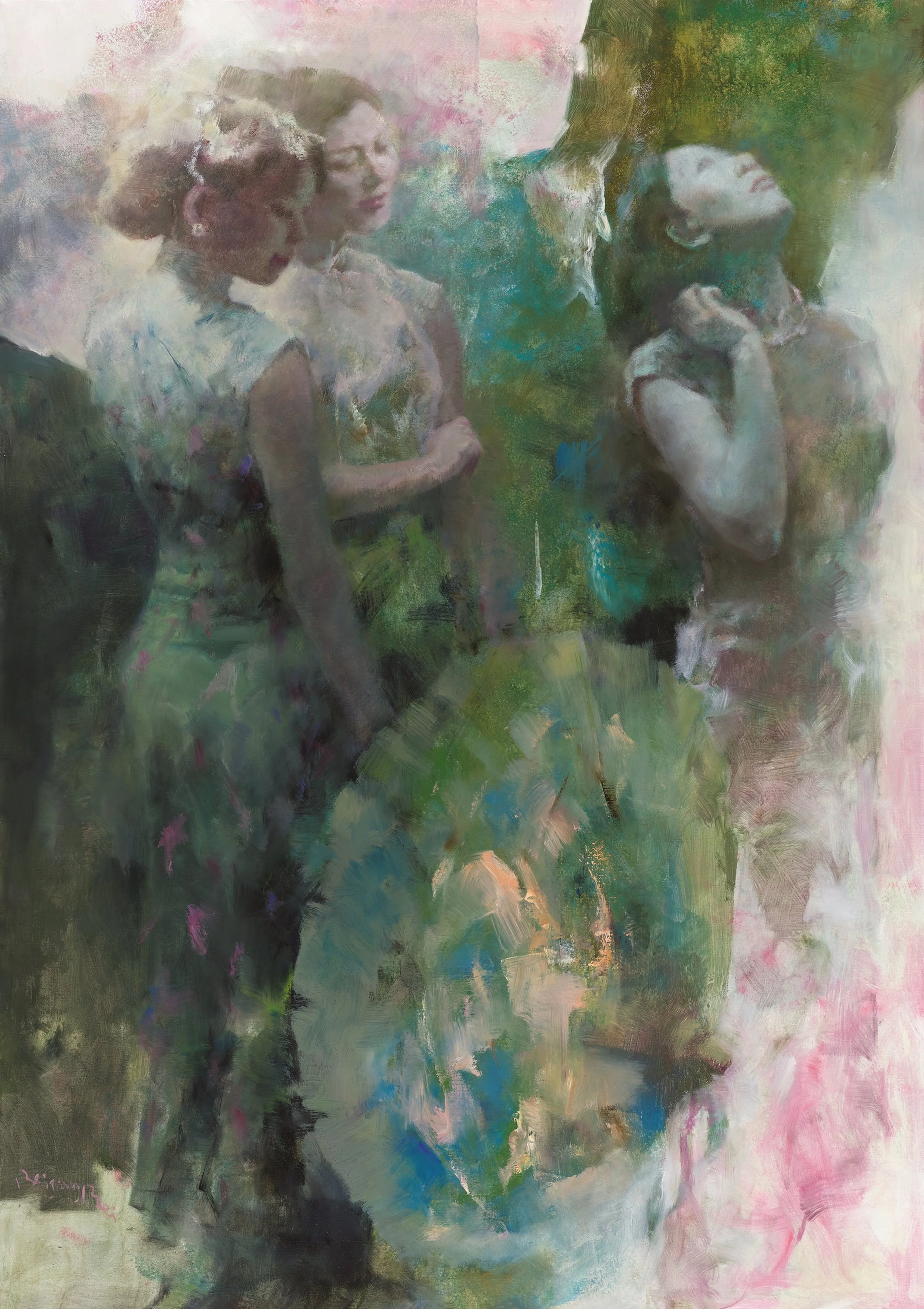
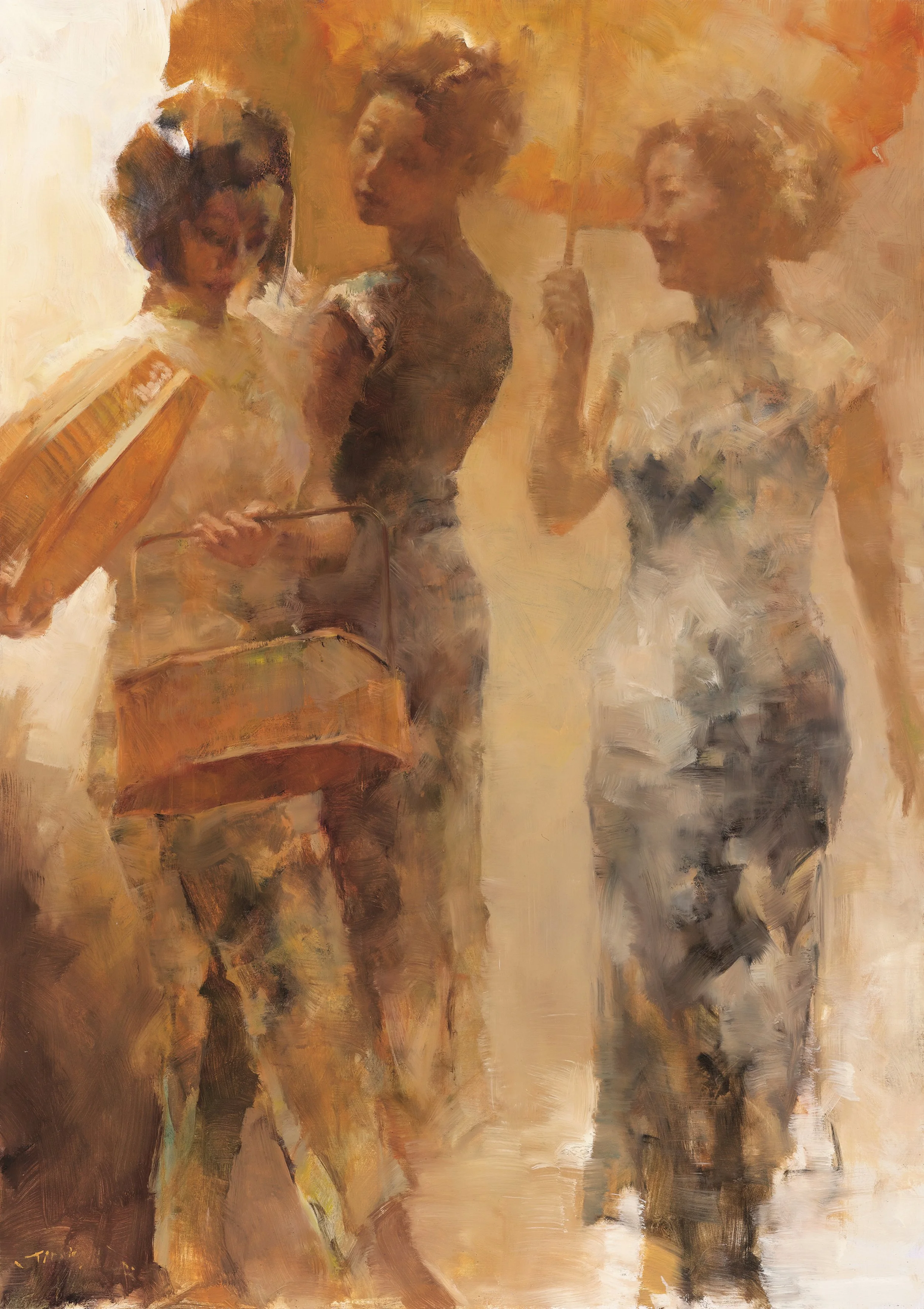
The color palette of the Shanghai Dialect series exhibits dual tensions: on one hand, it utilizes high-saturation reds, indigos, and greens to create a visual feast; on the other hand, it employs gradients of black, white, and gray to simulate the faded textures of old photographs, lending the paintings a tranquil foundation. This color strategy has formal connections to Klimt’s decorative gold tones, but whereas Klimt’s luxury symbols are transformed by BEI into vibrant fragments of urban life.
Gazing at the canvas evokes a soft murmur, reflecting BEI Jiaxiang’s exploration of cultural nostalgia in the modernity process, his persistent pursuit of the imprint of Shanghai culture, and his deep concern for fellow spiritual wanderers like himself who reside in foreign lands.