
BEI Jiaxiang and the Mutual Shaping of Eastern and Western Aesthetics III
BEI Jiaxiang’s artistic journey transcends mere technical synthesis, delving deeper into the mutual permeation and sublimation of aesthetic philosophies across cultures. From his innovative engagement with materiality to his exploration of symbolic expression, his practice embodies a profound inner dialogue between Eastern and Western sensibilities.
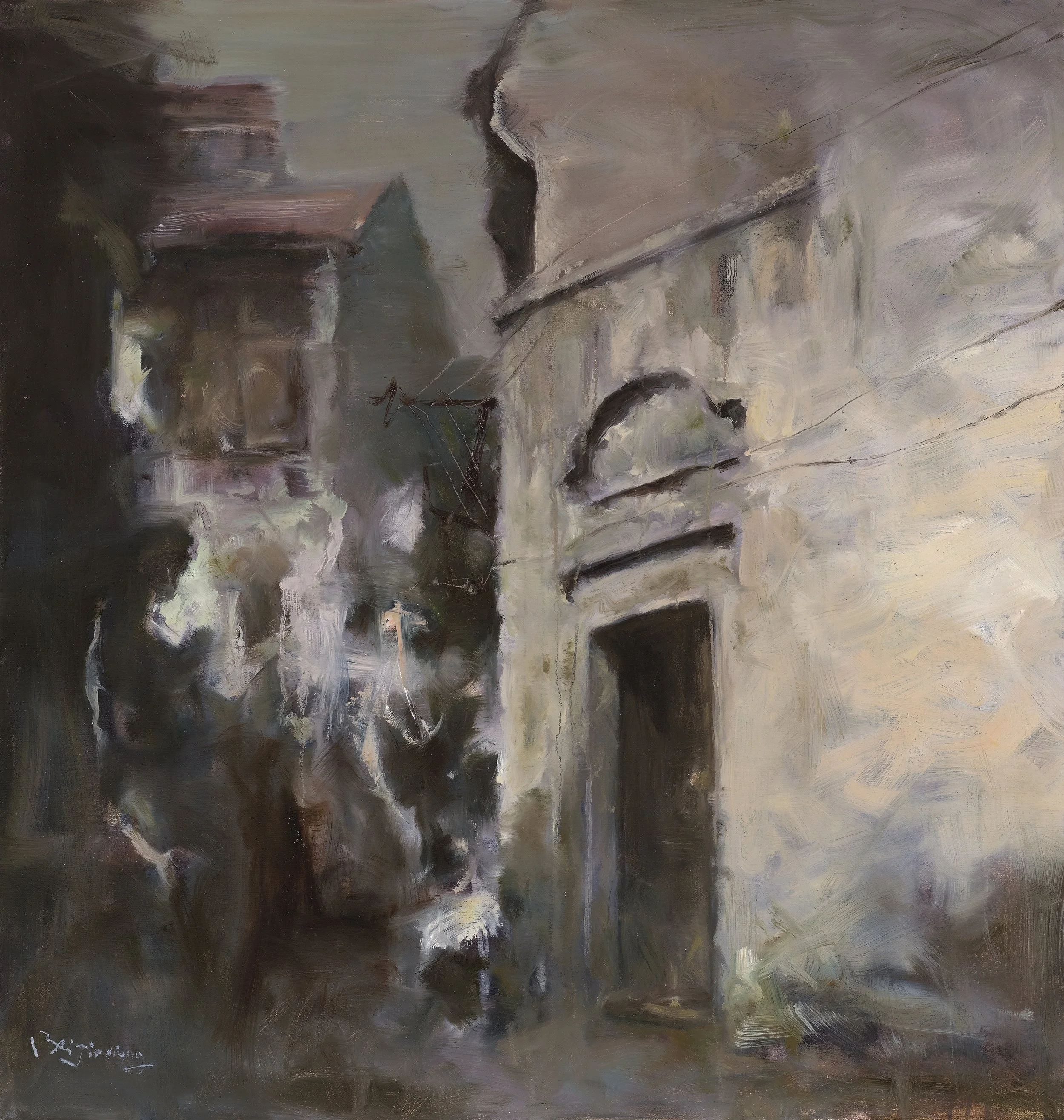
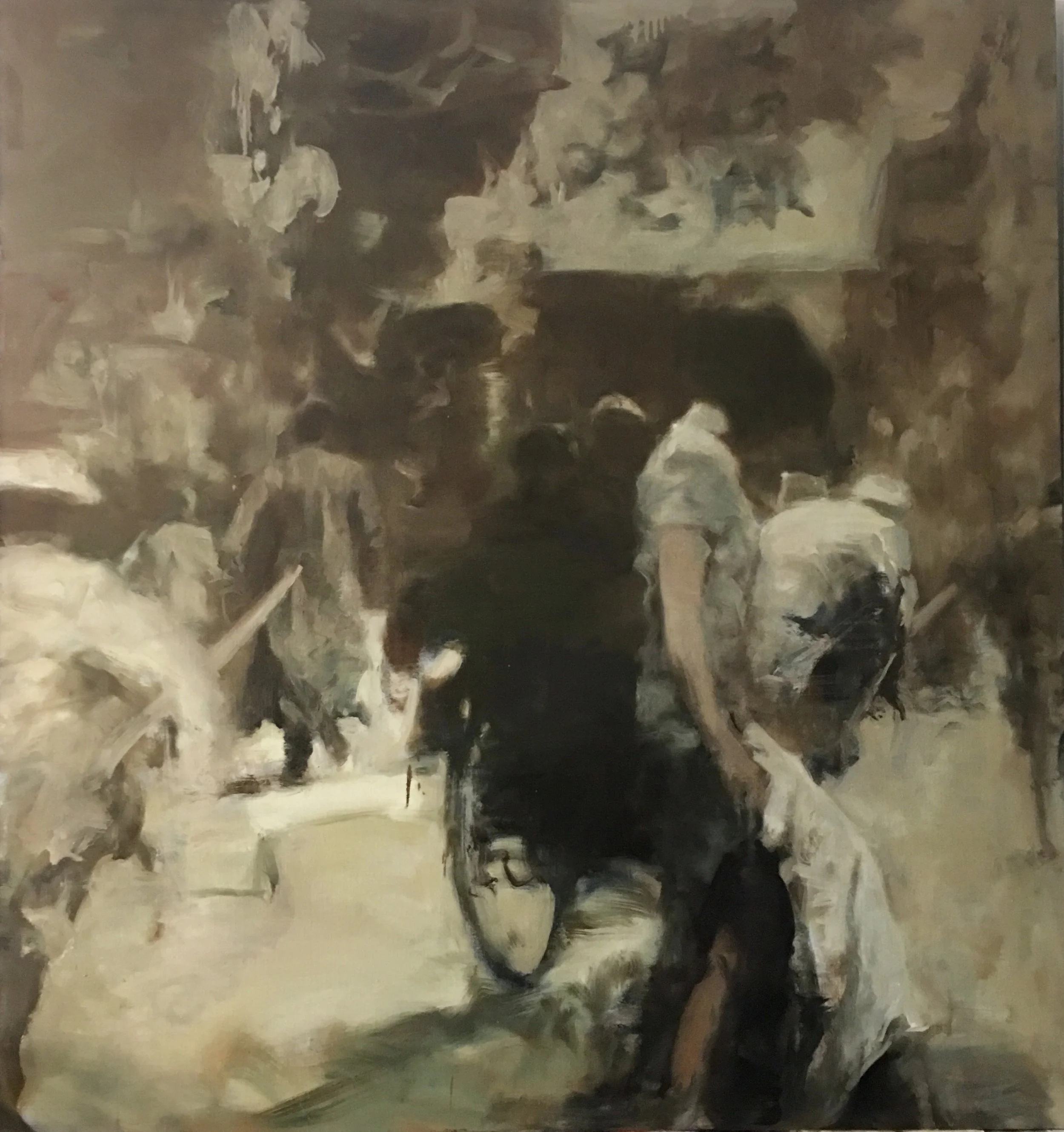
In BEI’s Old Shanghai series, he deliberately eschews the glittering icons of the Bund, turning instead to the quiet folds of alleyways—peeling white walls in Mengjiang Lane, the languid posture of a qipao woman in Doorstep. Here, BEI replaces the vibrant palette of the cosmopolitan cityscape with a nuanced spectrum of grays. This “de-sensationalized” approach distills historical memory into poetic abstraction, crafting a liminal space where reality and illusion coalesce. BEI’s grays inherit the resonant subtlety of Jiangnan literati tradition, transforming urban scenes into humanistic schematics and suffusing his oils with the cadence of ancient Eastern artistry.
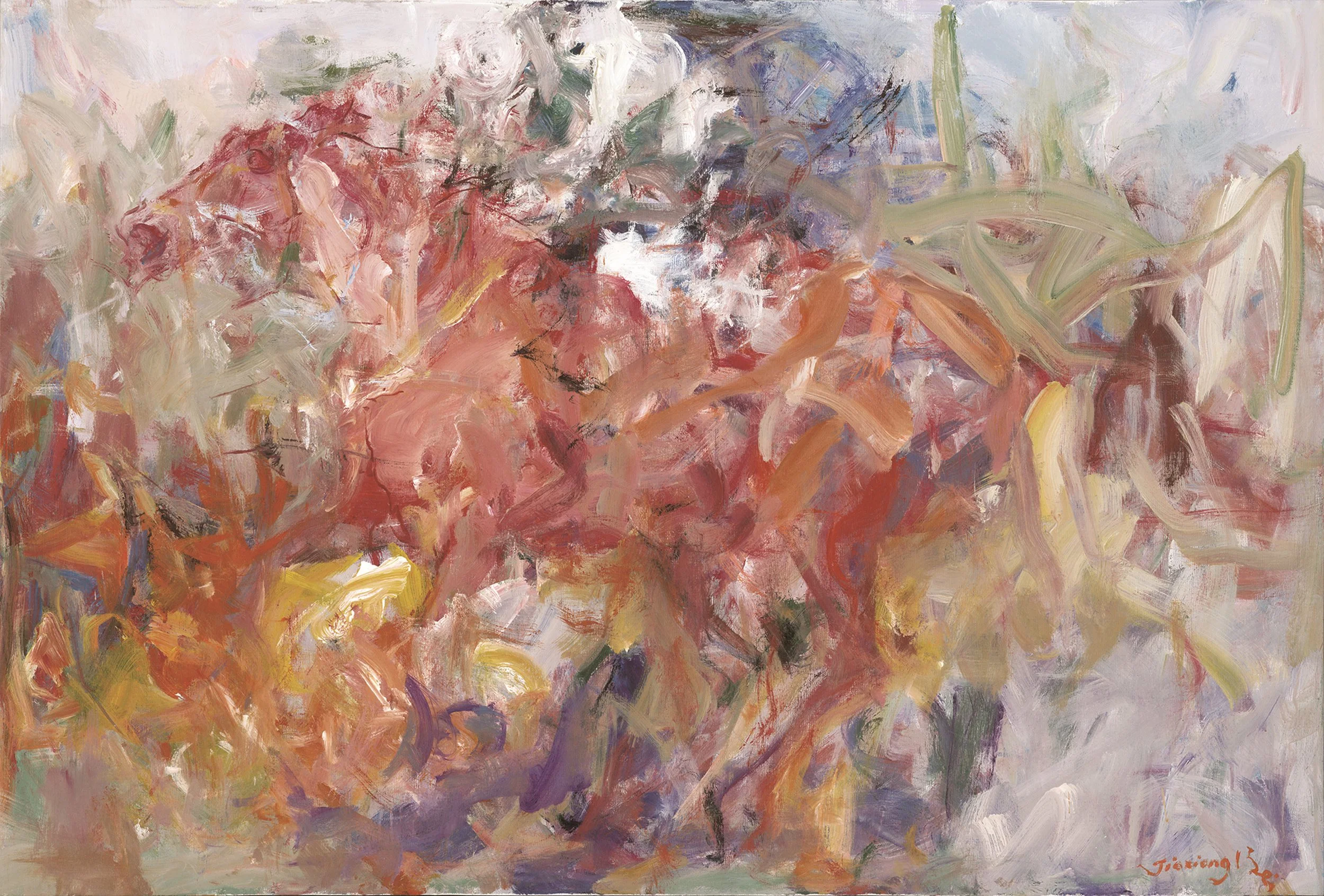
Striding
Oil On Canvas
130*88cm
In his horse works, BEI’s Galloping Horses series resonates deeply with Western Expressionism. Pieces like Phantom and Striding employ palette-knife empty strokes to trace velocity, as horses shed their reins to become pure symbols of kinetic force. This obsession with motion recalls Futurist Umberto Boccioni’s dismantling of static representation—yet BEI’s brushwork is steeped in the “spiritual rhythm” of Chinese freehand ink. The horses’ sweeping tails evoke the wild cursive script of Huai Su, while their hoof-prints mirror the spontaneity of XV Wei’s ink splashes. Where Boccioni’s mechanized forms channel industrial-age anxiety, BEI’s horses exude primal vitality, aligning with Deleuze’s “body without organs” or, more fundamentally, the Daoist unity of cosmos and self.
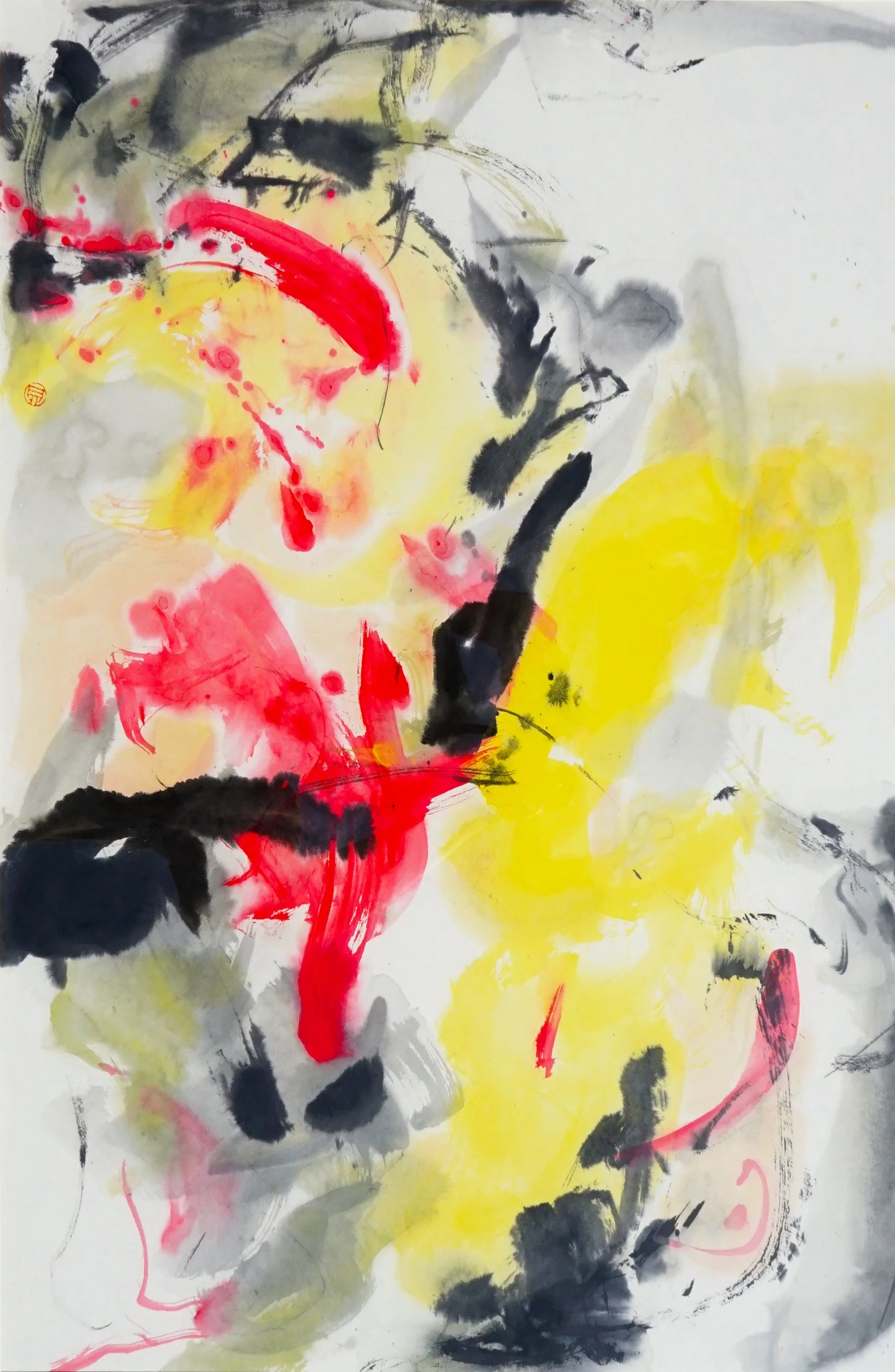
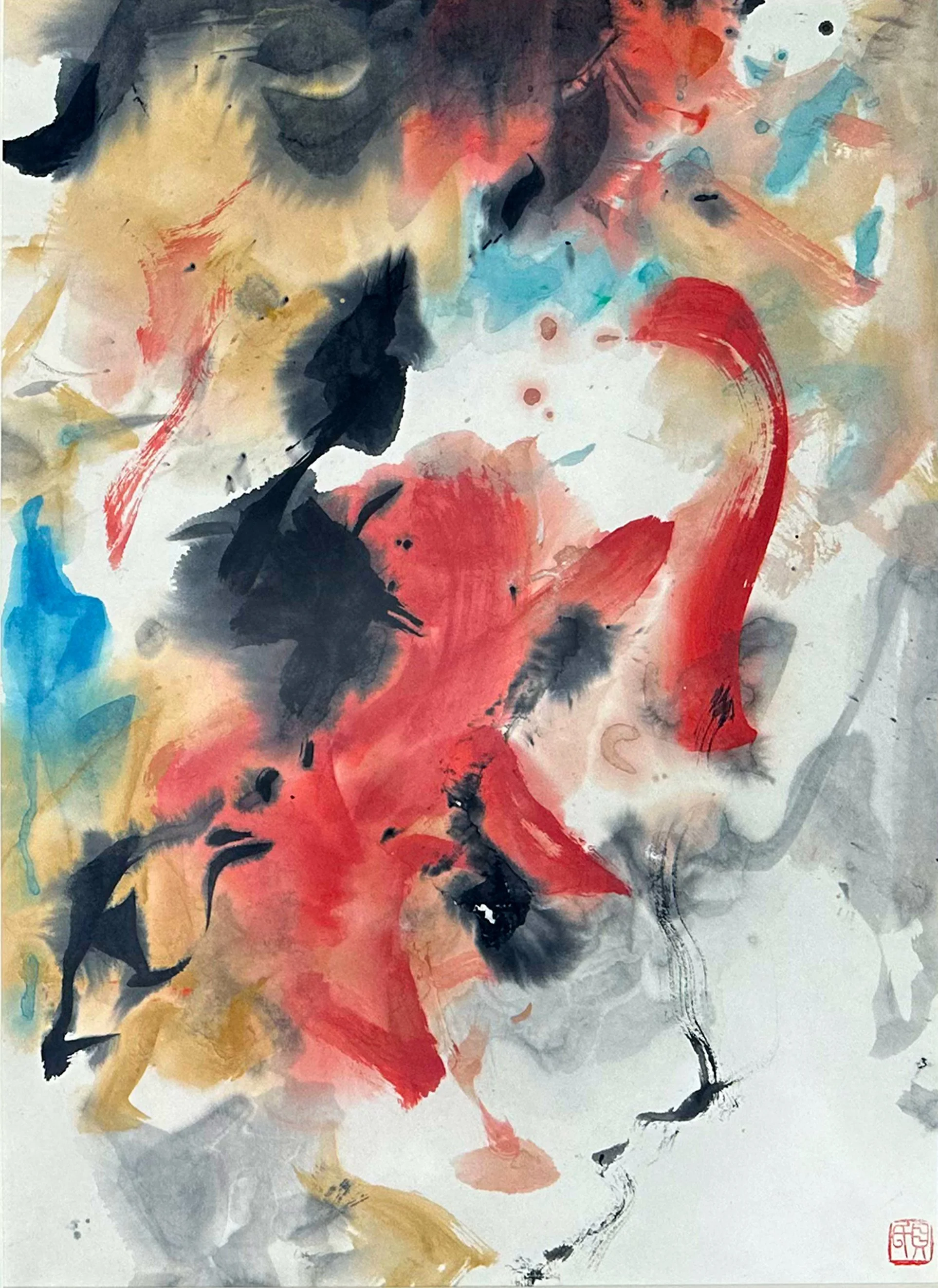
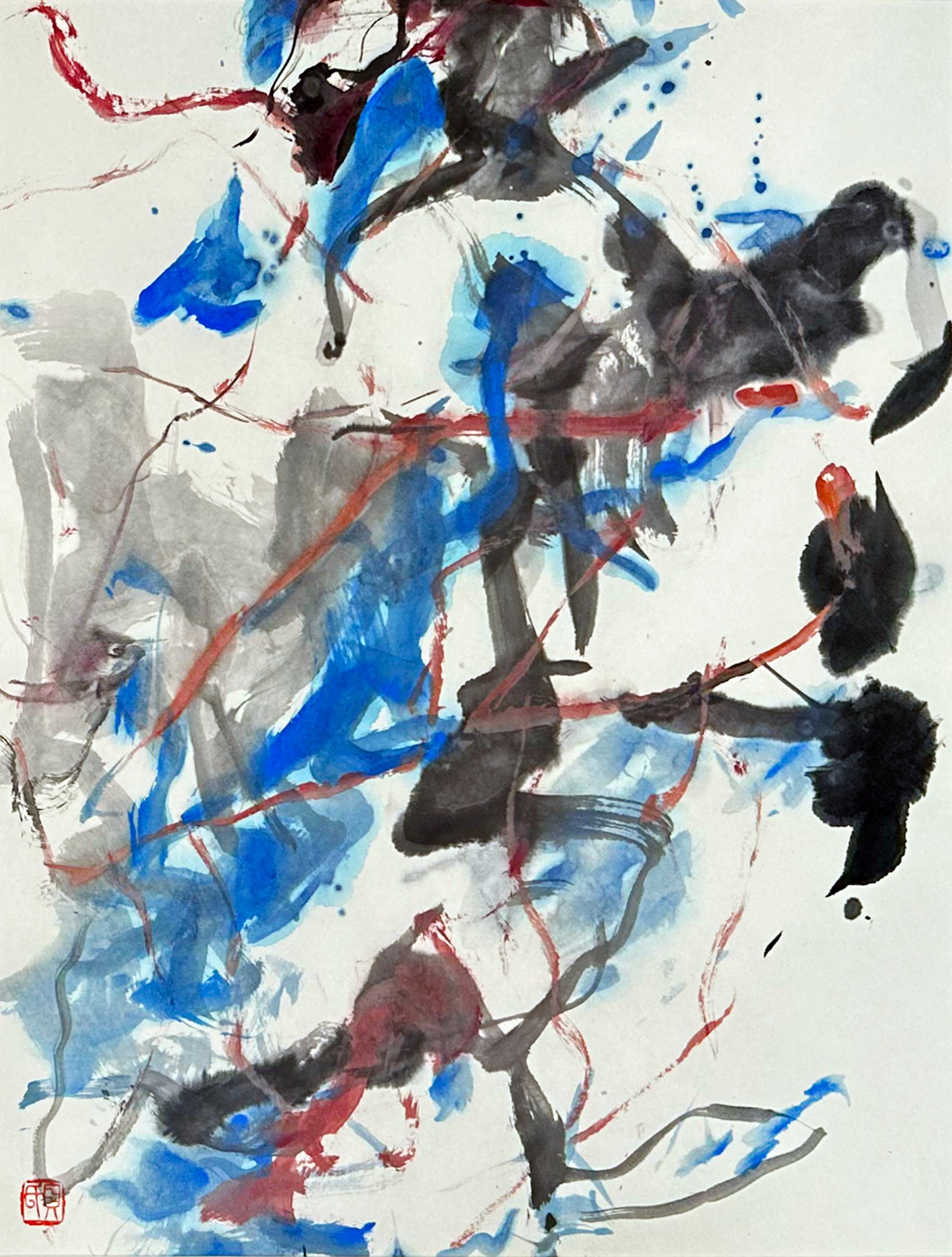
BEI’s floral and natural subjects reveal a quieter dialogue with Post-Impressionism. His Moonlit Lotus Pond series infuses Cézanne’s structural rigor into the lyrical tradition of Chinese bird-and-flower painting, layering translucent oils to mimic ink-wash diffusion—a reverse appropriation of how Impressionists borrowed from ukiyo-e. Van Gogh’s tormented hues and swirling strokes externalize emotion; Bei, by contrast, reconstructs space through the five tones of ink, as seen in Blossom #12, where petals tremble through clashes of warm and cool grays, translating HUANG Binhong’s “luminous ink” into oil. BEI’s semi-abstract ponds become vessels of “mind-world fusion”—at once botanical forms and literati landscapes for the soul.
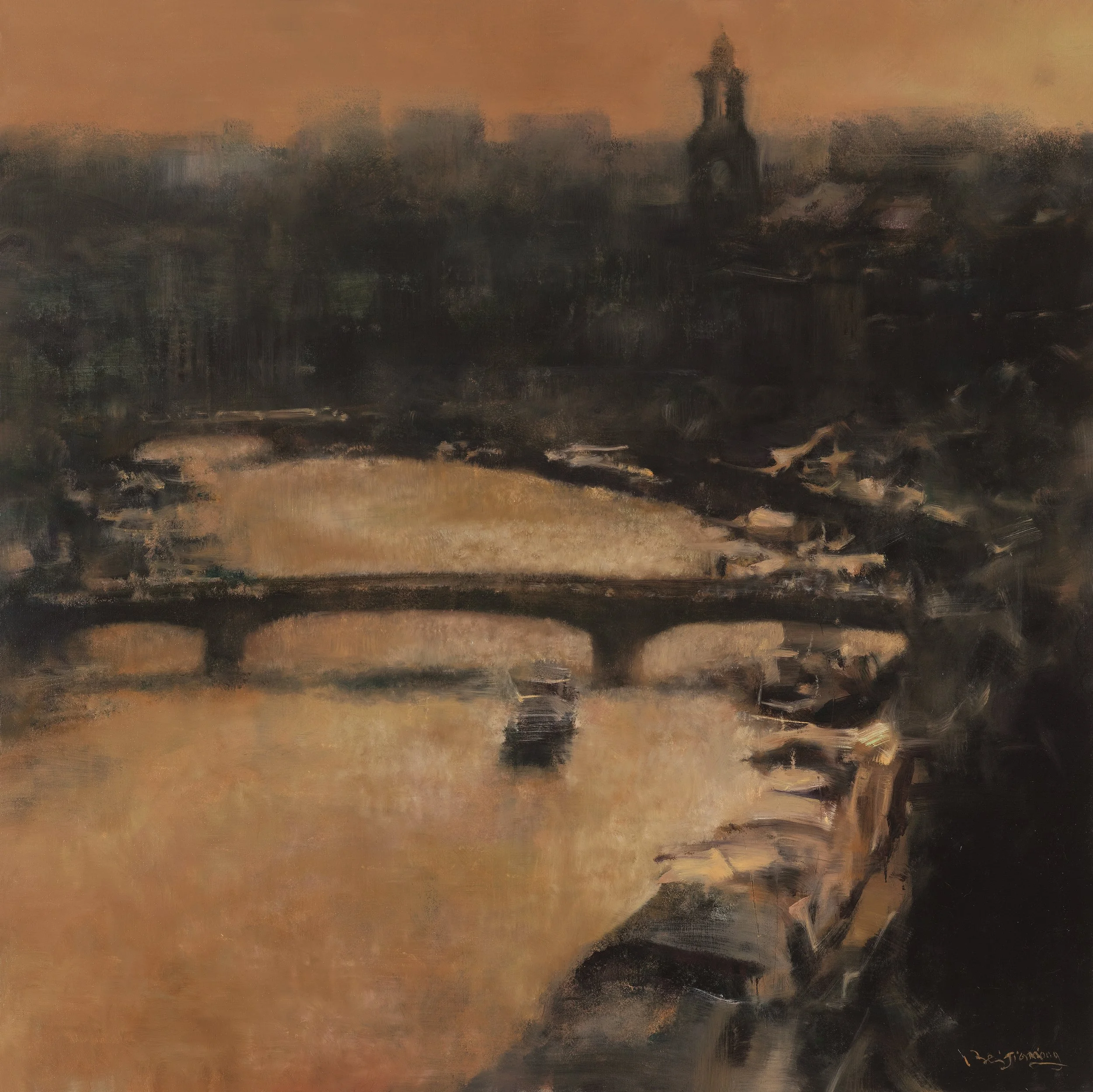
Glittering HongKou
Oil On Canvas
116*116cm
BEI’s profound transformation of Eastern and Western artistic traditions is rooted in a spiritual coordinate system defined by the dual tensions of displacement and homecoming. Having lived in Australia for over three decades, his Old Shanghai series is described by the artist himself as an “artistic return”—a cultural anchor cast from the shores of diaspora. In works like Glittering HongKou, where the clock tower, ferry smoke, and silhouetted figures coexist under illogical light, time and space collapse into a palimpsest of memory. This fragmented narrative echoes Picasso’s Blue Period vagrants, both employing disjointed scenes to bear the weight of humanistic introspection.
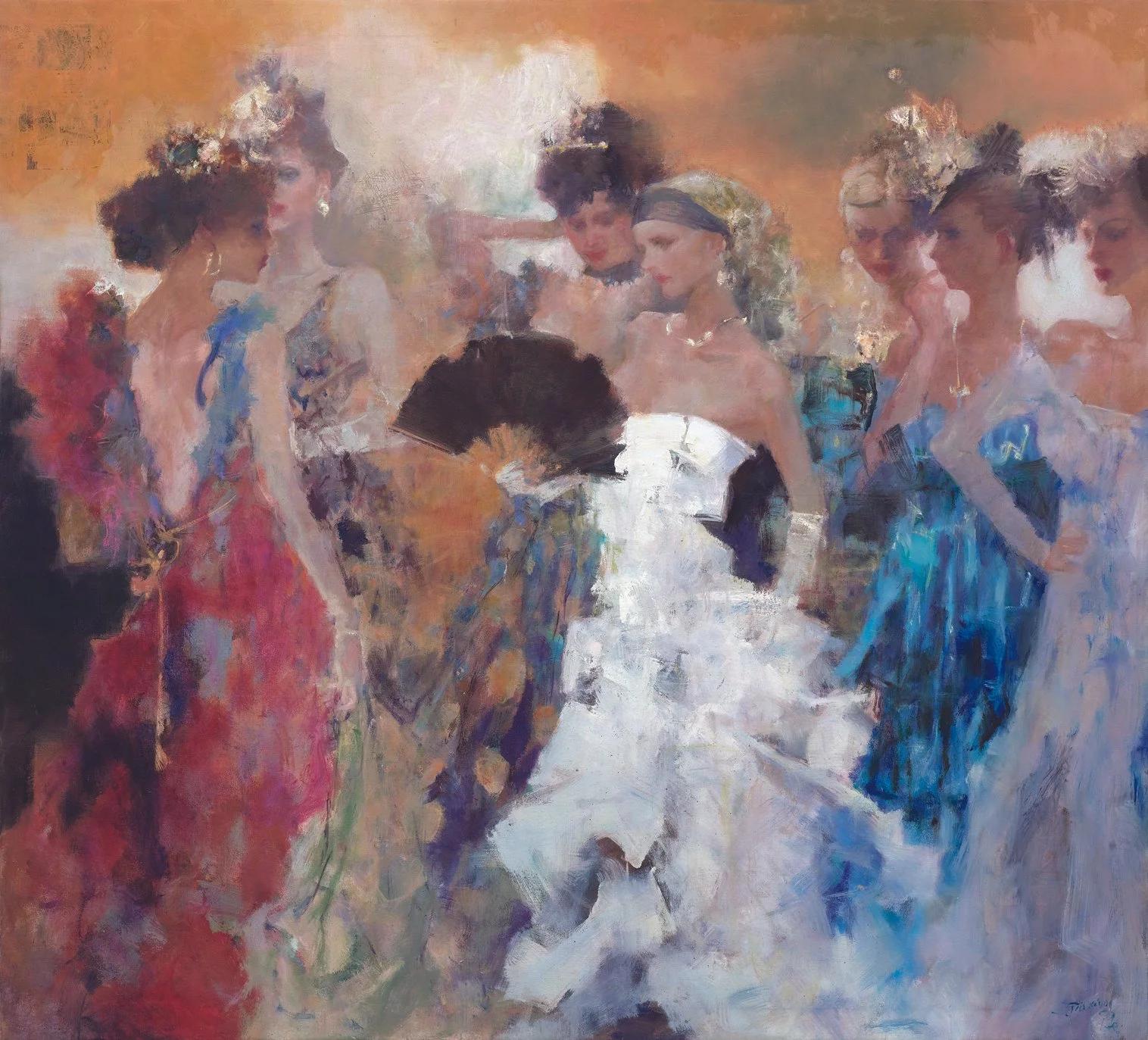
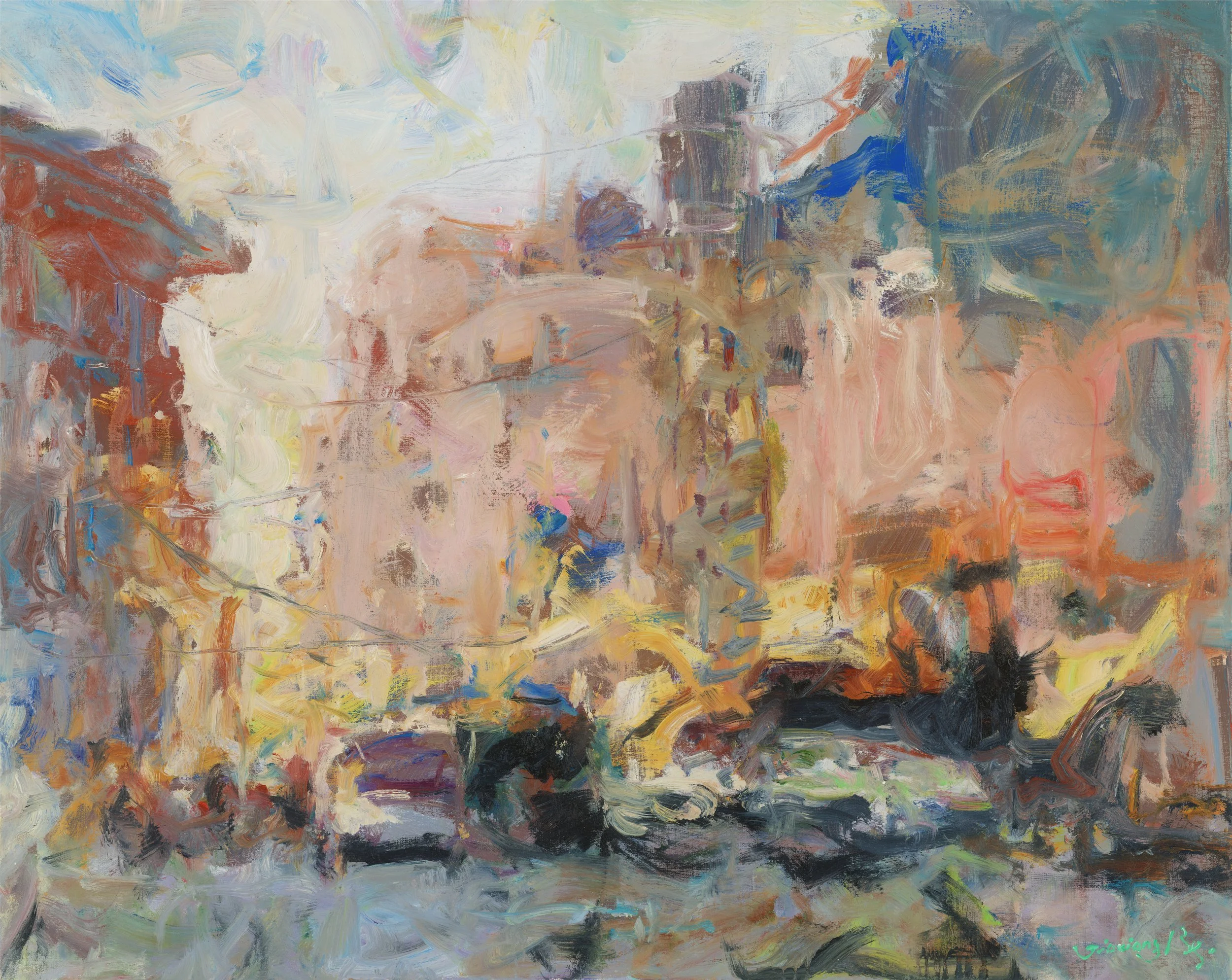
BEI’s practice offers a compelling case for East-West artistic exchange. His explorations pay homage to tradition while embracing open fusion, carving a unique path through cross-cultural currents. Amidst technology’s encroachment into art, his insistence on soul-driven creation reflects the conviction inherited from masters of both Eastern and Western canons. The spontaneous brushwork of a dancer’s skirt in AstonishingElegance or the trembling light in Billowing Sunglow—each declares the presence of BEI’s psyche through their very “unfinishiness.” These gestures resonate with LIN Fengmian’s prison-torn sketches or ZAO Wou-Ki’s furious strokes after personal loss, transcending cultural binaries to affirm a universal truth: art, regardless of origin, is ultimately a flame of freedom burning in the fissures of civilization.