
Break I — The Clarity of Form
As BEI Jiaxiang’s new works from 2025 are unfurled one by one in the studio, a subtle atmosphere begins to permeate the canvases. It is neither the gentle classicism of the Ground Period before 2019, nor the explosive, untamed energy of the Struggle Period from 2022 to 2024, but rather a more complex, and more intriguing, sense of “restraint.” After traversing extremes of stylistic expression, BEI appears to be moving toward a quiet process of refinement—the saturation of colors subtly dialed down, the sharp edges of brushwork gently reined in, and those forms that once nearly dissipated amidst the wildness now begin to emerge from the chaos.
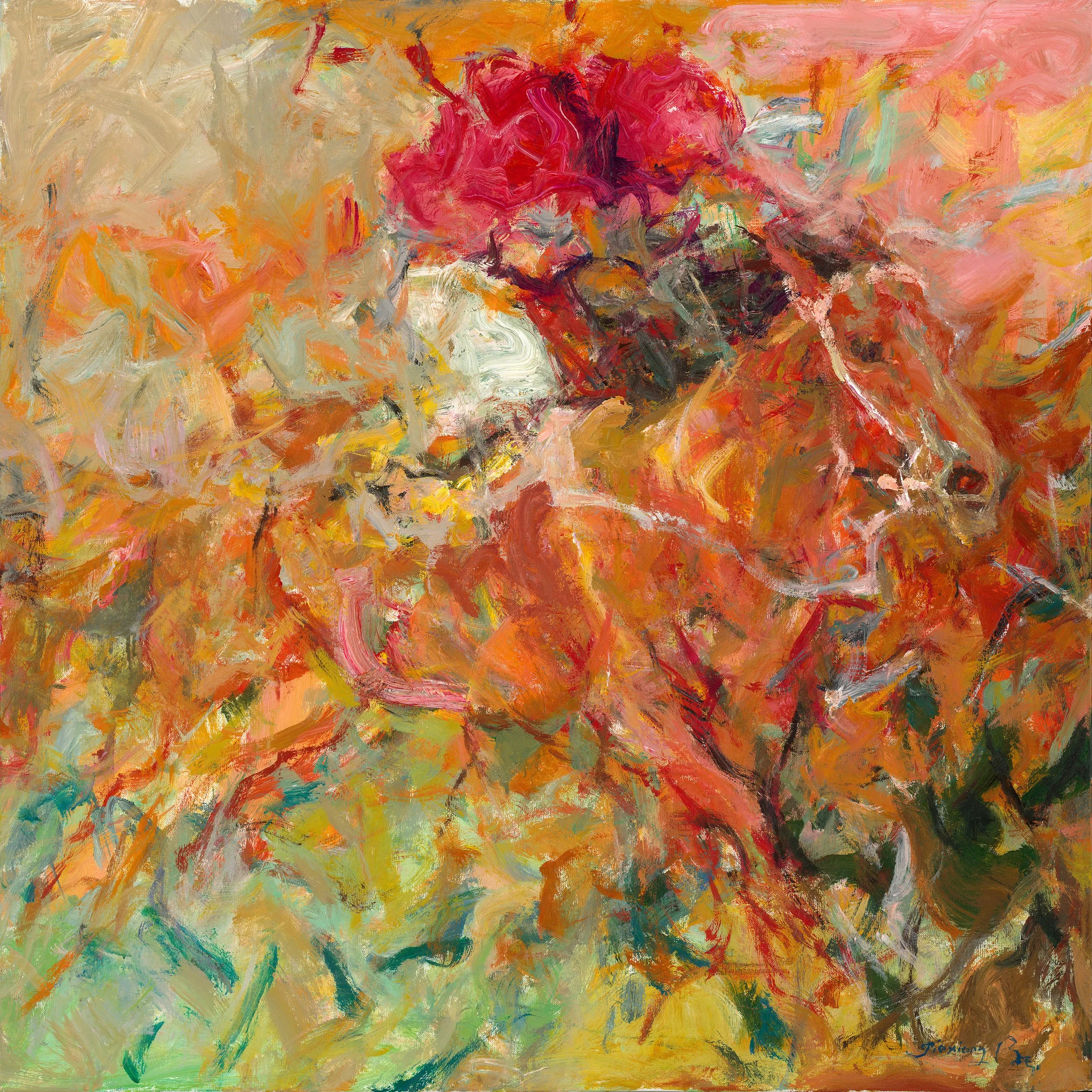
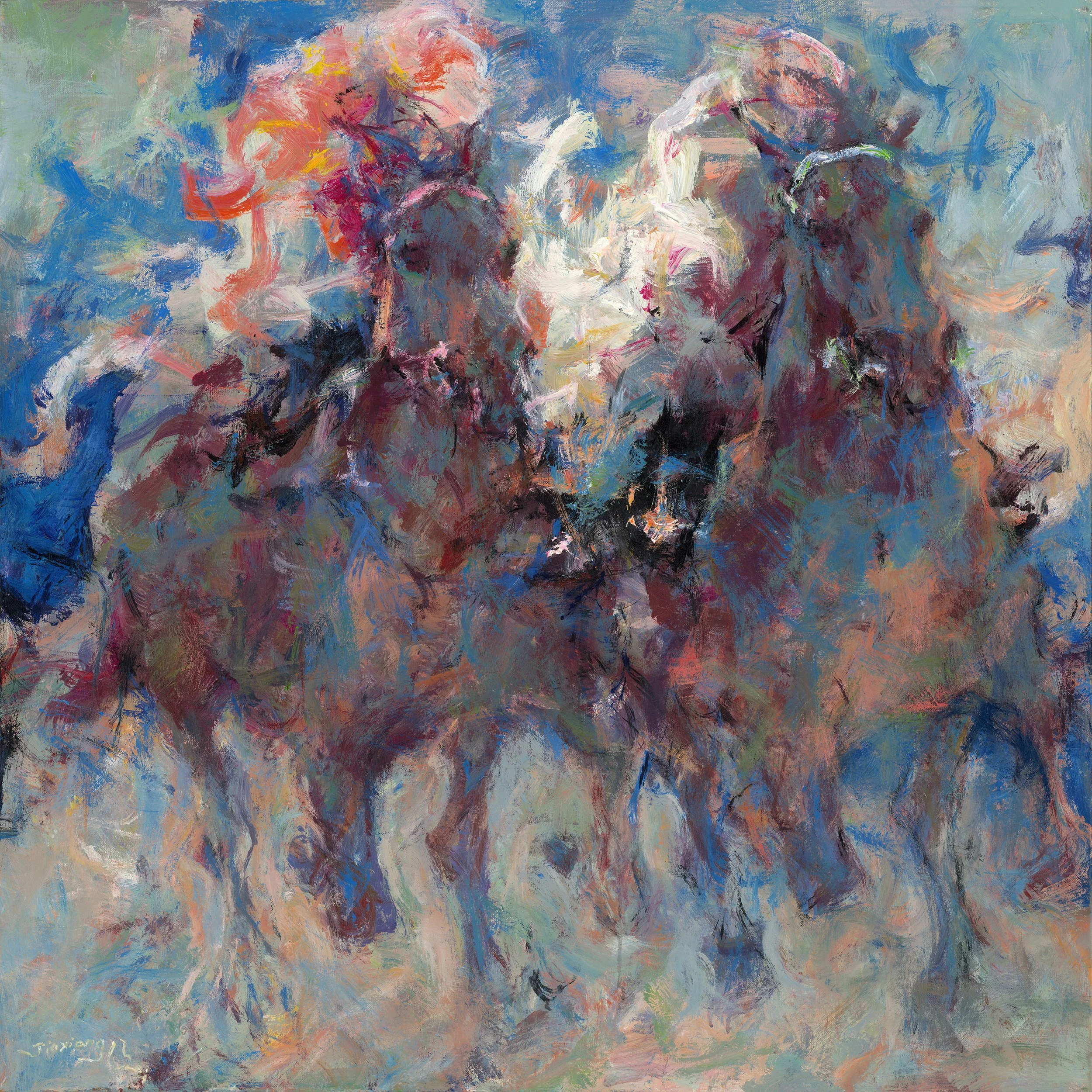
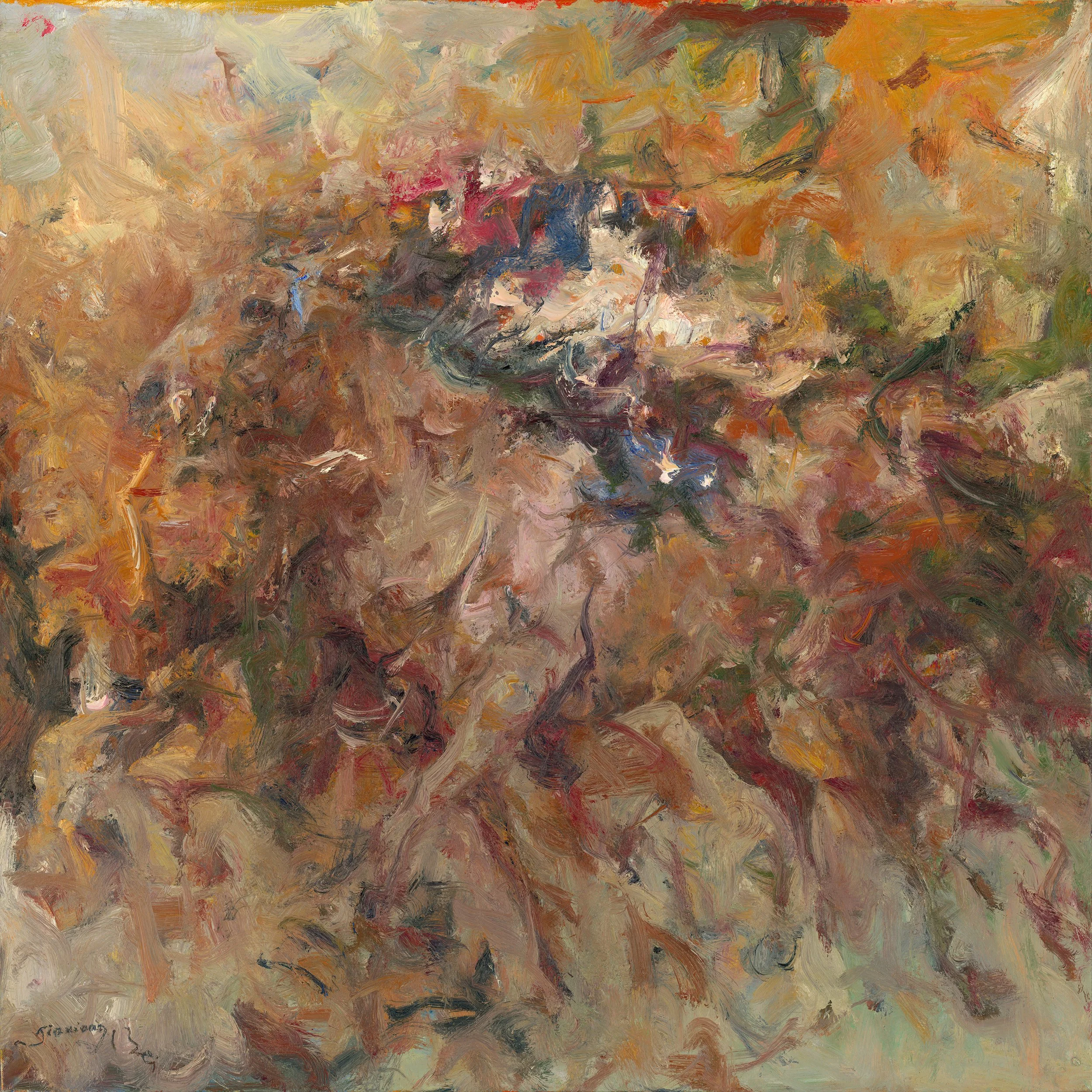
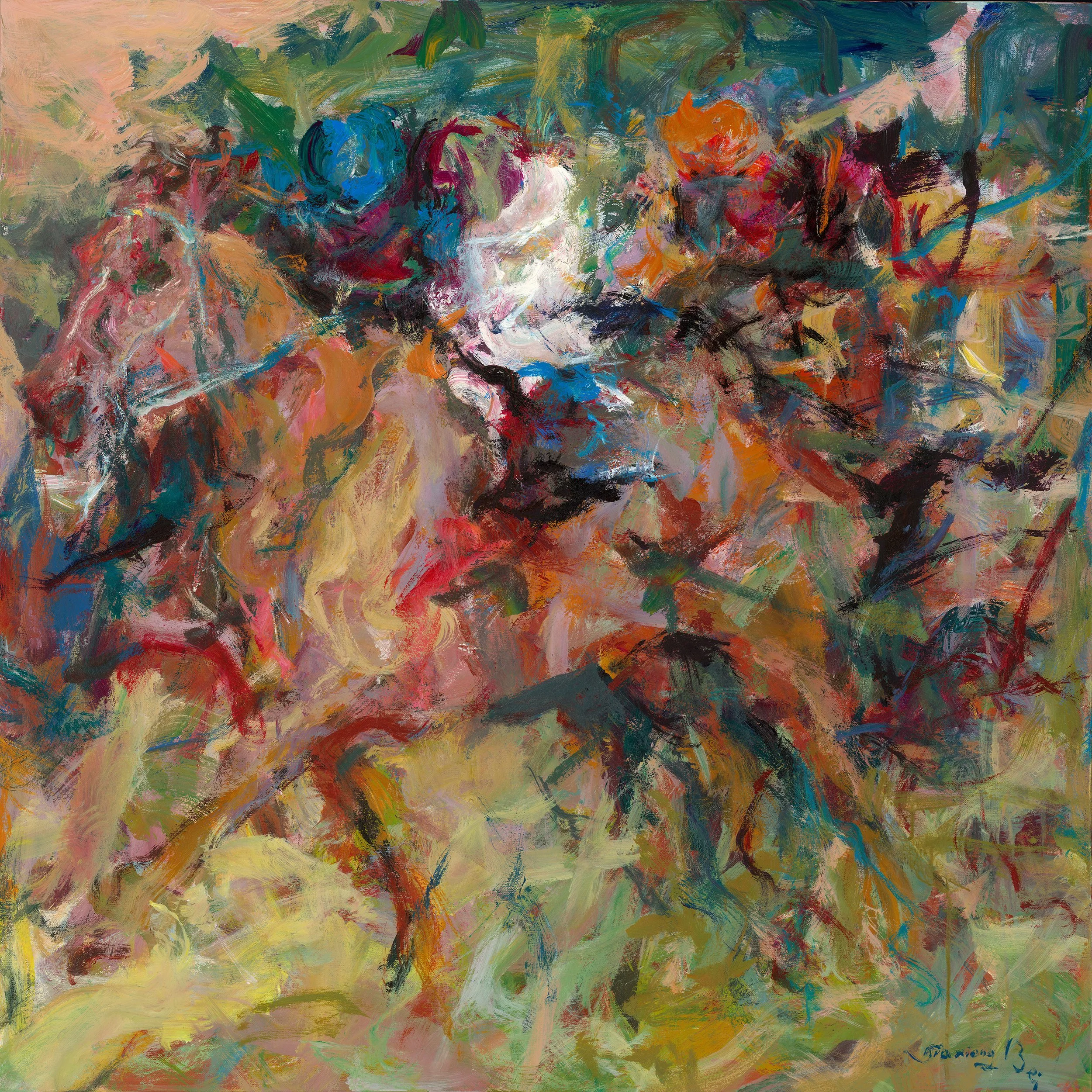
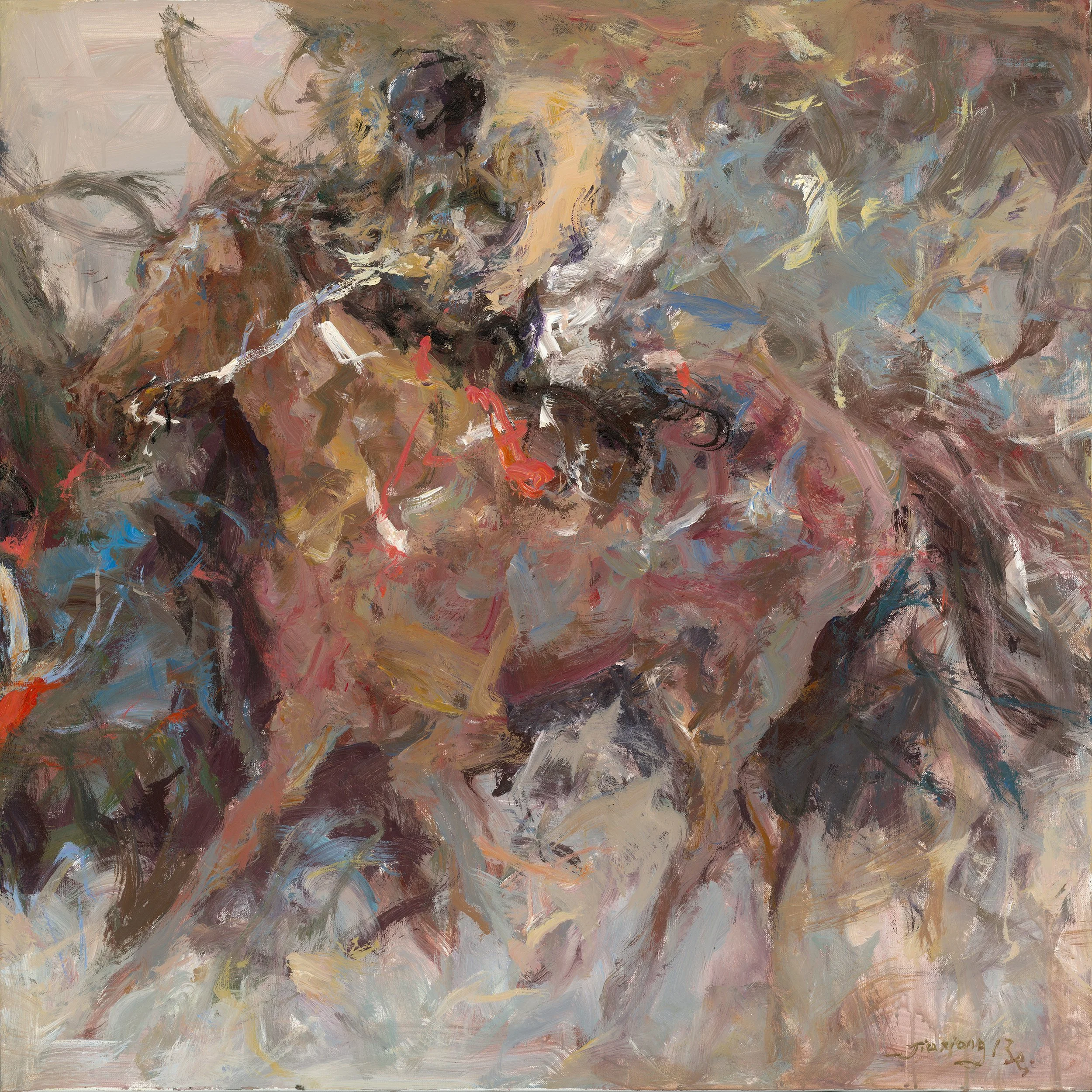
This new idiom, tentatively termed the New Style, is not a simple return to any past phase. It is the sediment left after refinement by intense fire; it is the plainness following the pinnacle of brilliance; it is a reconstruction after breaking through barriers. Standing before the new galloping horse works, one can clearly discern the faces, the manes, even the twisted muscles of the horses in full stride within the sweeping momentum. The brushstrokes remain modern, distinct, and full of calligraphic quality, yet compared to the densely interwoven traces of the Struggle Period, the horses in the New Style possess an added “legibility.” If the Ground Period was about painting “the image of the horse,” and the Struggle Period was about painting “the motion of the horse,” then the New Style is about painting “the life of the horse”—a life that retains its speed and passion yet is anchored in a concrete existence.
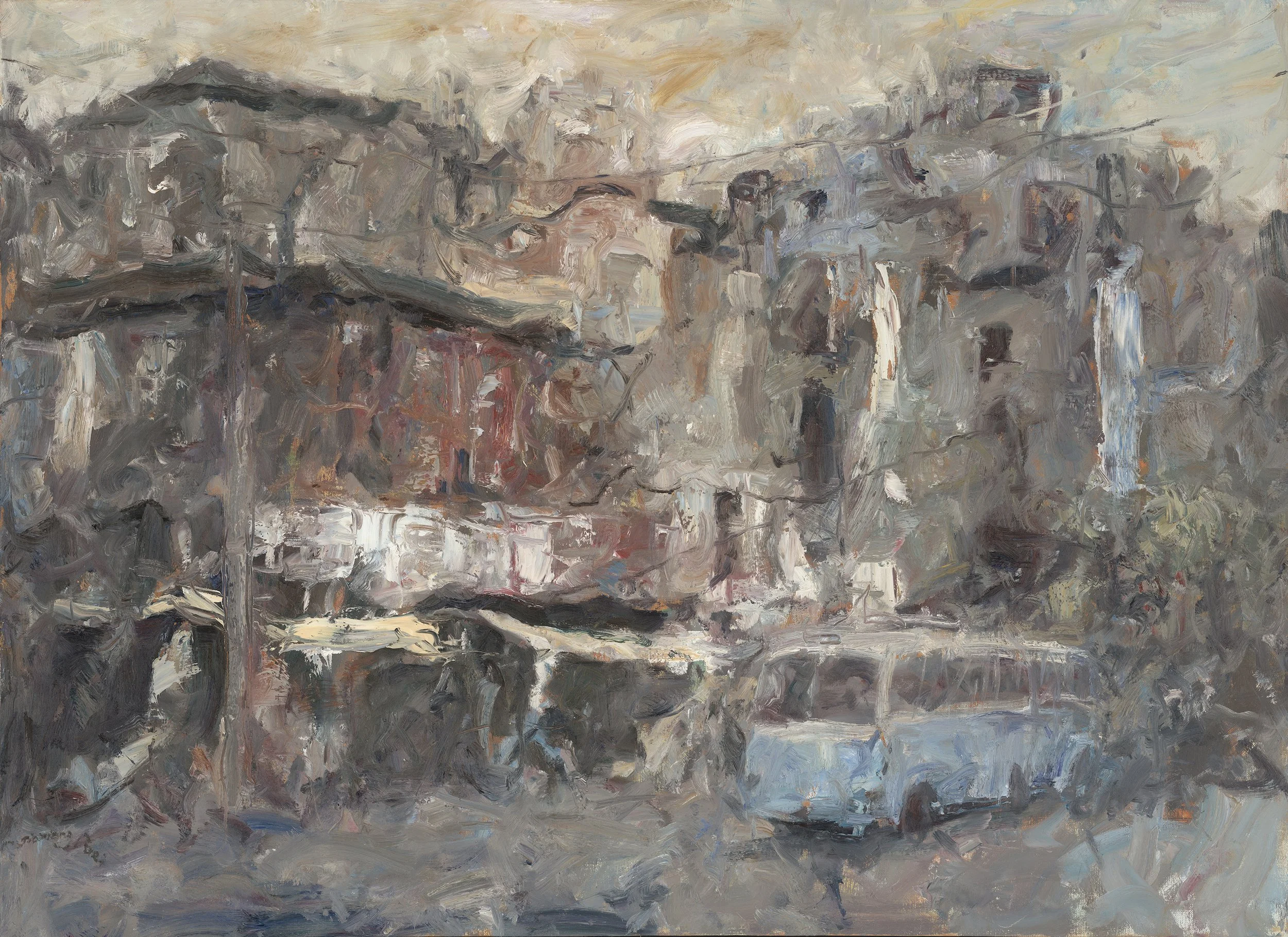
Old Days
Oil On Canvas
165*120cm
The modulation of color is equally intriguing. The near-cathartic high saturation of the Struggle Period is replaced in the New Style by more nuanced and complex hues. The saturation is lowered, and in some works depicting Shanghai streetscapes, the overall tonality approaches the classical elegance of the early Ground Period. In the work Old Days, an old lane house crisscrossed with electrical wires is bathed in the tranquil interplay of the setting sun and its wooden structure. Yet, on the road in the lower right corner of the canvas, BEI adds a light-blue minibus. It does not become part of a fading past; rather, through this choice of color, it conveys an extra sense of lightness, as if gently emerging from memory. As BEI himself puts it: “Color doesn’t have to be harmonious.” In the New Style, the ultimate pursuit of color turns toward a sense of tranquility, an “inner color.”
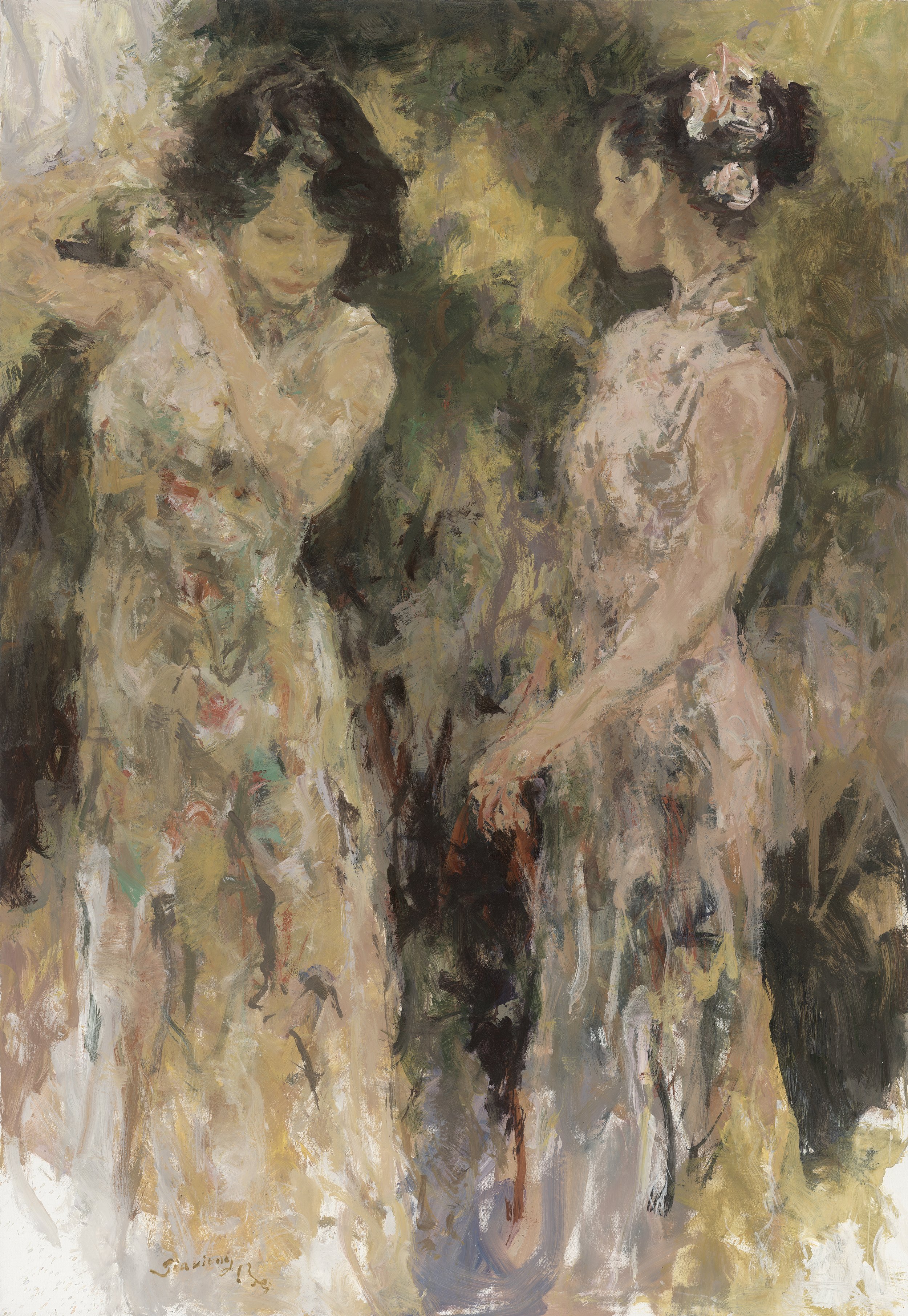


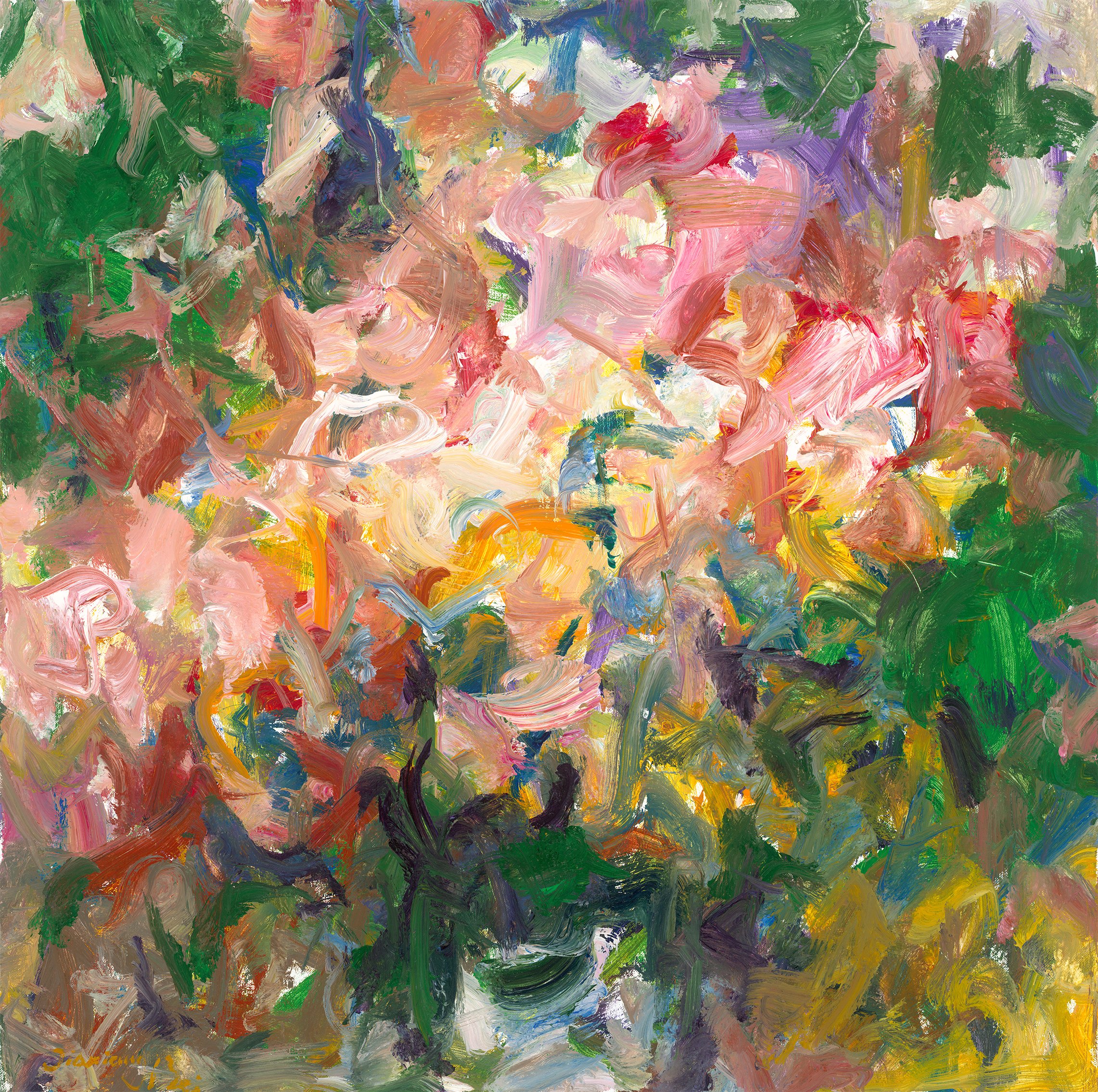
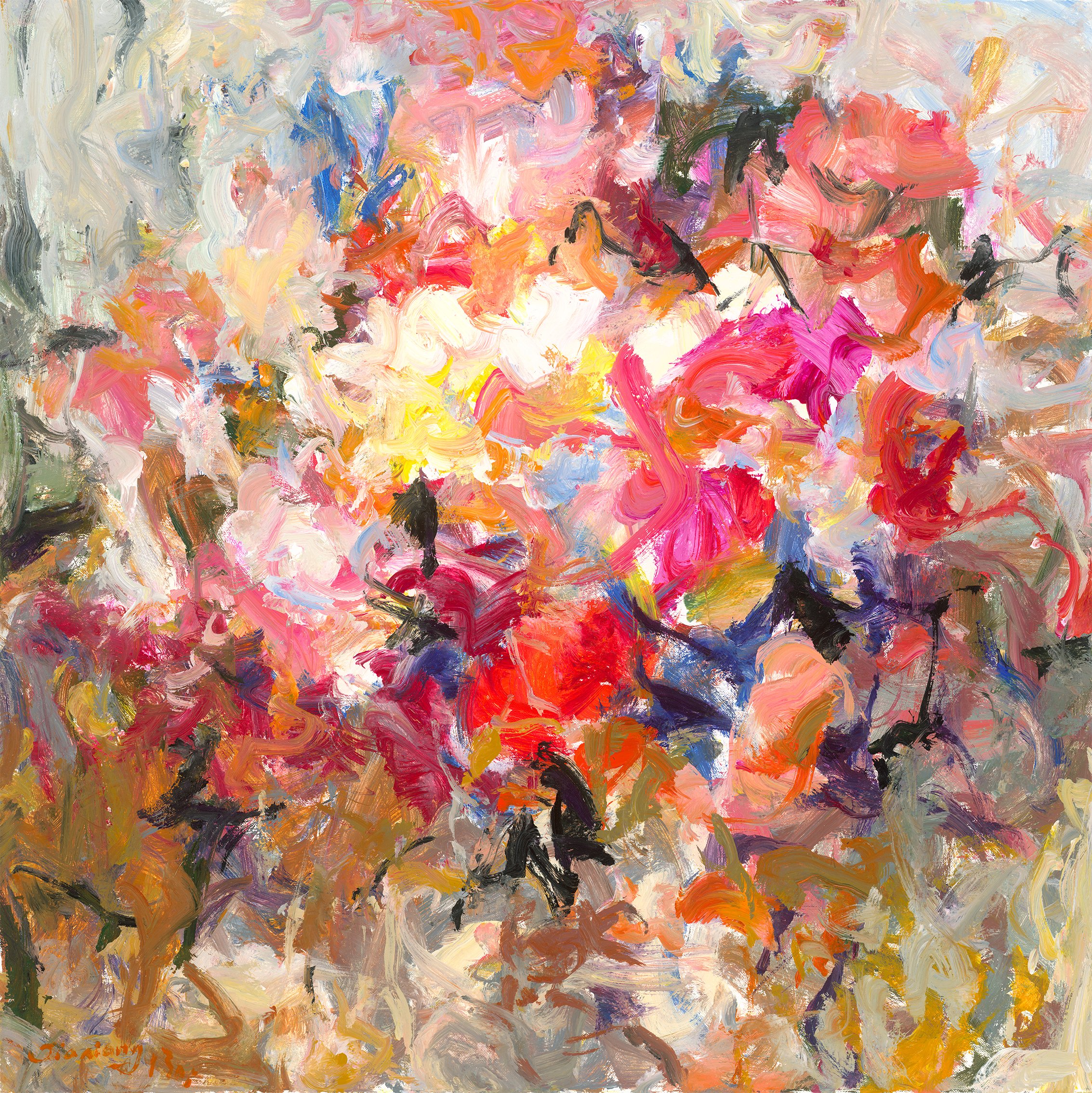
It is worth noting that this “restraint” is not a retreat, but an integration on a higher plane. Kandinsky once praised Goethe’s view that painting requires a solid foundational theory, one that should be a “musical model behind the pattern,” emphasizing the profound connections among all arts. BEI Jiaxiang’s New Style precisely manifests this “musical model”—those seemingly restrained brushstrokes and colors actually harbor an internal rhythm and cadence. In the Shanghai Dialect Series III, short strokes of the garment brush, sweeping lines defining postures, and dry-brush textures and rubbings in the background form a triple rhythm of allegro, moderato, and adagio. In New Flower 01, the spread of green leaves around the canvas edges serves as a sustained bass, while the freely blooming, delicate rouge tones in the center offer a captivating coloratura aria. The painting is no longer an immediate catharsis of emotion, but a serene chant born of contemplation. This shift adds a layer of depth for reflection to his works, beyond their visual impact. Those forms that wander between figuration and abstraction seem to invite viewers to slow down and listen to the voices deep within the canvas.